
Context
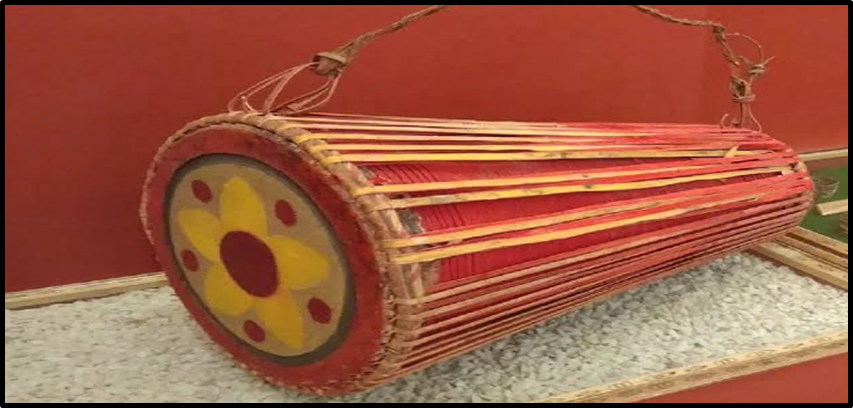
- Recently, the Geographical Indications Registry, Chennai, has granted the GI tag to ‘Mandar of Jharkhand’, a traditional folk musical instrument rooted in the tribal life of the state.
About Folk Instrument Mandar
- Type: Traditional folk musical instrument (drum) of Jharkhand.
- Cultural link: Deeply rooted in the folk culture and tribal life of Jharkhand.
- Key features cited: Traditional craftsmanship, locally sourced red clay, indigenous manufacturing techniques and a distinctive sound.
- Master artisan: Manpuran Nayak, known as ‘Mandar Samrat’, called Mandar an integral part of Jharkhand’s cultural heritage.
Expected Benefits
- Identity: Gives Mandar products a distinct identity linked to Jharkhand.
- Livelihoods: Provides traditional Mandar artisans a stronger foundation to expand into domestic and international markets.
- Heritage: Supports preservation of tribal cultural heritage; described as a tribute to the ancestors and the soil of Jharkhand.
About Geographical Indication (GI)
- Meaning: A sign used on goods with a specific geographical origin, whose quality, reputation or characteristics are essentially due to that origin.
- Indian law: Geographical Indications of Goods (Registration and Protection) Act, 1999, in force since 2003.
- Administered by: Department for Promotion of Industry and Internal Trade (DPIIT), Ministry of Commerce and Industry.
- Validity: 10 years, renewable.
- International link: Protected under the WTO’s TRIPS Agreement.
- First GI tag in India: Darjeeling Tea.
Conclusion
The GI tag for Mandar of Jharkhand protects a tribal musical tradition and gives its artisans a recognised identity and wider market access.
| Important CTC from this article for UPSC Prelims – Geographical Indications (GI) Tag |