
What is CRM?
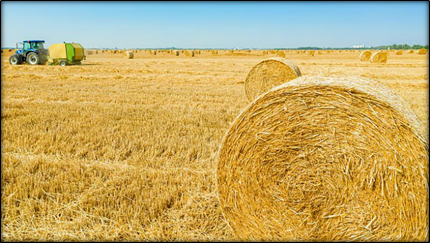
The Crop Residue Management (CRM) Scheme is a Central Sector initiative aimed at promoting sustainable crop-residue management, preventing stubble burning and reducing air pollution, particularly in northwestern India.
Key Features and Objectives
- Objective: The scheme seeks to discourage the open burning of paddy straw by promoting in-situ management and the collection and utilisation of crop residue.
- Financial Assistance to Farmers: Eligible farmers receive financial assistance of 50% of the cost of specified crop-residue management machinery, subject to scheme guidelines.
- Support for Custom Hiring Centres (CHCs): Eligible cooperatives, Farmer Producer Organisations (FPOs), rural entrepreneurs and other approved institutions can receive assistance of up to 80% for establishing custom hiring centres, subject to applicable conditions.
- Promotion of In-situ Management: The scheme encourages the use of Happy Seeders, Super Seeders, mulchers and other approved machinery to manage crop residue within agricultural fields.
- Promotion of Ex-situ Utilisation: It supports the development of systems for collecting and utilising crop residue for bioenergy, industrial applications and other productive purposes.
- Environmental Benefits: The scheme aims to reduce air pollution, conserve soil health, recycle nutrients and promote sustainable agricultural practices.
Recent Progress and Significance
- Implementation since 2018–19: The scheme has supported Punjab, Haryana, Uttar Pradesh, Madhya Pradesh and the NCT of Delhi in addressing crop-residue burning.
- Financial assistance provided: By June 2026, the government reported that ₹4,266.47 crore had been provided to States and ICAR, supporting the distribution of more than 3.54 lakh crop-residue management machines and establishment of over 43,500 Custom Hiring Centres.
- 2026–27 allocation: The government announced a provision of ₹544.15 crore, alongside plans to distribute over 46,000 machines and develop 141 stubble supply-chain projects.
Conclusion
The CRM Scheme is an important intervention for sustainable agriculture and pollution control. Its effectiveness depends on affordable technology, stronger biomass supply chains, farmer participation and a shift from residue burning towards economically viable residue utilization.
| This Concept Has Been Covered Under This Article: Stubble Burning in North India | Structural Causes, Policy Challenges and Sustainable Solutions |