
Context
Recently, the International Day for Biosphere Reserves was observed on 3 November, highlighting the role of biosphere reserves in biodiversity conservation and sustainable development.
About International Day for Biosphere Reserves
- Observed on: 3 November every year.
- Proclaimed by: UNESCO.
- Objective: To raise awareness about the contribution of biosphere reserves to biodiversity conservation and sustainable development.
About Biosphere Reserves
- Definition: Biosphere Reserves are areas identified by national governments for conserving biodiversity while promoting sustainable development.
- Objective: They aim to protect natural habitats, maintain ecological balance and encourage the sustainable use of biological resources.
- International Framework: UNESCO’s Man and the Biosphere (MAB) Programme, launched in 1971, provides the international framework for biosphere reserves.
- Nature: They function as living laboratories for testing and demonstrating sustainable development practices through scientific research and community participation.
- Significance: They contribute to food security, water availability, climate resilience and the livelihoods of local communities.
Functions of Biosphere Reserves
- Conservation: Protect biodiversity, genetic resources, ecosystems and landscapes, including associated cultural diversity.
- Sustainable Economic Development: Promote economic and social activities that respect ecological limits and local cultural values.
- Scientific Support: Encourage scientific research, environmental monitoring, education, training and knowledge exchange.
Zonation of Biosphere Reserves
- Core Zone: Strictly protected area for conserving biodiversity, habitats and ecological processes; human activities are highly restricted.
- Buffer Zone: Surrounds or adjoins the core zone; permits research, environmental education and regulated ecotourism.
- Transition Zone: Allows human settlements and sustainable activities such as agriculture, forestry and ecotourism.
Difference between Biosphere Reserves and Other Protected Areas
- Protected areas such as National Parks and Wildlife Sanctuaries primarily focus on protecting wildlife and their habitats under India’s wildlife protection laws.
- Biosphere reserves adopt a broader approach. They connect protected ecosystems with surrounding communities, making biosphere reserves a model for demonstrating how biodiversity and human well-being can coexist.
About India’s Biosphere Reserve Network
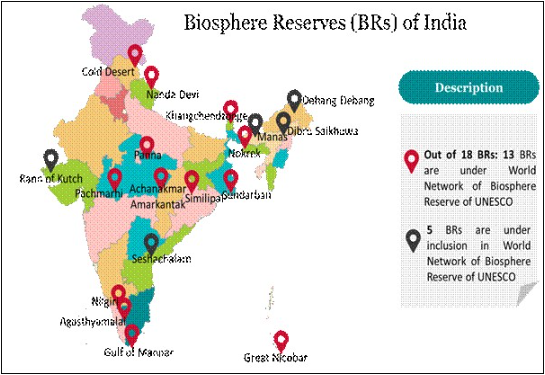
- Total Notified Biosphere Reserves: 18.
- UNESCO Recognition: 13 are included in UNESCO’s World Network of Biosphere Reserves.
- Nodal Ministry: Ministry of Environment, Forest and Climate Change (MoEFCC).
Conclusion
Biosphere Reserves represent an integrated approach to biodiversity conservation by combining ecological protection with sustainable development and community participation. Strengthening scientific research, habitat restoration and local livelihood opportunities will be essential for ensuring long-term ecological resilience and achieving sustainable development.
| Important CTC from this Article: World Network of Biosphere Reserves |