Why in the News?
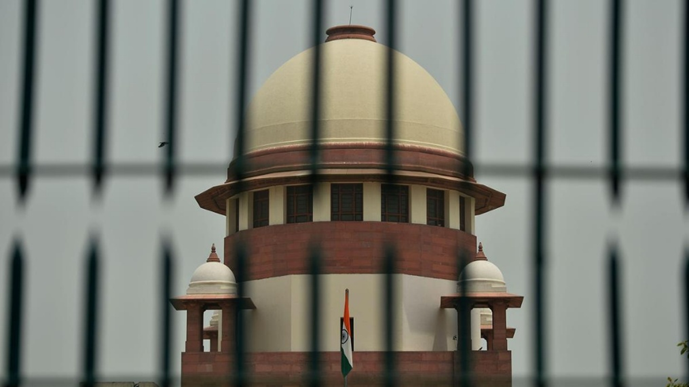
On 18 November 2025, the Supreme Court of India, through a 2:1 majority in the CREDAI vs Vanashakti review petition, recalled its earlier judgment (May 2025) which had declared ex-post facto (retrospective) Environmental Clearances (ECs) illegal.
The original judgment was seen as a powerful reaffirmation of India’s preventive environmental framework. However, the review ruling now creates fresh uncertainty regarding the State’s authority to regularise violations after development has already begun, altering the legal and environmental accountability landscape.
Background: India’s Environmental Clearance Architecture
Environmental governance in India is built on the principle that environmental risk must be assessed before development begins. This principle is codified in:
• Environment (Protection) Act, 1986
• EIA Notifications of 1994 and 2006
These require:
– Prior EC before construction or expansion
– Public hearings and scientific scrutiny
– Conditions to prevent irreversible harm
This model supports the precautionary principle, polluter pays, and inter-generational equity — widely recognised norms in Indian jurisprudence.
Evolution of Retrospective Environmental Clearances
| Period / Event | What it Permitted | Consequence |
| Prior to 2017 | Strict rule of prior EC | Preventive regime maintained |
| 2017 Notification | One-time window to apply for EC after commencement | Start of retrospective regularisation |
| 2021 Office Memoranda / SOP | Detailed route to regularise violations with penalties | Institutionalisation of violations |
| May 2025 Supreme Court ruling | Held retrospective ECs illegal, restoring strict regime | Strengthened deterrence and rule of law |
| Nov 2025 Review (Current Develop.) | Recalled the earlier ruling, reopening scope for regularisation | Dilution of safeguards |
The Original Judgment: A Protective Legal Shift
The May 2025 ruling strongly reaffirmed:
✔ Environmental protection as a core constitutional value under Article 21
✔ The preventive nature of the EIA regime
✔ That allowing projects to start illegally and later purchase compliance destroys deterrence
The Court recognised that:
– Environmental harms often become irreversible if addressed late
– Public consultation cannot be bypassed without harming environmental justice
– Executive convenience cannot rewrite statutory intent
It re-aligned environmental regulation with scientific prudence and global best practices.
The Review Judgment: A Shift Toward Accommodation
The review decision adopted a significantly different stance:
- Treated retrospective clearances as administrative accommodation rather than structural violation
- Suggested penalties and costs can compensate for non-compliance
- Allowed the State greater flexibility in managing regulatory breaches
However, the dissenting opinion warned: “Punishing illegality after the fact cannot substitute scientific appraisal before harm occurs.”
Thus, the majority’s view reduces the legal stigma attached to violations and risks making regularisation a norm instead of an exception.
Key Concerns Arising from the Review
- Loss of Deterrence: If compliance can be bought later, project developers may willingly violate initial requirements.
- Weakening Public Participation: Public hearings — a cornerstone of EIAs — are impossible to restore retrospectively.
- Dilution of Environmental Rule of Law: Executive memoranda and one-time windows can now override a statutory prior clearance mandate.
- Increased Scope for Regulatory Capture: Financially powerful violators could secure approvals easily, leaving communities exposed.
- Long-term Harm to Ecological Security: Damage done before assessment cannot always be remedied, even with penalties.
This shift represents not just a legal reinterpretation, but a philosophical retreat from environmental precaution.
The Larger Significance: A Precedent with Systemic Effects
The review judgment signals a broader weakening of accountability:
- Environmental governance becomes vulnerable to convenience
- Enforcement authorities may become lenient
- Violations may be viewed as regularisable defaults instead of threats
- Climate and biodiversity commitments stand compromised
India’s environmental framework — long celebrated internationally for judicial leadership — now faces erosion at its core.
Way Forward
For environmental protection to remain meaningful:
- Clear legal boundaries: Parliament must define if and when retrospective regularisation is allowed — and under strictly narrow conditions.
- Stringent safeguards: Any regularisation must require restoration plans, independent scientific evaluation, and community participation.
- Real penalties: Violators should compensate based on ecological damage, not nominal fines.
- Institutional strengthening: Pollution control boards and appraisal committees need capacity and autonomy.
Only then can developmental needs be balanced without compromising environmental integrity.
Conclusion
The Supreme Court’s recall of its earlier judgment marks a moment of deep concern for India’s environmental regulatory rulebook. The preventive shield that ensures assessment before destruction has been weakened. The path to sustainable development demands that India:
- Stay aligned with constitutional environmental values
- Preserve public participation and scientific oversight
- Resist shortcuts that convert illegality into entitlement
How the State and judiciary navigate this space now will shape the ecological rights of future generations.
Source: A dismantling of the base of environmental regulation – The Hindu
UPSC CSE PYQ
| Year | Question |
| 2013 | What are the environmental implications of disposal of obsolete and defective electronic goods? Describe measures to address the issue. |
| 2014 | Environmental Impact Assessment (EIA) has been made mandatory for all developmental projects. What are the shortcomings of EIA? |
| 2016 | The Namami Gange and Clean Ganga programmes are interdisciplinary in nature. Discuss. |
| 2017 | How do you justify the view that the level of excellence of Indian biodiversity is one of the world’s highest? |
| 2018 | EIA brings transparency in environmental governance. Comment. |
| 2018 | The impact of Climate Change is being observed in the Indian subcontinent. What measures are needed to address the challenges? |
| 2019 | Discuss the role of the National Green Tribunal (NGT) in environmental protection. |
| 2020 | What are the key features of the National Clean Air Programme (NCAP) initiated by the Government of India? |
| 2021 | Explain the ecological and economic significance of Wetlands of India. |
| 2021 | “Cooperative & Competitive federalism is strengthening the governance of the country.” Explain the statement in the context of the management of COVID-19 pandemic. |
| 2022 | What is the importance of wetlands for ecologically sensitive zones? |
| 2022 | Describe the various initiatives by India to curb plastic waste pollution and minimize environmental degradation. |
| 2023 | Discuss the role of water harvesting & groundwater recharge techniques in India. |
| 2023 | How does the National Green Tribunal ensure access to environmental justice? |