Why in the news?
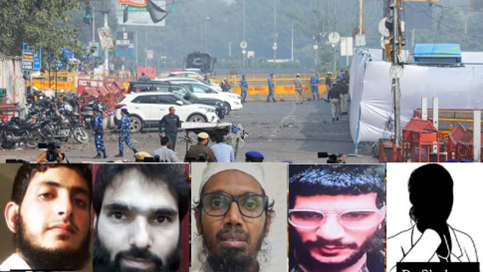
- A terror-type explosion occurred in a moving vehicle near the Red Fort, Delhi, on November 10, killing several people and injuring others.
- The incident has prompted the police to invoke the Unlawful Activities (Prevention) Act (UAPA) and the Explosives Act, and the National Investigation Agency (NIA) has taken charge of the investigation.
- The event has triggered political attention and renewed discussions on terrorism, counterterrorism strategies, social harmony, and the rule of law.
Background / Context
- The suspect, allegedly linked to terror groups, was identified as a doctor from Pulwama district, Kashmir.
- Political leaders have assured justice and accountability, while the Opposition has called for transparency in investigation.
- The incident draws attention to India’s internal security challenges, the application of anti-terror laws, and the need for responsible political and media discourse.
Key Concepts and Legal Framework
| Aspect | Description |
| UAPA (Unlawful Activities Prevention Act) | Empowers agencies to curb terrorist activities and detain suspects under strict conditions. Concerns remain about misuse and prolonged detention. |
| NIA (National Investigation Agency) | India’s central counter-terrorism agency, responsible for investigating offences affecting national security. |
| Explosives Act | Regulates the manufacture, possession, and use of explosives. |
| Due Process & Human Rights | Essential to balance state power with civil liberties in counterterrorism operations. |
Nature and Implications of the Incident
- Symbolic significance: Attack near a historical and political landmark increases psychological and political impact.
- National security implications: Highlights possible intelligence lapses and challenges in early detection.
- Public perception: Raises concerns about safety, preparedness, and communal harmony.
- International image: Incidents in the capital can affect the nation’s global standing and investor confidence.
Investigative and Legal Dimensions
- Appropriate use of UAPA: Indicates the seriousness of the act but demands strict judicial oversight to prevent misuse.
- Forensic evidence: Critical in identifying perpetrators; need for stronger forensic and cyber capabilities.
- Coordination among agencies: Seamless collaboration between local police, intelligence units, and central agencies is essential.
- Transparency: Public communication should be evidence-based to prevent misinformation and speculation.
Political and Social Response
- Government’s role: Ensure swift, transparent investigation; avoid rhetoric that divides communities.
- Opposition’s responsibility: Support national security efforts while seeking accountability.
- Media ethics: Avoid premature conclusions, communal narratives, or sensationalism.
- Public trust: Transparency and fairness are essential to prevent alienation and promote unity.
Counterterrorism and Social Harmony
- Integrated approach: Counterterrorism must combine intelligence-led policing with social cohesion initiatives.
- Community engagement: Local participation helps detect radicalisation early and rebuilds trust.
- Preventive measures: Education, employment, and dialogue reduce susceptibility to extremist ideologies.
- Deradicalisation programs: Rehabilitation and counselling of vulnerable individuals to reintegrate them into society.
Structural Challenges and Reforms
- Intelligence Gaps: Need better data integration and real-time analysis.
- Forensic Limitations: Modernisation of laboratories and skilled personnel training.
- Legal Reforms: Review and balance of stringent laws with civil liberties.
- Capacity Building: Strengthen state police and urban counterterrorism units.
- Cyber Vigilance: Monitor digital spaces used for radicalisation and propaganda.
Security Measures vs. Social Measures
| Category | Security (Hard) Measures | Social (Soft) Measures |
| Objective | Prevent and punish terrorism | Build trust and resilience |
| Examples | NIA investigations, UAPA enforcement, intelligence operations | Community outreach, education, deradicalisation, grievance redressal |
| Risks | Rights violations, alienation | Requires long-term engagement |
| Outcome | Immediate security | Sustainable peace and stability |
Recommendations
- Ensure transparency: Regular press briefings with verified facts.
- Promote police-community partnerships: Strengthen cooperation and trust at local levels.
- Media regulation: Encourage responsible reporting and discourage speculative narratives.
- Judicial oversight: Fast-track terror cases with fairness and accountability.
- Inclusive policies: Focus on social welfare and education in vulnerable areas.
- Strengthen forensic and intelligence networks: Modern tools and trained manpower for investigation.
Key Takeaways
- Counterterrorism is not only about strong laws but also about maintaining public confidence and national unity.
- Social harmony acts as a preventive shield against radicalisation.
- Responsible governance, transparent investigation, and media restraint are critical to sustaining peace.
- The incident underlines the need for a balanced strategy—combining hard security measures with soft social engagement.
Conclusion
The Delhi blast serves as a sobering reminder that terrorism thrives on division and fear. A purely coercive response cannot ensure lasting peace. True security lies in combining strong investigative mechanisms with the promotion of social harmony and mutual trust. Transparent governance, community participation, and responsible communication are indispensable in countering terrorism while upholding democratic values and human dignity.
Source: Act of evil: On the Delhi blast – The Hindu
Terrorism

Terrorism denotes the organised use or threat of violence to create fear, advance political or ideological aims, and coerce societies or governments. Because states and international bodies frame the concept differently, there is no single universally accepted legal definition; practice relies on statutory definitions and international instruments that emphasize violence, intent and political motive.
Background
- Modern terrorism evolved through 20th-century political and ideological struggles and has adapted rapidly to new technologies, conflict zones and criminal markets.
- In the 21st century it has become geographically concentrated: a handful of conflict-affected countries account for the bulk of fatalities, while transnational networks, local insurgencies and lone-actor attacks coexist and change with local conditions. Global data show an uptick in activity and lethality among several major groups in recent years.
Key statutes, Conventions and Institutional Instruments
- International frameworks: United Nations counter-terrorism instruments (UN Global Counter-Terrorism Strategy; CTED/UNOCT mechanisms) set norms for cooperation, capacity building and protection of human rights in counter-terrorism.
- Regional/financial standards: The Financial Action Task Force (FATF) provides the global standard for countering terrorist financing and obliges states to assess and mitigate financing risks.
- Domestic criminal laws and agencies
- Unlawful Activities (Prevention) Act, 1967 (UAPA) — India’s primary anti-terror law sets out offences, designation powers and penalties; it has been amended to expand designation and investigative reach. The Act is an example of how states combine preventive, punitive and designation powers in domestic law.
- National Investigation Agency Act, 2008 (NIA) — another model: creates a central specialised investigative agency to investigate scheduled terror offences, coordinate with states, and try cases in special courts.
Challenges and structural drivers
- Concentration in conflict zones: Terrorist lethality is heavily concentrated in states with active armed conflict and governance vacuums. This makes military or policing solutions alone insufficient.
- Hybridisation of tactics: Groups combine conventional insurgency, urban terrorism, lone-actor attacks and cyber/propaganda efforts; technological diffusion (encrypted comms, drones, cryptocurrencies) complicates detection and disruption.
- Financing and criminal linkages: Terrorist groups exploit illicit economies (drug and mineral trafficking, smuggling, extortion), misuse charities, and use informal value-transfer systems — undermining traceability. FATF standards target these channels but implementation varies.
- Local grievances and governance deficits: Political exclusion, weak public services, corruption and socio-economic marginalisation create recruitment pools that violent networks exploit.
- Human-rights tradeoffs: Overbroad counter-terror measures (indefinite detention, poor due process) can erode legitimacy, fuel grievances and hinder long-term prevention; therefore, legal safeguards and oversight are essential.
- Transnational dynamics and safe havens: Cross-border sanctuaries, porous borders and proxy relationships expand operational reach and complicate unilateral responses.
Recent updates and trends
- Global trend (2024): Major violent groups (IS and affiliates, al-Qaeda affiliates, certain regional insurgencies) increased activity and caused a rise in fatalities in 2024, reversing declines seen in some earlier years.
- Tactical shift: Use of drones and low-cost commercial technology for reconnaissance and strikes has increased in several theatres, notably in parts of Africa. This represents a tactical diffusion from conventional conflict zones to insurgent groups.
- Operational successes: Several states have reported arrests and disruption of cells planning attacks, demonstrating that intelligence-led policing and international cooperation can prevent attacks when capabilities are aligned. (See reporting on recent arrests and interdictions by national authorities.)
Way forward — principles and practical measures
- Prioritise prevention and resilience: Invest in governance, public services, education, and economic inclusion in fragile and marginalised areas so that violent alternatives lose appeal.
- Intelligence-led, rights-compliant policing: Strengthen human intelligence, inter-agency data-sharing, and specialist investigative capacity while preserving judicial oversight and safeguards.
- Disrupt financing and logistics: Implement FATF-aligned anti-financing regimes, regulate informal channels, and follow asset-tracing best practice to choke resources to violent groups.
- Counter-narratives and community engagement: Support local actors, faith and community leaders, and credible voices to undercut extremist messaging and enable rehabilitation pathways for low-level participants.
- Technology and cyber capability: Develop legal frameworks to compel platform cooperation against online radicalisation, invest in digital forensics, and regulate emerging tools (cryptocurrency, darknet markets).
- International and regional cooperation: Improve extradition frameworks, fast-track information exchange, and support capacity building in partner countries, especially where terrorist activity is transnational.
- Legal clarity and accountability: Ensure counter-terror laws have clear definitions, proportionality safeguards, time-bound detention limits, and independent oversight to preserve public legitimacy.
Conclusion
Terrorism is a dynamic, multi-dimensional threat that flourishes where violence, exclusion and weak governance intersect. Effective responses combine prevention (development and governance), precise and accountable law-enforcement, financial-disruption measures, community resilience, and international cooperation. Above all, legal clarity and respect for human rights are not optional — they are central to long-term effectiveness and legitimacy.
UPSC CSE
| Year | Question |
| 2013 | What are the major internal security challenges being faced by India? Give a broad outline of the measures taken by the Government to tackle them. What are the key elements of the National Security Doctrine for India? |
| 2014 | Religious indoctrination via social media has become a major source of recruitment for terrorist outfits. Discuss the steps that need to be taken to curb this threat. Money laundering poses a serious threat to the country’s economic sovereignty. What steps have been taken to tackle this menace? |
| 2015 | The linkage between development and spread of extremism is well-recognized. Highlight the differences between left-wing extremism, terrorism, and insurgency. Bring out the role of the Government in dealing with such threats. What are the various facets of terrorism in India? How does cross-border terrorism impact India’s internal security? |
| 2016 | Terrorism is emerging as a competitive industry over the last few decades. Analyse the above statement. The use of the Internet and social media by non-state actors for subversive activities is a major concern. How can India deal with this challenge? |
| 2017 | What are the major sources of terrorist funding? Suggest effective measures to prevent their utilization by terrorists. The North-Eastern region of India has been witnessing insurgency for decades. Discuss the role of ethnic diversity and underdevelopment in fuelling this problem. |
| 2018 | The cross-border movement of insurgents is only one of the several security challenges facing the policing of border areas in India. Examine the other challenges and suggest measures for effective border management. Data security has assumed significant importance in the digitized world due to rising cybercrimes. Discuss the steps that must be taken to strengthen cyber security. |
| 2019 | What is meant by over-ground workers (OGWs) in the context of terrorism? Examine their role in assisting terrorist organisations. The banning of certain organizations has proved ineffective in combating terrorism. Examine the reasons for such ineffectiveness. |
| 2020 | For effective border area management, border security and development of border areas must go hand in hand. Discuss. The proliferation of communication networks has posed new challenges in internal security. Discuss the significance of India’s cyber deterrence policy in this context. |
| 2021 | Analyse the complexity and intensity of terrorism, its causes, linkages, and internal and external dimensions. Also, suggest measures to address this menace. Discuss the role of technology in combating terrorism in India. |
| 2022 | Discuss the types of organized crimes. Explain how terrorism is different from organized crime. What are the challenges to internal security through communication networks? |
| 2023 | “Winning of ‘Hearts and Minds’ in terrorism-affected areas is an essential step in restoring the trust of the population.” Discuss. The use of drone technology by non-state actors for smuggling arms, drugs, and explosives is a serious internal security concern. Examine the steps taken by India to address this challenge. |