
Why in the News
Recently, during the fourth round of Free Trade Agreement (FTA) negotiations between India and New Zealand, both countries discussed collaboration in agricultural technology and methods to enhance farm productivity.
Background
- India and New Zealand have been negotiating a Free Trade Agreement (FTA) aimed at enhancing trade in goods, services, and agricultural technologies.
- New Zealand has a history of agricultural innovation, focusing on increasing production efficiency and farmers’ incomes.
- India is committed to doubling farmers’ incomes by 2030, making agricultural technology cooperation a priority in bilateral discussions.
Key Highlights of the Negotiations
- Agricultural Technology Cooperation
- Sharing of agri-tech innovations and modern farming methods is a “big part” of the FTA discussions.
- New Zealand has developed techniques to increase productivity and farmers’ earnings, which it is willing to share with India.
- The collaboration aligns with Prime Minister Narendra Modi’s goal of raising farmers’ incomes by 50% by 2030.
- Bilateral Engagement
- Union Minister Piyush Goyal visited New Zealand to participate in high-level talks with Todd McClay.
- Both sides emphasized a cooperative approach, aiming to find solutions together rather than engage in disputes during negotiations.
Challenges in Negotiations
- Agricultural negotiations are sensitive, as India remains firm in protecting farmers’ interests.
- Similar challenges have arisen in negotiations with the U.S., EU, and the U.K., where agricultural sectors are critical points of contention.
- Despite challenges, progress has been made, though no deadline for finalizing the FTA has been set.
Significance of the FTA
- Boosting Farmers’ Incomes: Agri-tech sharing can help Indian farmers adopt modern methods to enhance yield and profitability.
- Strengthening Bilateral Trade: The FTA could open new markets for agricultural products and foster technology exchange.
- Sustainable Agricultural Practices: Integration of New Zealand’s scientific methods can support sustainable farming in India.
- Global Precedent: Cooperation demonstrates India’s focus on inclusive growth, aligning with international best practices in agri-tech and trade.
Conclusion
The India-New Zealand FTA negotiations underscore the importance of agricultural technology cooperation in boosting farmers’ incomes and modernizing farming practices. Successful implementation of the agreement can strengthen bilateral trade ties, promote sustainable agriculture, and support India’s goal of increasing farmers’ earnings by 2030.
E-Technology in the aid of Framers
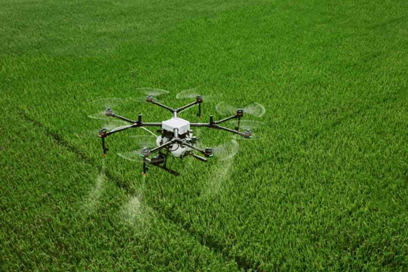
Agriculture is a primary livelihood source for nearly 58% of India’s population, contributing around 18% to GDP. In FY24, the growth in agriculture and allied sectors was only 1.4%, highlighting persistent structural problems.
Productivity is hindered by fragmented landholdings, inconsistent production cycles, market asymmetries, and inadequate adoption of modern farming practices and reforms in marketing. Globalization introduces further challenges, requiring Indian farmers to produce high-quality goods at competitive prices to meet global standards
Farmers require up-to-date knowledge, training, and guidance in resource management and commodity production. E-technology can play a transformative role in addressing these challenges and improving rural livelihoods.
Applications of E-Technology in the aid of Farmers
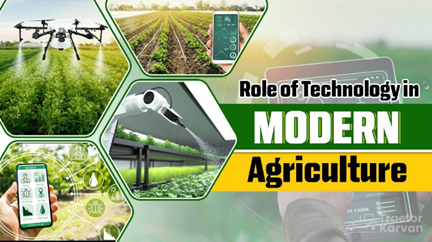
E-technology supports decision-making and enhances efficiency by providing farmers with timely and location-specific information on:
- Agro-inputs: seeds, fertilizers, pesticides
- Crop and soil management
- Weather forecasting and disaster preparedness
- Agro-processing, marketing, and agri-business management
- Government schemes and subsidies
- Localized agricultural information at village, block, district, and state levels
- Benefits include:
- Improving skills and productivity while ensuring cost-effectiveness and sustainability
- Facilitating linkages with academia, government agencies, and private sector
- Enabling access to emerging technologies and suitable markets
- Potential to trigger a new Green Revolution by delivering relevant information at the right time
Key Drivers of E-Technology Adoption in Agriculture
The main factors enabling E-technology in agriculture are:
- Low-cost, pervasive connectivity and affordable digital tools due to mobile, wireless, and internet expansion
- Advanced data storage and exchange technologies
- Innovative business models through government-private partnerships
- Democratization of information via open access, social media, and online platforms
E-technology encompasses all electronic methods, including devices, satellite communication, mobile services, and applications, collectively termed E-Agriculture, which harness ICT for agricultural development.
Government Initiatives for E-Technology in Agriculture
- National e-Governance Plan in Agriculture (NeGP-A)
- Centrally sponsored scheme aimed at ICT-enabled agricultural development.
- Uses multiple delivery channels: internet, touch-screen kiosks, Krishi Vigyan Kendras, Kisan Call Centres (KCCs), Agri-Clinics, Common Service Centers (CSCs), and mobile technologies like IVRS, USSD, and voice recognition.
- Provides integrated ICT-based services for agriculture and allied sectors, ensuring farmers receive timely, relevant information to improve productivity and farm management.
- Information Technology Vision 2020 (DAC)
- Formulated by Department of Agriculture and Cooperation (DAC) to ensure agricultural information reaches farmers for optimized productivity and income.
- Offers 24/7 advisory services through ICT tools and networks the agriculture sector nationally and globally.
- Includes over 80 portals, applications, and websites such as SEEDNET, DACNET, and AGMARKNET, enhancing service delivery and building extensive agricultural databases.
- Kisan SMS Portal (2013)
- Integrated farmers’ portal delivering information, advisories, and services via SMS in local languages.
- Farmers can register queries on weather, soil, market trends, crop management, and receive customized responses.
- Benefits: timely crop advisories, adoption of modern technologies, access to government schemes, immediate alerts for adverse weather, pest and disease management, selection of suitable crop varieties, and market price information.
- Kisan Sabha App & Crop Insurance Mobile App
- Crop Insurance app enables calculation of insurance premiums, understanding of coverage details, subsidy information, and access to sum insured data for loanee and non-loanee farmers.
- Enhances risk management and crop protection.
- National Agriculture Market (e-NAM)
- Pan-India electronic trading platform connecting APMCs and market yards to create a unified national market.
- Provides economical logistics support, increases farmer profits, and eliminates middlemen.
- Key features: Negotiable Warehouse Receipts (e-NWRs), Farmer Producer Organization (FPO) modules, logistic aggregator platforms.
- Benefits: market transparency, reduced intermediation costs, standardized procedures, and value chain development.
- As of March 16, 2023, 1,361 mandis across 23 states and 4 UTs are integrated.
- Seednet
- National portal providing comprehensive information on quality seeds, seed varieties, testing labs, certification agencies, and seed replacement ratios.
- Supports seed sector transparency and improved seed management.
- DACNET
- IT-enabled project by Department of Agriculture and Cooperation to improve governance and service efficiency.
- Reduces service processing time from over a year to under three months.
- Focuses on ease-of-use, fast information delivery, reduced errors, minimized corruption, and affordable services.
- AGMARKNET
- Joint initiative of Directorate of Marketing and Inspection (DMI) and National Informatics Center (NIC).
- Covers 3,245 market nodes and 300 commodities in 10 languages.
- Provides market prices, arrivals, trends, analyses, laws, and timely data for producers, traders, and consumers, enhancing marketing efficiency.
- Kisan Call Centres (KCCs)
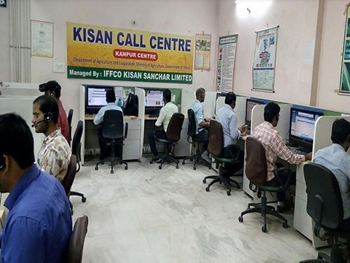
- Purpose and Reach: Launched in 2004 to provide agriculture-related guidance to farmers through a single nationwide toll-free number (1800-180-1551), accessible on all mobile and landline networks across India. Services are offered in 22 regional languages.
- Services Offered: Provides information on crops, government schemes, markets, and localized farming practices, ensuring farmers receive timely, practical advice tailored to their region and language.
- Expert Access and Availability: Farmers can interact with subject matter experts via call conferencing. The service operates daily from 6 AM to 10 PM, ensuring continuous Pan-India support.
Private Sector Initiatives in E-Agriculture
- Green SIM (IFFCO Kisan Sanchar Limited – IKSL)
- Delivers daily voice messages and text updates on agriculture-related topics in regional languages.
- Covers 16 thematic categories including agriculture, horticulture, animal husbandry, floriculture, poultry, irrigation, fertilizers, insurance, banking, and rural health.
- Provides helpline services managed by experts, along with phone-in programs and mobile quizzes to engage farmers.
- Information is accessible via online portal, mobile devices, and mobile apps, increasing reach and accessibility.
- Facebook for Farmers and Extension Workers (Kerala)
- Social media platforms, particularly Facebook, are used to enhance extension services and farmer engagement.
- The Kerala Government has institutionalized Facebook as a tool for agricultural communication, requiring officers to maintain active accounts.
- Farmers are encouraged to maintain social media accounts to stay in touch with Krishi Bhavans, enhancing productivity and profitability.
- e-Choupal (ITC Ltd.)
- Provides farmers with information for better decision-making and access to markets, storage facilities, and agricultural equipment.
- Buyers come to the farmer instead of the farmer traveling to markets, reducing middlemen exploitation.
- Reaches over 4 million farmers across 6,100 kiosks in 10 states: Madhya Pradesh, Haryana, Uttarakhand, Uttar Pradesh, Rajasthan, Karnataka, Kerala, Maharashtra, Andhra Pradesh, and Tamil Nadu.
- Covers a range of crops including soybean, coffee, wheat, rice, pulses, and shrimp.
- Facilitates synchronized village operations for increased production quantity, quality, and profitability.
- SasyaSree (Andhra Pradesh)
- A regional, one-stop portal providing locally-specific, demand-driven knowledge in Telugu.
- Offers guidance on best crop management practices, government schemes, market prices, and information on allied sectors like animal husbandry and poultry.
- Uses video, audio, and photographic content to make information accessible and understandable for farmers.
- mKRISHI (Tata Consultancy Services)
- Provides personalized agro-advisory services in voice and visual formats via mobile devices.
- Farmers receive tailored guidance on crops, farm practices, and market strategies, improving decision-making and productivity.
- eSagu (IIIT Hyderabad)
- IT-based personalized agro-advisory system delivering farm-specific expert guidance.
- Aims to increase farm productivity by providing timely, high-quality advice tailored to the individual farmer and their land conditions.
- Supports evidence-based decision making for farmers in crop selection, soil management, and pest control.
- Integration with Weather Services
- Private platforms complement government weather initiatives, providing real-time, hyper-local weather alerts, drought monitoring, and agro-met advisories.
- Tools like mobile apps disseminate information on forecasted weather, rainfall, temperature, and extreme events to help farmers take preventive actions.
Weather-Based E-Technology Services
- Forecasted weather and agro-met advisories at district and sub-region level
- Services via SMS and apps under Gramin Krishi Mausam Sewa (GKMS), Climate Change Knowledge Network (CCKN-IA), Mahalanobis National Crop Forecast Centre (MNCFC)
- IMD apps Mausam and Meghdoot provide weather alerts for agriculture
Digital India and Agriculture Sector
- Launched in 2015 to empower citizens with digital access to government services
- Core components: digital infrastructure, digital services, digital literacy
- Mobile phones are primary medium; programs like mAgriculture and mGramBazar support agriculture extension and marketing
- Benefits: rural digital empowerment, universal connectivity, timely service delivery, and improved governance
Challenges in E-Agriculture
- Low Awareness and Digital Literacy
- Many farmers, especially in rural and remote areas, are unaware of e-agriculture tools, their benefits, or usage.
- Lack of training and guidance limits effective use of tools like e-NAM, Kisan SMS, and mobile apps for crop and market decisions.
- Difficulty in accessing or interpreting digital advisories reduces impact.
- Limited Digital Infrastructure
- Poor connectivity, low internet penetration, and unreliable power supply hinder consistent access to ICT services.
- Affordable access to smartphones, computers, or other devices is a major challenge for small and marginal farmers.
- Maintenance and technical support gaps affect service delivery even where infrastructure exists.
- Digital Divide and Social Inequalities
- Access favors literate, wealthier, or urban-adjacent farmers, leaving marginalized communities, women farmers, smallholders, and landless laborers disadvantaged.
- Limits equitable distribution of benefits from e-agriculture.
- Reluctance to Directly Engage with Technology
- Farmers often depend on intermediaries, risking distortion of information.
- Fear of complexity and technological errors discourages adoption.
- Direct engagement with apps and online portals remains limited.
- Language and Localization Barriers
- Digital services may not be available in local languages/dialects.
- Information may lack context for local crops, soils, or agro-climatic zones, reducing actionability.
- Integration with Traditional Practices
- Farmers rely on traditional knowledge systems, sometimes conflicting with ICT recommendations.
- Limited awareness campaigns and extension support hinder integration of e-technology into conventional farming.
- Sustainability and Scalability Issues
- Many initiatives are pilot-based or project-specific, lacking long-term funding or policy support.
- Poor coordination between central/state authorities, private stakeholders, and NGOs limits reach and impact.
- Data Reliability and Trust
- Farmers may distrust digital advisories if past information was inaccurate.
- Reliable weather forecasts, market prices, and crop advisory data are critical; errors can affect income and production decisions.
Way Forward: Strengthening E-Technology in the aid of Farmers
- Enhancing Rural Access
- Promote smart villages, financially viable communication infrastructure, and sustainable rural information centers
- Localize information and integrate conventional methods (radio, extension services) with new ICT
- Education and Sensitization
- Include agriculture in school curriculum and digital literacy
- Develop digital libraries, awareness campaigns, and Behaviour Change Communication (BCC)
- Market Chains and Integration
- Improve collaboration between farmers, transporters, traders, and buyers
- Implement policies capturing local knowledge, research agenda, and ICT tool integration
- Research and Innovation
- Train researchers and extension workers in ICT
- Digitalize agricultural academic and research data
- Link rural communities with universities and research institutions through multi-stakeholder mechanisms
Conclusion
E-technology in agriculture has the potential to transform productivity, improve market access, and enhance farmers’ incomes. Full realization of this potential requires policy support, infrastructure investment, awareness, and collaboration between government, private sector, and research institutions.
UPSC MAINS PYQs
- How can biotechnology improve the living standards of farmers? (2019)
- How is science interwoven deeply with our lives? What are the striking changes in agriculture triggered off by science-based technologies? (2020)
- How and to what extent would micro-irrigation help in solving India’s water crisis? (2021)
- What are the present challenges before crop diversification? How do emerging technologies provide an opportunity for crop diversification? (2021)
- What are the main bottlenecks in upstream and downstream process of marketing of agricultural products in India? (2022)
- How does e-Technology help farmers in production and marketing of agricultural produce? Explain it. (2023)