Context
Recently, the Government of India announced a significant policy shift by approving the export of 25 lakh tonnes of wheat and 5 lakh tonnes of wheat products for the early 2026 season. This decision, stems from a projected record harvest and robust central stocks of 182 LMT, which far exceed the mandatory buffer requirements. The move marks the end of a long-standing export restriction and aims to help Indian farmers tap into global demand while stabilizing local wholesale prices.
1. Wheat Cultivation in India: Climate and Soil Requirements
- Crop Category: Wheat is the second most important cereal crop in India, following rice, and is the staple food for most of North and West India.
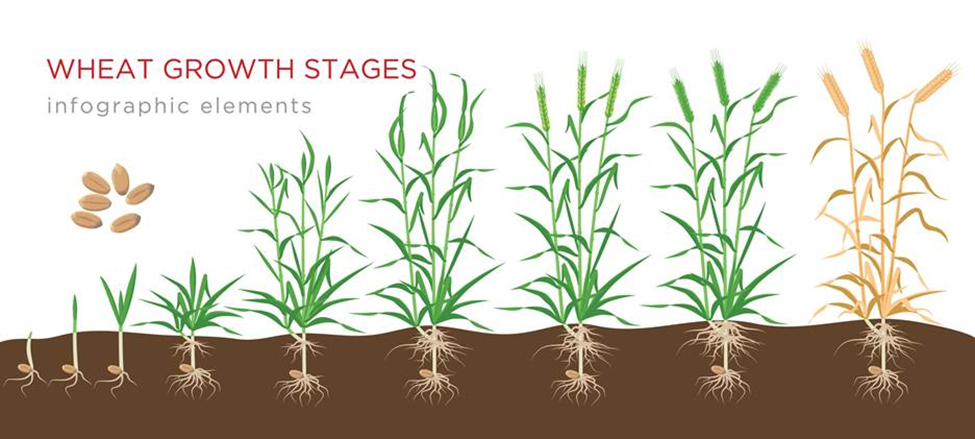
- Season: It is primarily a Rabi crop, sown in winter (October–December) and harvested in spring (February–May).
- Ideal Temperature: It requires a cool growing season (10°C to 15°C at sowing) and a warm, sunny ripening period (21°C to 26°C at harvest).
- Rainfall Patterns: The crop thrives with 50-75 cm of annual rainfall. Winter drizzles caused by Western Disturbances are particularly beneficial for higher yields.
- Soil Suitability: Well-drained, fertile loams and clayey loams are preferred. The alluvial soils of the Indo-Gangetic plains and the black soils of the Deccan are primary cultivation zones.





2. India’s Position as a Global Producer and Exporter
- Production Ranking: India is the world’s second-largest producer of wheat, contributing nearly 14% of the total global output, second only to China.
- Top Producers Globally: The top five producers are China, India, Russia, the United States, and France.
- Export Dimension: Although India is a top producer, it is often a “swing” exporter due to its massive domestic consumption requirements.
- Global Export Leaders: Russia remains the world’s largest wheat exporter. India’s re-entry into the market in 2026 targets key deficit regions in West Asia, Southeast Asia (Indonesia, Philippines), and North Africa (Egypt).
3. Key Government Policies and Economic Support
- MSP for 2026-27: The government fixed the Minimum Support Price (MSP) for wheat at ₹2,585 per quintal.
- Farmer Profits: This price ensures a return of 109% over the estimated cost of production, providing the highest profit margin among all Rabi crops.
- Stock Management: The Food Corporation of India (FCI) manages the “Central Pool” to supply grains for the National Food Security Act (NFSA) and the PM-GKAY scheme.
4. Challenges: Climate Change and Biosecurity
- Terminal Heat Stress: Rising temperatures in March (during the grain-filling stage) are a major threat, potentially reducing yields by 6-25% by 2100.
- Wheat Blast: This fungal disease (Magnaporthe oryzae) is an emerging threat to South Asian food security, causing sudden bleaching of the wheat heads.
- Climate-Resilient Varieties: Researchers have developed varieties like HD-3385 (early sowing/heat tolerant) and PBW RS1 (high amylose for health benefits) to combat these challenges.
Q1. Consider the following statements regarding the wheat sector in India:

1. India is currently the world's largest exporter of wheat, mainly supplying markets in North Africa and the Middle East.

2. The 'Wheat Blast' disease is caused by a fungal pathogen that primarily affects the grain-bearing head of the plant.

3. The Minimum Support Price (MSP) for wheat in the 2026-27 season provides a return of over 100% on the cost of production.

Which of the statements given above are correct?

A. 1 and 2 only
B. 2 and 3 only
C. 1 and 3 only
D. 1, 2, and 3

Solution: B

•	STATEMENT 1 INCORRECT: While India is the second-largest producer, it is not the largest exporter; Russia currently holds that position. India's exports are carefully regulated based on domestic needs.
•	STATEMENT 2 CORRECT: Wheat Blast is a devastating fungal disease (Magnaporthe oryzae) that attacks the "spikes" or heads of the wheat, leading to empty or shriveled grains.
•	STATEMENT 3 CORRECT: The approved MSP of ₹2,585 per quintal for the 2026-27 season represents a margin of 109% over the cost of production.