Historical Genesis:
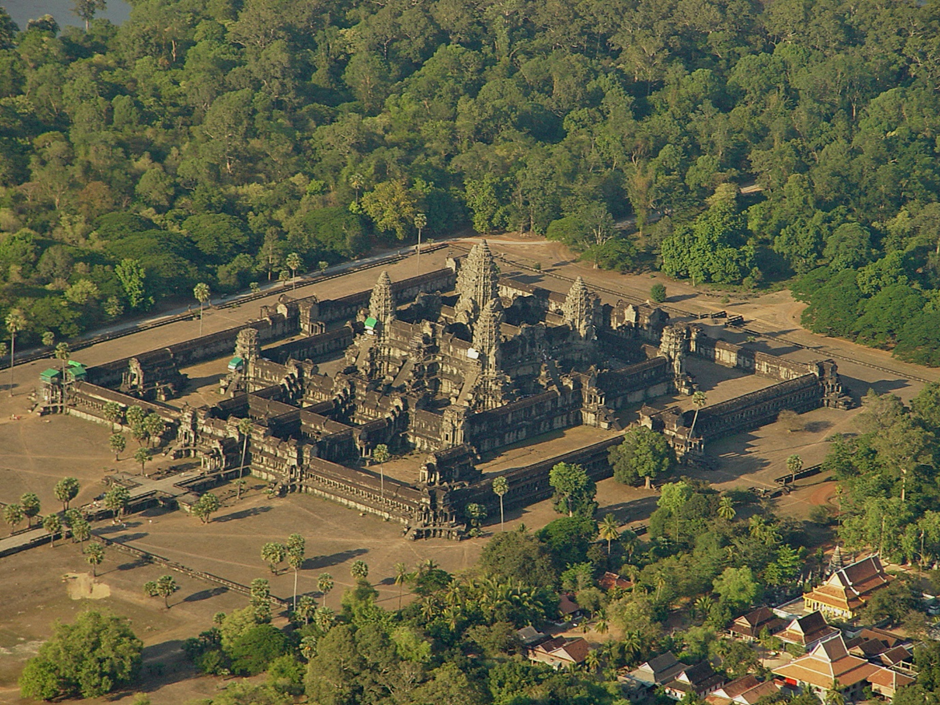
- Patron: Built by the Khmer King Suryavarman II.
- Timeline: Constructed in the first half of the 12th Century (approx. 1110–1150 AD).
- Religious Transition: Originally dedicated to Lord Vishnu (Hinduism), it gradually transformed into a Buddhist temple towards the end of the 12th century.
2. Location & Geography
- Site: Located in Siem Reap province, Cambodia.
- Significance: It served as the capital of the Khmer Empire (9th–15th Centuries).
- Complex: The greater Angkor area includes other major temples like Angkor Thom, Bayon Temple, and Ta Prohm.
3. Key Features
- Style: Represents the zenith of high classical Khmer architecture.
- Material: Constructed primarily using Sandstone blocks.
- Engineering Marvel: Stones were fitted without mortar; the precise binding agent (wooden paste vs. lime plaster) remains a subject of study.
- Defensive Structure: Protected by a massive 15-foot high wall and a wide moat. Access is restricted to small bridges on the East and West.
4. Symbolism & Art
- Mount Meru: The temple’s five central towers symbolize the peaks of Mount Meru, considered the abode of gods in Hindu-Buddhist cosmology.
- Bas-Reliefs: Extensive carvings depict Hindu epics (Ramayana, Mahabharata), deities, and Khmer history.
5. Global Recognition
- Status: Designated as a UNESCO World Heritage Site in 1992.
- Scale: It holds the distinction of being the largest religious monument in the world (covering ~200 acres).
Q. With respect to the historical genesis of the temple consider the following statement:

1. It was constructed by Khmer King Suryavarman II in the first half of the 12th Century.
2. Originally built as a Buddhist temple, it gradually transformed into a shrine dedicated to Lord Vishnu.

Which of the statements given above is/are correct?
(a) 1 only
(b) 2 only
(c) Both 1 and 2
(d) Neither 1 nor 2

Answer: A

Explanation:

Statement 1 is Correct: The temple (Angkor Wat) was indeed built by King Suryavarman II in the first half of the 12th Century.
Statement 2 is Incorrect: The religious transition was the reverse of what is stated. It was originally dedicated to Lord Vishnu (Hinduism) and later transformed into a Buddhist temple.