After Reading This Article You Can Solve This UPSC Mains Model Questions:
Artificial Intelligence is increasingly becoming a critical component of modern military capability. Examine the growing role of AI in defence systems and discuss the strategic and ethical challenges associated with its militarisation. 15 Marks (GS-3, Science and Technology)
Context
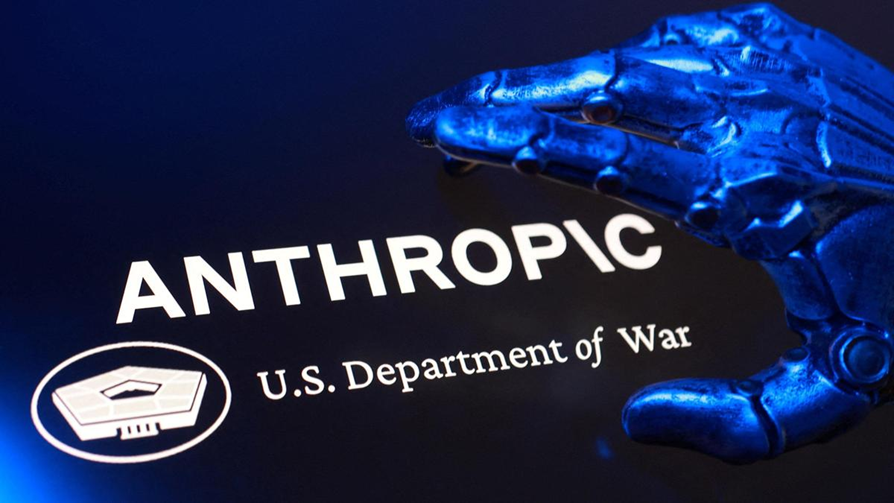
- A disagreement emerged recently between the United States Department of Defense and the AI company Anthropic, developer of Claude AI. The conflict arose when the U.S. military sought broader access to Anthropic’s AI systems for defence applications, including potential use in autonomous strike capabilities.
- Anthropic declined to permit such unrestricted access because its internal AI governance framework prohibits involvement in fully autonomous weapons and large-scale surveillance.
- Subsequently, OpenAI negotiated a separate agreement with the Department of Defence that allows military use of its AI systems under specified safeguards.
Background: Increasing Role of Artificial Intelligence and Private Technology Firms in Defence
A. Growing Importance of Artificial Intelligence in Defence
Artificial Intelligence is increasingly becoming a critical component of modern military capability. Governments across the world are integrating AI into defence systems to enhance strategic advantage, operational efficiency, and technological superiority.
AI technologies are currently being applied in:
- Cybersecurity and cyber warfare
- Military intelligence analysis
- Autonomous and semi-autonomous weapons systems
- Drone operations and battlefield logistics
- Predictive analytics for strategic decision-making
Major powers such as the United States, China, and Russia have prioritised AI development as part of their national security strategies.
B. Role of Private Technology Firms
- Unlike earlier periods when defence technologies were largely developed by government laboratories, advanced AI capabilities are now concentrated in private technology firms.
- Companies such as Anthropic, OpenAI, and Google have become central to the development of cutting-edge large language models and AI platforms.
- This has led to increasing collaboration and tension between governments and private AI developers.
Key Technological Pillar
A. Introduction to Claude AI
Claude AI is an advanced AI chatbot and coding assistant created by Anthropic.
Key Characteristics
- Claude is based on Large Language Model (LLM) architecture capable of generating sophisticated text and programming code.
- It can assist users in creating, editing, and optimising software programs.
- The system can also support tool creation and software integration when provided access to relevant software libraries.
B. What is Claude Code Platform?
A specialised feature called Claude Code has gained prominence due to its ability to assist in complex coding tasks and software development.
C. Relevance for Defence and Strategic Applications
Claude AI has attracted considerable interest from defence agencies due to its potential to support high-technology defence development.
The system can contribute to defence innovation by:
- Accelerating the development of complex software systems used in military technologies.
- Assisting improvements in advanced defence platforms and strategic technologies.
- Reducing delays associated with security clearance requirements for specialised programmers.
Military software development often occurs within highly classified environments, which slows the recruitment of qualified engineers. In such contexts, AI coding assistants like Claude can significantly shorten development timelines, particularly when utilised by experienced software developers working on sensitive defence systems.
Disagreement between Anthropic and the U.S. Department of Defense
A disagreement emerged between Anthropic and the United States Department of Defense, primarily centred on the ethical restrictions imposed by Anthropic on the use of its AI systems, particularly concerning autonomous weapons and surveillance.
- Initial Collaboration: In 2025, Anthropic entered into a $200 million agreement with the U.S. Department of Defense. Under this arrangement, the government was allowed to use Claude AI through secure cloud infrastructure provided by Amazon Web Services for defence-related technological development.
- Shift in U.S. Military AI Policy: In January 2026, U.S. Defence Secretary Pete Hegseth issued a memorandum titled “Accelerating America’s Military AI Dominance.”
The policy aimed to accelerate the deployment of AI in military systems by removing barriers such as:- Restrictions on data sharing
- Lengthy testing and certification processes
- Delays in contracting procedures
- Bureaucratic hurdles affecting rapid technology adoption
- Anthropic’s AI Governance Framework: Anthropic follows an ethical framework known as the “AI constitution,” which discourages the use of its AI systems for:
- Mass surveillance
- Fully autonomous weapons
- High-risk decisions without human oversight
CEO Dario Amodei insisted that the agreement include legal safeguards preventing the use of AI for domestic surveillance and fully autonomous lethal weapons.
- Threat of “Supply Chain Risk” Designation: In response, the Department of Defense threatened to classify Anthropic as a “supply chain risk.” Such a designation could discourage government contractors and defence partners from using Anthropic’s technology, potentially affecting its future collaborations with the defence sector.
OpenAI Entry: OpenAI’s Agreement and Key Differences
Following the dispute, OpenAI negotiated its own agreement with the United States Department of Defense.
A. Key Provisions of the Agreement: The agreement allows the military to use OpenAI’s systems under defined safeguards:
- AI systems may be used for lawful defence purposes.
- AI cannot independently control autonomous weapons when regulations require human oversight.
- Critical decisions must remain under human authority and supervision.
B. Operational Safeguards: OpenAI indicated that its framework includes:
- Deployment primarily through cloud-based infrastructure
- Human-in-the-loop oversight mechanisms
- Continued functioning of internal AI safety systems
C. Difference in Approach: The main difference lies in the legal interpretation of safeguards.
- Anthropic reportedly sought more explicit and binding restrictions, ensuring that its AI could not be used for autonomous weapons even if laws or military policies changed in the future.
- OpenAI’s agreement instead focuses on compliance with existing laws and regulations governing military operations.
Broader Implications of the Anthropic–DoD Dispute
1. Militarisation of Artificial Intelligence:
- The episode illustrates the rapid expansion of AI integration into defence systems.
- Advanced AI tools can significantly enhance military capability, but they also increase the risks associated with autonomous warfare and algorithmic decision-making.
2. Ethical Governance of AI:
- The conflict highlights the tension between corporate ethical commitments and state security priorities.
- Technology companies are increasingly required to balance commercial opportunities, ethical obligations, and geopolitical pressures.
3. Expanding Role of Technology Companies in National Security
- Private technology firms now play a critical role in developing advanced AI systems that influence military power.
- This development raises important questions regarding:
- Corporate responsibility in defence applications
- Government regulation and oversight
- Transparency and accountability in the use of AI technologies
4. Global Debate on Autonomous Weapons
- The use of AI in warfare has intensified debates on Lethal Autonomous Weapons Systems (LAWS).
- Several countries and international organisations have called for global norms and regulatory frameworks to ensure meaningful human control over lethal technologies.
Strategic Implications for India
As India modernizes its armed forces and builds its “IndiaAI” ecosystem, the Anthropic–DoD dispute serves as a crucial case study.
- Defence Modernisation: India’s AI initiatives by Defence Research and Development Organisation and programmes like Innovations for Defence Excellence (iDEX) highlight growing AI integration in defence; however, ensuring human oversight in autonomous systems is crucial.
- Strategic and Technological Autonomy: Under the IndiaAI Mission, India must strengthen indigenous AI capabilities and reduce reliance on foreign technologies through domestic AI models and innovation.
- Regulatory and Economic Preparedness: Strengthening AI governance frameworks through bodies like NITI Aayog and ensuring data protection under the Digital Personal Data Protection Act, 2023 will be essential to support responsible AI growth and protect Indian startups.
Way Forward
1. Establish International Norms for Military AI: Global frameworks under organisations such as the United Nations should promote regulations governing autonomous weapons and AI-enabled warfare.
2. Strengthen AI Governance Mechanisms: Governments and companies should develop clear regulatory frameworks, including:
- Mandatory human oversight in high-risk systems
- Robust accountability and audit mechanisms
- Transparency in AI deployment practices
3. Promote Responsible Public–Private Partnerships: Collaboration between governments and technology companies should be guided by ethical principles, legal clarity, and effective oversight structures.
4. Balance Innovation and Security: Policies should ensure that innovation in artificial intelligence continues while maintaining strict safeguards against misuse in surveillance or autonomous lethal systems.
Conclusion
The dispute involving Anthropic and the United States Department of Defense, along with an agreement by OpenAI, highlights the growing intersection of artificial intelligence, military use, and ethical governance. It underscores the need for human oversight, legal accountability, and international cooperation to ensure AI strengthens national security while being used responsibly.