
Why in News
Recently, concerns have been raised prominently regarding the significant lag in numeracy outcomes compared to literacy despite visible progress under the NIPUN Bharat Mission, with emphasis placed on extending remedial support to middle grades, introducing FLN+ skills, and integrating real-life applications to ensure sustained mathematical proficiency.
Policy Framework and Initial Achievements
- National Education Policy 2020 has been recognised as correctly identifying Foundational Literacy and Numeracy (FLN) as the cornerstone of all future learning.
- The NIPUN Bharat Mission has been implemented to shift focus from inputs to measurable learning outcomes.
- Foundational learning outcomes that remained stagnant for decades have recorded measurable improvement, as confirmed by both government surveys and independent assessments.
Present Ground Reality: Numeracy Severely Lagging Literacy
- Annual State of Education Report (ASER) 2024 has revealed that while 48.7% of Class 5 students can read a Class 2-level text fluently, only 30.7% can perform a basic division, creating an 18 percentage point gap.
- No State has been found to report higher numeracy outcomes than literacy outcomes.
Core Reasons Behind the Numeracy Deficit
Hierarchical and Cumulative Nature of Mathematics
- Mathematics has been described as fundamentally cumulative and hierarchical, where each concept builds rigidly on the previous one, unlike language learning where partial comprehension still permits progress.
- Missed early concepts such as place value render subsequent topics like addition, subtraction, and decimals inaccessible, causing gaps to widen progressively.
Syllabus-Driven Teaching Without Mastery Assurance
- Traditional teaching has been observed to advance strictly according to the syllabus without ensuring mastery of earlier concepts.
- The Teaching at the Right Level (TaRL) methodology developed by Pratham has demonstrated through research and field experience that instruction must be aligned with the child’s current learning level rather than the prescribed grade-level curriculum.
Disconnect Between Classroom Learning and Real-Life Application
- A study conducted by the Abdul Latif Jameel Poverty Action Lab has established a two-way disconnect: students who perform well in classroom assessments frequently fail to apply concepts in real-life market situations, while children experienced in real-world tasks struggle to transfer those skills to classroom problems.
- This disconnect has been identified as necessitating integrated learning that deliberately brings real-life problem-solving into the classroom.
Far-Reaching Consequences of the Numeracy Gap
- Students lacking foundational numeracy skills have been found to struggle severely in mathematics and science subjects, which consistently register far higher failure rates in board examinations.
- Persistent learning gaps render middle and secondary school instruction incomprehensible, leading many adolescents to drop out before reaching board exams despite having access and interest.
- The widespread dread of mathematics has been highlighted as effectively closing pathways to higher education for large numbers of students.
Strategic Interventions and Way Forward
Addressing the numeracy crisis requires a multi-pronged response that expands upon the gains achieved under NIPUN Bharat:
- Extension of Interventions to Middle Grades: It is considered urgent to extend FLN interventions up to Class 8, as limiting support to Class 3 is inadequate when upper primary children, many of whom lost crucial primary years due to COVID-19 disruptions, continue to struggle.
- Evidence of Success: Experiences from the Union Territory of Dadra and Nagar Haveli and Daman and Diu, where FLN interventions were extended into middle grades, showed significantly improved outcomes in the Parakh Rashtriya Survekshan 2024.
- Introduction of FLN+ Skills: There is a critical need to move beyond basic foundations and introduce FLN+ skills—specifically fractions, decimals, percentages, ratios, and integers—as these are essential for board exam success and academic progression.
- Addressing Specific Gaps: The inability of nearly 70% of Class 5 students to solve division problems suggests a concurrent lack of higher-level skills, such as adding simple fractions, which must be rectified through concerted efforts.
- Pedagogical Evolution: Teaching methodologies must evolve beyond the designated NIPUN hours by adapting child-friendly, activity-based methods for higher-level concepts, ensuring that teaching aligns with students’ learning levels rather than rigid grade-based syllabi.
- Contextual Integration: The learning process must be connected more meaningfully with the outside world by embedding literacy and numeracy in real-life contexts and encouraging everyday problem-solving to make learning relevant and enduring.
Conclusion
- The numeracy gap in India has been established as both widespread and deep, intensifying with each advancing grade due to the cumulative nature of mathematics and instructional approaches that fail to address individual learning levels.
- The resulting poor learning outcomes, high board-examination failure rates, and elevated dropout rates pose a direct threat to educational equity and the nation’s economic future.
- The proven success of the NIPUN Bharat Mission in improving foundational skills at scale demonstrates that large-scale transformation is achievable.
- Building systematically on these gains through extended middle-grade support, introduction of FLN+ skills, and adoption of real-life-connected pedagogy now constitutes an urgent national priority with profound implications for enrolment, employability, and inclusive growth under the broader vision of NEP 2020 and Sustainable Development Goal 4.
Primary Education in India
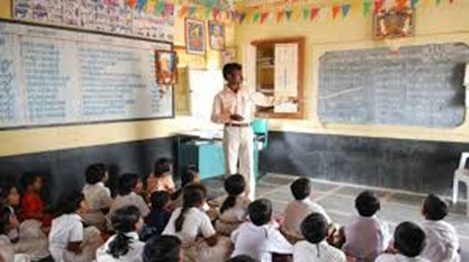
Primary education (Classes 1–5, ages 6–11 years) constitutes the most critical phase of formal schooling as it lays the Foundational Literacy and Numeracy (FLN) skills that determine lifelong learning trajectories.
Recognised globally under SDG-4 (Quality Education) and nationally under Article 21A of the Indian Constitution, universalisation of elementary education has shifted from mere access to actual learning outcomes. Despite remarkable progress in enrolment, India continues to grapple with a severe learning crisis in the primary stage.
Historical Evolution of Primary Education Initiatives in India
- Ancient & Medieval Period (Pre-Colonial) – Indigenous systems like Gurukuls, Pathshalas, Maktabs, and Vihar/Madrasa education provided basic literacy and numeracy to limited sections, largely restricted by caste, gender, and religion.
- No concept of universal, state-funded primary education existed.
- 1770–1830: Early Colonial Experiments – Charter Act of 1813 allocated ₹1 lakh annually for promotion of education among natives – first formal British commitment.
- Missionary schools (Serampore, Scottish Church, etc.) introduced modern primary education for lower castes and girls in limited areas.
- 1835–1854: Macaulay’s Minute & Wood’s Despatch – Macaulay’s Minute (1835) emphasised English-medium education but largely ignored mass primary education.
- Wood’s Despatch 1854 (Magna Carta of Indian Education) recommended creation of vernacular primary schools in every village, systematic teacher training, and grants-in-aid system – laid the first blueprint for mass primary education.
- 1858–1919: Limited Expansion under Crown Rule – Hunter Commission 1882 strongly recommended state-sponsored expansion of primary education in vernacular medium and transfer of primary education control to local bodies.
- By 1901, only 4% of the population was literate; primary enrolment remained abysmally low.
- 1920–1947: Provincial Autonomy & Nationalist Efforts – Gopal Krishna Gokhale’s Elementary Education Bill 1911 (defeated but created public awareness).
- Hartog Committee 1929 highlighted over-emphasis on secondary/university education and recommended consolidation and qualitative improvement of primary education.
- Wardha Scheme of Basic Education 1937 (Mahatma Gandhi & Zakir Husain Committee) advocated 7–8 years of free, compulsory, craft-centred basic education in mother tongue – first indigenous vision of universal primary education.
- Sargent Plan 1944 proposed universal, compulsory, free education for ages 6–14 by 1984 – became the post-independence blueprint.
- 1947–1960: Post-Independence Constitutional Commitment & Early Plans – Article 45(Directive Principles) directed the State to provide free and compulsory education for all children until age 14 within 10 years (by 1960).
- Kothari Commission’s recommendation (1964–66) for common school system and neighbourhood schools remained largely unimplemented at primary level.
- 1961–1985: Slow Expansion & Community Development Approach – First non-formal education programmes for out-of-school children launched in 1970s. – Primary education remained largely a State subject with limited central funding.
- 1986–1993: National Policy on Education Era – NPE 1986 & POA 1992 launched Operation Blackboard to improve primary school infrastructure, teacher training, and teaching-learning materials.
- Minimum Levels of Learning (MLL) defined for the first time.
- 1994–2001: External Aid & District Focus – District Primary Education Programme (DPEP) launched in 1994 with World Bank assistance in educationally backward districts – focused on civil works, teacher training, and community mobilisation.
- 2001–2010: Universalisation through Sarva Shiksha Abhiyan – Sarva Shiksha Abhiyan (SSA) launched in 2001 as the flagship programme for universal elementary education – achieved near 100% Gross Enrolment Ratio at primary level by 2010.
- 2009–2019: Legal Backing & Normative Framework – Right of Children to Free and Compulsory Education Act, 2009 came into force on 1 April 2010 – made education a Fundamental Right under Article 21A and prescribed infrastructure, PTR, teacher qualification norms.
- 2010–2018: Equity & Nutrition Focus – Expansion of Mid-Day Meal Scheme (world’s largest school feeding programme) significantly boosted primary enrolment and retention, especially among girls and marginalised communities.
- 2018–2020: Integrated School Education – Samagra Shiksha launched in 2018 by merging SSA, Rashtriya Madhyamik Shiksha Abhiyan, and Teacher Education – holistic treatment from pre-school to Class 12.
- 2020–Present: Outcome-Oriented Transformative Phase – National Education Policy 2020 introduced 5+3+3+4 structure, universal Early Childhood Care and Education (ECCE), and placed unprecedented emphasis on Foundational Literacy and Numeracy.
- NIPUN Bharat Mission 2021 launched to ensure every child achieves FLN by end of Class 3 by 2026–27 – marks the shift from “schooling for all” to “learning for all”.
Constitutional and Legal Backbone
- Article 21A (86th Constitutional Amendment, 2002): Makes education a Fundamental Right for children aged 6–14 years.
- Article 45 (Directive Principle, now partially justiciable post-NEP): State shall endeavour to provide early childhood care and education for all children until they complete 6 years.
- Article 51A(k): Fundamental duty of parents to provide opportunities for education to children aged 6–14.
- Right of Children to Free and Compulsory Education Act, 2009 (RTE) – landmark legislation with following enforceable provisions: –
- Free and compulsory education in neighbourhood school
- 25% reservation for EWS/DG in private unaided schools
- Ban on capitation fee and screening procedure
- Norms for infrastructure, Pupil-Teacher Ratio (PTR 30:1 at primary), teacher qualifications, 200 working days, 45 hours/week teaching
- No detention, no expulsion, no physical punishment till Class 8 (no-detention repealed in 2019)
- School Management Committees (75% parents) empowered to monitor and prepare School Development Plan
Present Status – Data Dashboard (2023–2025)
| Indicator | Value | Source |
| Gross Enrolment Ratio (Primary) | 99.1% | UDISE+ 2023–24 |
| Net Enrolment Ratio (Primary) | 88–92% | UDISE+ |
| Gender Parity Index (Primary) | 1.03 (girls > boys) | UDISE+ |
| Transition Rate (Primary to Upper Primary) | 90.8% | UDISE+ |
| Percentage of schools with functional girls’ toilet | 96.7% | UDISE+ |
| Pupil-Teacher Ratio (Primary) | 26:1 (national average) | UDISE+ |
| Percentage of trained teachers | 87% | UDISE+ |
| Schools with drinking water | 96% | UDISE+ |
Learning Outcomes – The Real Picture (2021–2025)
| Report / Survey | Class | Key Findings |
| ASER 2024 | 5 | Only 30.7% can do division; 48.7% can read Class 2 text → 18-point numeracy-literacy gap |
| NAS 2021 (NCERT) | 3 | Language: 38%, Mathematics: 39% at/above grade level |
| Foundational Learning Study 2022 | 3 | Only 35–42% achieved global minimum proficiency in numeracy & literacy (19 states) |
| PARAKH Rashtriya Sarvekshan 2024 | 3 | Huge inter-state variation; Kerala, Punjab, Haryana top; Bihar, Jharkhand, Meghalaya at bottom |
Why Primary Education Matters – Significance
- Cognitive Foundation: 85% of brain development occurs by age 8.
- Economic Returns: Every additional year of quality primary education raises earnings by 8–10% (World Bank).
- Social Mobility: Breaks inter-generational poverty cycle.
- Demographic Dividend: Without strong FLN, India risks creating the largest unskilled youth population in the world by 2040.
- National Security & Social Cohesion: Educated children less likely to fall prey to extremism, casteism, or misinformation.
Multi-Dimensional Challenges
- Severe Learning Crisis & Grade-Level Illusion – ~70% of Class 5 children cannot read Class 2 text or do Class 3-level division (ASER 2024).
- “Enrolled but not learning” phenomenon – India ranks among the bottom 10 globally in PISA-equivalent learning levels.
- Teacher Vacancies, Quality & Motivation Crisis – Over 10–12 lakh teacher vacancies at elementary level (highest in Uttar Pradesh ~3 lakh, Bihar ~2 lakh).
- 15–20% contractual/shiksha mitra teachers with inadequate training.
- Only 55–65% teachers clear Teacher Eligibility Test (TET) in most states.
- High absenteeism in rural & tribal areas (10–25% on any given day).
- Infrastructure & Basic Amenities Deficit – ~4% schools still without drinking water, ~3% without toilets (UDISE+ 2023–24).
- 22–25% lack functional CWSN-friendly toilets; 10–12% without electricity.
- 35% primary schools have PTR above 30:1; many rural schools are single/double-teacher.
- COVID-19 Induced Learning Loss & Digital Divide – NCERT longitudinal study: average 2-year learning loss in language and mathematics.
- 40–50% rural children had zero access to online education during pandemic.
- Smartphone penetration only ~45% in rural households; digital content largely in English/Hindi.
- Equity & Inclusion Gaps – SC/ST children lag 15–25 percentile points behind general category (NAS 2021).
- Children with disabilities: only 1.2% schools fully CWSN-compliant.
- Migrant children, urban slum children, and tribal habitations remain chronically underserved.
- Curriculum, Pedagogy & Assessment Maladies – Overloaded, content-heavy textbooks promoting rote memorisation.
- Mathematics phobia widespread due to abstract teaching without concrete materials.
- Annual examinations still mark-based rather than competency-based in most states.
- Governance & Financial Challenges – Education budget stuck at ~4.6% of GDP (NEP target 6%).
- Per child expenditure at primary level ~₹18,000/year – among the lowest in BRICS nations.
- Corruption and leakages in Mid-Day Meal, textbook distribution, and civil works.
- Socio-Cultural & Seasonal Barriers – Child labour in agriculture (sowing/transplanting seasons cause 20–40% dropout).
- Early marriage of girls (especially Rajasthan, Bihar, West Bengal).
- Migration of families disrupts continuity.
- Early Childhood Care and Education (ECCE) Weakness – Only 13–15% children aged 3–6 receive quality pre-primary education.Anganwadi workers severely under-trained for ECCE; infrastructure poor.
- Monitoring, Accountability & Data Integrity Issues – Inflated enrolment figures in many states to show 100% GER.
- Weak School Management Committees (SMCs) – attendance often <30%.
- No real-time learning outcome tracking in most states.
Global Best Practices
| Country | Practice | Key Feature & Relevance for India |
| Finland | No formal schooling till age 7; play-based ECCE | Delay academics; focus on social-emotional development |
| Singapore | Concrete-Pictorial-Abstract (CPA) in mathematics | Builds deep conceptual understanding; adopted in NCERT textbooks now |
| Vietnam | National scale-up of TaRL (Pratham model) | One of the fastest learning gains globally (from low base) |
| Estonia | 100% digital classrooms from Class 1 | Personalised learning; e-schoolbag model |
| Japan | Lesson Study – teachers observe & refine lessons | Collaborative professional development; can be scaled via NISHTHA |
| Rwanda | Mother-tongue instruction till Class 6 | Sharp improvement in learning outcomes |
Indian Success Stories & Innovations
- Pratham’s Teaching at the Right Level (TaRL) – scaled in UP, Haryana, Bihar; 15–20 percentage point gains in 50 days
- Tamil Nadu Activity-Based Learning (ABL) – child-centric, multi-level grouping
- Rajasthan’s Ganit Mitra & Shiksha Sambal camps
- Himachal Pradesh & Kerala – consistently top NAS scores due to strong teacher training
- DIKSHA Platform – 40+ crore content plays; largest digital teacher resource repository
- NISHTHA – trained 48 lakh teachers (largest in-service programme globally)
NEP 2020 – The Game-Changing Reforms for Primary Education
- New Structure: 5+3+3+4 – Foundational Stage (Age 3–8): 3 years Anganwadi/pre-school + Class 1–2 – Preparatory Stage (Class 3–5)
- Universal ECCE by 2030
- NIPUN Bharat Mission – Lakshya targets for every child by Class 3
- Multilingualism & mother-tongue/local language as medium till at least Class 5
- No rigid separation of curricular/extra-curricular; play & discovery-based pedagogy
- PARAKH – National Assessment Centre for competency-based testing
- 50 hours/year mandatory CPD for teachers
- Integration of vocational education from Class 6 (including internships)
Way Forward
- Mission-Mode Universal FLN by 2027–28 – Extend NIPUN Bharat beyond 2026–27 deadline with legal backing (like RTE).
- Make Foundational Literacy and Numeracy a non-negotiable national target: every child exiting Class 3 must read with comprehension and perform four basic operations.
- Introduce FLN+ Mission from Class 4–8 covering fractions, decimals, measurement, data handling, and basic algebraic thinking.
- 100% Teacher Recruitment & Professionalisation – Fill 12–15 lakh vacancies within 24 months through a special national drive (like UPSC conducts for civil services).
- Make 4-year Integrated B.El.Ed mandatory for all new primary teachers by 2030.
- Enforce 50 hours/year CPD under NISHTHA 2.0 with certification linked to increments.
- Teaching at the Right Level (TaRL) as Default Pedagogy – Mandate TaRL methodology in every government and government-aided primary school for at least 100–120 days annually.
- Group children by learning level (not grade) for Language and Mathematics – proven 15–25 percentage point gains in 50 days (Pratham evidence).
- Universal Quality ECCE by 2030 – Co-locate every Anganwadi with a primary school → create Bal Vatikas(NEP 2020 vision).
- Train 30 lakh Anganwadi workers through 6-month diploma in ECCE.
- Provide play-based curriculum, toys, and activity corners in all 14 lakh Anganwadis.
- Infrastructure Saturation in 5 Years – Achieve 100% functional drinking water, toilets, electricity, boundary wall, library, and ICT lab in every primary school by 2030.
- Convert all single-teacher schools into School Complexes (cluster model) for resource sharing and specialist teachers.
- Digital & Blended Learning Revolution – Make DIKSHA content 100% offline-capable and available in all 22 Schedule VIII languages + major dialects.
- Provide one tablet per teacher + projector/smart TV in every classroom under PM-SHRI scheme.
- Launch National Tutors Programme – 10 lakh college students as paid part-time tutors in rural schools.
- Assessment for Learning, Not of Learning – Fully operationalise PARAKH by 2026 as independent national assessment regulator.
- Conduct annual census-based Class 3 & Class 5 Foundational Learning Assessment (like NAS but every year).
- Shift completely to competency-based report cards; abolish marks/rank till Class 8.
- Finance & Accountability Overhaul – Increase education spending to 6% of GDP by 2028 (current ~4.6%) with at least 50% allocated to elementary education.
- Direct fund flow to School Management Committees with real financial powers.
- Link 20% of Samagra Shiksha funds to learning outcome improvement.
- Community & Parental Ownership – Revive and empower SMCs: mandatory quarterly meetings, social audit of Mid-Day Meal, teacher attendance monitoring.
- Launch “Padhe Bharat, Badhe Bharat” mass awareness campaign involving PRIs, SHGs, and celebrities.
- Special Focus on Marginalised & Lagging Geographies – Dedicated Aspirational Primary Education Mission for 100 most backward districts (similar to Aspirational Districts Programme).
- Residential bridge schools for migrant children, seasonal hostels in agricultural areas, and special TaRL camps for child labourers.
Conclusion
- Primary education is the foundation of Viksit Bharat @2047 and the key to converting India’s demographic dividend into a global human-capital advantage.
- Having secured near-universal enrolment, India must now achieve universal Foundational Literacy and Numeracy by 2030 to fulfil SDG-4 (Quality Education) and power inclusive growth
- With proven tools like NEP 2020, NIPUN Bharat, and TaRL ready for scale, the next five years will determine whether India rises as the world’s most skilled young workforce or loses its greatest asset forever.
Every child who learns to read and compute today is a guarantee that India will lead tomorrow.
UPSC MAINS PYQs
- National Education Policy 2020 is in conformity with the Sustainable Development Goals-4 (2030). It intended to restructure and re-orient the education system in India. Critically examine the statement. (2020)