After Reading This Article You Can Solve This UPSC Mains Model Questions:
Climate change is fundamentally a water crisis. Examine how disruptions in the hydrological cycle are intensifying socio-economic vulnerabilities in India. 15 Marks (GS-3, Environment)
Context
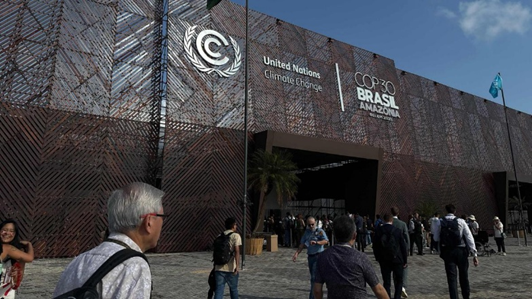
- During the 30th session of the United Nations Climate Change Conference (COP 30) COP30 held in Belém, global adaptation indicators under the UAE Framework for Global Climate Resilience placed water, sanitation and hygiene (WASH) systems at the core of climate adaptation strategies, marking a paradigm shift by establishing water as the central pillar of global climate adaptation.
How Climate Change Affects Water Systems
Climate change acts as a “threat multiplier” by disrupting the natural balance of the hydrological cycle.
- Intensification of Extreme Events (Flood–Drought Paradox): Rising temperatures intensify the water cycle; warmer air holds about 7% more moisture per 1°C increase, leading to short bursts of intense rainfall followed by prolonged dry spells.
- This results in simultaneous urban flooding and rural droughts. Urban areas with heavy concrete sealing cannot absorb rainfall, worsening floods.
- Examples: The 2023 North India floods and recurring floods in Chennai illustrate how extreme rainfall combined with poor drainage causes disasters, while regions like Marathwada in Maharashtra frequently face crop failures due to delayed or failed Southwest Monsoons.
- Himalayan Glacial Destabilisation (“Third Pole” Crisis): The Himalayas—often called the “Third Pole”—feed major perennial river systems such as the Ganga River, Brahmaputra River, and the Indus.
- Climate warming accelerates glacier melting. Initially this increases river flows and flood risks, but over time it depletes the natural “water bank,” threatening the perennial nature of these rivers. Retreating glaciers also form unstable lakes, increasing the risk of Glacial Lake Outburst Floods (GLOFs).
- Example: The 2023 South Lhonak Lake outburst in Sikkim damaged the Teesta-III hydropower project, highlighting risks to Himalayan infrastructure.
- Coastal Vulnerability and Saline Intrusion: Sea-level rise pushes saltwater into freshwater aquifers, a process known as saline intrusion, contaminating groundwater used for drinking and irrigation. It also increases soil salinity in delta regions, reducing agricultural productivity.
- Example: In the Sundarbans, rising sea levels and cyclones have forced farmers to shift from traditional rice cultivation to salt-tolerant crops or shrimp farming, which further degrades soil quality.
- Agricultural Stress and the Water–Food–Climate Nexus: Agriculture depends heavily on water and is both affected by and contributes to climate change. Traditional flooded paddy cultivation contributes around 10–15% of global methane emissions, while changing monsoon patterns disrupt crop cycles.
- Over 50% of India’s net sown area remains rain-fed, making it highly vulnerable to shifts in the onset, progress, and withdrawal of the monsoon.
- Example: The 2024 heatwaves followed by erratic rains in Punjab and Haryana reduced wheat yields, affecting national food stocks and contributing to food inflation.
- Water–Energy Feedback Loop: Climate change increases dependence on groundwater extraction when surface water fails, requiring significant electricity for pumping.
- This electricity often comes from coal-based power plants, creating a feedback loop where higher energy use increases greenhouse gas emissions and further intensifies climate change.
- Example: In states like Tamil Nadu and Telangana, groundwater levels have fallen to 300–500 metres, leading to a sharp rise in agricultural electricity consumption and deepening the water-energy-climate cycle.
Belém Adaptation Indicators
The 59 Belém Adaptation Indicators, adopted under the UAE Framework for Global Climate Resilience redefines Water Security, moving the focus away from simple “asset creation” toward the functional reliability of systems under intense climate stress. It is structurally divided into two primary strategic clusters:
- Cluster 1 – Climate-Resilient WASH Systems: Focuses on mitigating climate-induced water scarcity and building resilience to floods/droughts. The objective is universal access to safe drinking water by ensuring infrastructure can withstand extreme events without service disruption.
- Cluster 2 – Proactive Risk Governance: Focuses on institutional preparedness. It sets a 2027 deadline for universal multi-hazard early warning systems and a 2030 deadline for updated national vulnerability assessments.
Significance of Water-Centric Climate Resilience
Water is the primary medium through which the impacts of climate change are felt, acting as the “connective tissue” between environmental stability and human survival.
Urban water bodies—lakes, wetlands, and tanks—are not mere aesthetic features; they are critical blue-green infrastructure essential for Regenerative Urbanism” (letting nature manage the water cycle by soaking up, storing, and cleaning water where it falls, rather than simply draining it away.)
Defining Blue-Green Infrastructure (BGI): Unlike “Grey Infrastructure” (concrete drains and pipes), BGI is a strategically planned network of natural and semi-natural areas.
- “Blue” refers to water bodies like rivers, lakes, and wetlands.
- “Green” refers to land-based elements like parks, trees, and gardens.
- The Primary Climate Messenger: Climate change is experienced most viscerally through the hydrological cycle. It manifests as a “trilemma” of water extremes: too much (flash floods), too little (chronic droughts), or the wrong kind (salinity in coastal aquifers). Resilience, therefore, depends on systems that can manage these rapid transitions without service disruption.
- Natural Flood Mitigation and Buffering: Urban wetlands and lakes serve as “natural sponges” that absorb and detain excess stormwater during heavy rains. By reducing surface runoff, they protect low-lying neighborhoods from inundation.
- Data Point: Historical loss of water bodies in Chennai and Mumbai has been directly linked to the increased frequency of catastrophic urban floods.
- Groundwater Recharge and Aquifer Replenishment: Water bodies act as critical “entry points” for rainwater to percolate into the ground. In cities where “concrete sealing” has blocked natural recharge, these zones are vital for replenishing drying aquifers.
- Data Point: In Bengaluru, the water table has plummeted from 28m to over 300m in just 20 years due to the disappearance of nearly 79% of its water bodies between 1973 and 2016.
- Micro-Climate Regulation and Heat Mitigation: Through the process of evapotranspiration, water bodies moderate ambient temperatures. This is a primary defense against the Urban Heat Island (UHI) effect, where dense concrete cores become significantly hotter than surrounding areas.
- Validation: Research shows that the loss of lakes in Bengaluru contributed to a 1.5°C rise in local temperatures over two decades.
- Water Purification and Ecological Filtration: Wetlands act as the “natural kidneys” of an urban region, filtering pollutants, sediments, and excess nutrients from wastewater.
- Global Benchmark: The East Kolkata Wetlands (EKW) naturally treat over 900 million litres of wastewater daily, simultaneously supporting local fisheries and agricultural economies without expensive chemical plants.
- Preservation of Biodiversity and Ecological Corridors: Lakes and wetland fringes serve as biodiversity hotspots and ecological corridors within “grey” urban landscapes. They provide essential breeding grounds for amphibians, fish, and migratory birds, maintaining the urban food web and ecological balance.
- Case Study: The Neknampur Lake in Hyderabad used “floating treatment wetlands” to restore habitats, successfully reviving local bird and amphibian populations.
Key Challenges Hindering Water-Centric Climate Resilience
India’s urban population is projected to hit 675 million by 2035. However, the 2023 Waterbody Census reveals that only 2.9% of India’s 2.4 million water bodies are in urban areas, many of which are “not in use” due to pollution and encroachment.
1. Systemic Scarcity and Infrastructure Vulnerability: Water scarcity in India is unevenly distributed and managed. Most water infrastructure is built for average weather, meaning it is rarely “stress-tested” for extreme climate events. When record floods or droughts hit, these rigid systems often fail.
- Core Issue: The focus remains on expanding the number of connections rather than ensuring diversification of sources and system redundancy (backup capacity) for emergencies.
2. Uncertain and Fragile Adaptation Finance: While global targets aim for $1.3 trillion annually by 2035, actual funding remains unreliable. A major mindset barrier is that water projects are treated as “sectoral costs” (basic municipal expenses) instead of high-value “climate investments.”
- Core Issue: Without predictable finance, cities focus on “post-disaster recovery” (reactive) rather than “long-term resilience planning” (proactive).
3. Anthropocentric vs. Eco-centric Conflicts: Many “revival” projects prioritize cosmetic beautification—such as granite jogging tracks, fences, and fountains—over ecological restoration. These “hard” interventions often destroy the hydrological functions of the water body, like its ability to recharge groundwater or filter pollutants.
4. Institutional Fragmentation and Silos: Water governance is split across multiple agencies with overlapping jurisdictions. For example, Revenue Departments own the land, Pollution Boards monitor quality, and Urban Local Bodies (ULBs) manage supply.
- Core Issue: This lack of coordination causes “implementation paralysis,” where one department’s cleaning efforts are neutralized by another department’s drainage or construction decisions.
5. Digital Gaps and Fragmented Data: India has massive amounts of hydrological data, but it is fragmented and isolated within different departments. There is very little AI-driven, real-time integration of weather and water data into local planning or budgeting.
- Core Issue: Without interoperable platforms, city managers cannot perform real-time monitoring or use climate-stress indicators to make quick, data-backed decisions.
Global Best Practices
| Case Study | Location | Key Innovation/Model |
| Jakkur Lake | Bengaluru | Integrated Model: Combines a sewage plant with a natural wetland to clean water. |
| East Kolkata Wetlands | West Bengal | “Natural Kidneys”: Treats 900 million liters of wastewater daily while supporting local fisheries. |
| Neknampur Lake | Hyderabad | Nature-based Solutions (NbS): Used “Floating Treatment Wetlands” made of recycled materials. |
| Cheonggyecheon | Seoul, S. Korea | Greenway Model: Removed a highway to restore a buried stream; lowered local heat by 3-5°C. |
| Singapore/China | Sponge City Model: Utilizing naturalized rivers and floodplains (e.g., Bishan-Ang Mo Kio Park) to manage stormwater via infiltration and detention. | |
Major Government Initiatives for Water-Centric Resilience
- Integrated Water Governance: The Ministry of Jal Shakti was created to integrate and streamline water-related departments, enabling coordinated management of water resources.
- Groundwater Management: The National Aquifer Mapping and Management Programme focuses on scientific mapping of aquifers and sustainable groundwater utilisation.
- Drinking Water Security: The Jal Jeevan Mission aims to provide functional household tap connections to rural households, ensuring safe drinking water access.
- River Rejuvenation: The National Mission for Clean Ganga works towards restoration, pollution control, and ecological conservation of the Ganga river basin.
Way Forward: A Regenerative Roadmap for Water Resilience
1. Policy Convergence & Institutional Integration: Instead of reinvention, India must align existing missions like Jal Jeevan, AMRUT 2.0, and Smart Cities with the Belém Indicators.
- Institutional Strength: Building on the 2019 consolidation of water governance under the Ministry of Jal Shakti, India is well-positioned for integrated stewardship.
- Key Action: Integrate Climate Stress Metrics into mission dashboards to track how infrastructure performs during extreme weather events.
2. Integrated Hydrological Planning: Cities must stop treating lakes as isolated “assets” or real estate spots. Lake Management Plans (LMPs) should be legally integrated into City Master Plans.
- Utilize National Aquifer Mapping and Management (NAQUIM) Programme 2.0 data to move from simple mapping to implementing aquifer-level management plans grounded in hydrogeological knowledge.
- Key Action: Protect the entire catchment area and feeder channels (inlet/outlet drains) to ensure water actually reaches the urban basins.
3. Adopting the “Sponge City” Framework: Urban design should shift from “draining” water to “absorbing” it. Cities must be designed to act like a sponge—absorbing, storing, and purifying rainwater.
- Key Action: Deploy Nature-based Solutions (NbS) like permeable pavements, bioswales, and rain gardens to reduce runoff and prevent urban flooding.
4. Mainstreaming a Circular Water Economy
Shift from a “linear” (use and throw) to a “circular” (reduce-recycle-reuse) model. Treated sewage must be viewed as a valuable resource for rejuvenating local water bodies.
- Key Action: Mandate the reuse of treated wastewater for industrial and cooling purposes to reduce the extraction of fresh groundwater.
5. Climate Stress-Testing of Infrastructure: All water infrastructure—including dams, pipes, and drains—must be “stress-tested” for extreme scenarios.
- Key Action: Ensure designs can handle “1-in-100-year” flood events, moving beyond historical average rainfall data to account for future climate volatility.
6. Digital Public Infrastructure & AI Integration: Leverage India’s technology prowess to create interoperable digital platforms that connect sensors with decision-makers.
- Key Action: Use Artificial Intelligence (AI) to link real-time weather forecasts directly to city water management systems for proactive disaster response.
7. Community Stewardship & Protecting the “Commons”: Resilience is only successful if it is inclusive. Local governance should move toward a stewardship model that protects the rights of traditional users.
- Key Action: Empower Mohalla Samitis and local NGOs (e.g., PNLIT in Bengaluru) to lead governance, ensuring that fisherfolk and farmers maintain access to water bodies as shared heritage.
Conclusion
Climate change is fundamentally a water challenge, as disruptions in the hydrological cycle intensify floods, droughts, and water insecurity. By shifting from simple asset creation to systemic resilience and aligning domestic missions with the Belém indicators, India can build a scalable model for the Global South while advancing the goals of Water Vision 2047.