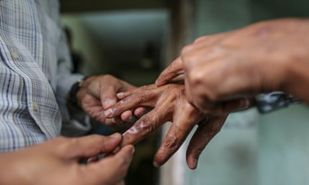
Why in the News
- The issue of discriminatory provisions against persons with leprosy has gained urgency recently, prompted by the Supreme Court of India’s intervention to combat stigma and discrimination.
- Following a direction from the Court, the National Human Rights Commission (NHRC) submitted a report detailing that as many as 97 central and State laws continue to contain provisions that discriminate against those affected.
- The need for a corrective action against these antediluvian provisions has been strongly emphasized, especially given the current state of medical advancements regarding the disease.
Background and Context: Leprosy and Discrimination
The problem of discrimination is rooted in a history of fear, misinformation, and ancient beliefs regarding the disease, despite modern science rendering it curable and non-infectious.
Understanding Leprosy in India
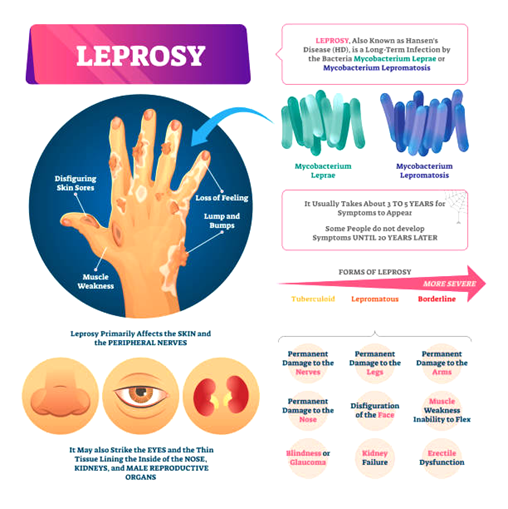
- Causative Agent: Leprosy is primarily caused by the bacterium, Mycobacterium leprae.
- Historical Context: It is among the earliest known infections to affect humans, with skeletal evidence dating back to 2000 BCE.
- Global Burden: Today, India continues to report about 57% of leprosy cases worldwide.
- Susceptibility: Genetic predisposition and living in unsanitary conditions are noted as factors that raise susceptibility.
- Medical Status: Due to a plethora of medical advancements, leprosy is now considered a non-infectious condition and can be fully curable with the right interventions.
Scope of Legal Discrimination
The provisions found across central and State statutes, which were being challenged through a batch of petitions, deny persons with leprosy access to fundamental rights and basic necessities:
- Denial of Access: Access to things as basic as public transport and public spaces is often denied.
- Political Rights: The right to run for elected office is restricted.
- Economic Rights: Access to employment or the ability to run a business venture is often impeded.
NHRC’s Pursuit of Justice
- The NHRC has been actively pursuing this issue since 2021 and previously released a comprehensive document with key recommendations.
- The recommendations aimed to ensure dignity and equal access to fundamental rights for persons with leprosy through:
- Early identification and timely treatment.
- Rehabilitation.
- Removing discriminatory practices.
Way Forward: Systematic Efforts for Remedial Action
A systematic and multi-pronged approach is urgently required to eliminate the stigma and remove the outdated legal barriers that impede the lives of persons with leprosy.
- Immediate repeal or suitable amendment of the 97 identified discriminatory provisions across Central and State laws must be undertaken by the Union Government and all State Governments on a war footing.
- Comprehensive anti-discrimination legislation specifically addressing leprosy-related stigma, replacing all derogatory terminology with dignified and scientific language, must be enacted without further delay.
- Nationwide awareness campaigns to dispel myths and misinformation about leprosy transmissibility and curability must be launched through schools, media and healthcare systems.
- Early detection, free multi-drug therapy and complete treatment must be ensured through strengthened primary healthcare and the National Leprosy Eradication Programme.
- Economic rehabilitation, skill development and livelihood support programmes for leprosy-affected persons and their families must be expanded and adequately funded.
- The Unique Identification Authority of India (UIDAI) has been given a pointed recommendation to promote the use of iris scans for Aadhaar enrolment, given that leprosy primarily affects the fingertips through nerve damage.
- Regular monitoring and reporting mechanism involving NHRC, Ministry of Health and civil society organisations must be established to prevent future legislative discrimination.
- Systematic efforts are required to eliminate stigma, which is often seeded by fear, misinformation or ancient beliefs, and to remove the discriminatory attitudes towards those affected.
Conclusion
- In an era where medical science has rendered leprosy completely curable and non-infectious after timely intervention, the continued existence of nearly a hundred discriminatory laws constitutes an unacceptable failure of the state to uphold constitutional values of equality, dignity and fraternity.
- The Supreme Court’s proactive intervention, combined with evidence-based advocacy by the NHRC, presents a historic opportunity to finally dismantle legal apartheid against leprosy-affected citizens and ensure that no individual is condemned to live in the dark ages because of a treatable medical condition.
UPSC MAINS PYQs
- Appropriate local community-level healthcare intervention is a prerequisite to achieving ‘Health for All’ in India. Explain. (2018)