Context
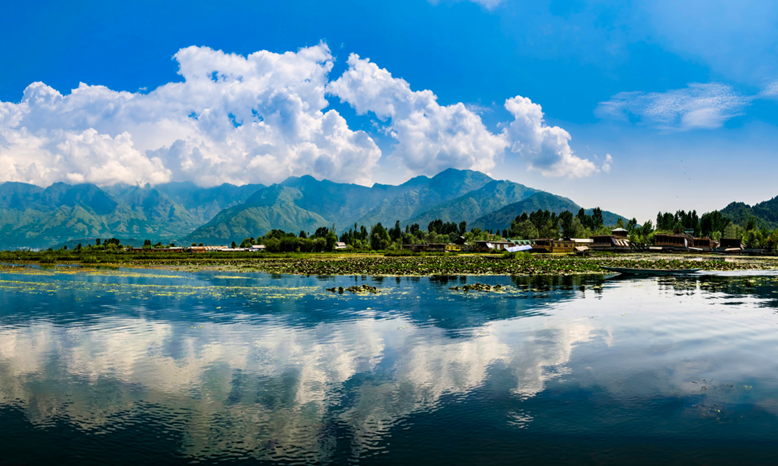
Recently, a report by the Comptroller and Auditor General of India (CAG) titled ‘Conservation and Management of Lakes’ revealed that out of 697 lakes in Jammu and Kashmir, 518 have either vanished or significantly shrunk as of March 2022.
The report highlights that 315 lakes have completely disappeared due to human activities, siltation, and land-use changes, leading to an increased risk of extreme weather events like the 2014 floods. It pointed out that various government departments failed to carry out detailed surveys or formulate comprehensive management programs for these critical water bodies.
1. The Institution of CAG
The CAG is an independent authority under the Constitution of India, acting as the guardian of the public purse and a key pillar of democratic accountability.
- Constitutional Provisions: Article 148 provides for an independent office of the CAG, appointed by the President by warrant under his hand and seal.
- Tenure and Removal: The CAG holds office for a period of 6 years or up to the age of 65 years, whichever is earlier, and can be removed only on grounds of “proved misbehaviour or incapacity” in a manner similar to a Judge of the Supreme Court.
- Duties (Article 149): The CAG audits all receipts and expenditures of the Union and the States, including bodies substantially financed from the Consolidated Fund.
- Performance Audit: Unlike a regular financial audit, the CAG also conducts “Performance Audits” to assess whether government programs (like the Lake Conservation in J&K) have achieved their objectives with economy, efficiency, and effectiveness.
2. Ecological Significance of Lakes
Lakes and wetlands are vital components of the hydrological cycle and provide several ecosystem services:
- Flood Regulation: They act as natural sponges and “flood balancing reservoirs” by absorbing excess runoff during heavy rainfall.
- Groundwater Recharge: They facilitate the percolation of water into the subsurface aquifers.
- Biodiversity: They serve as habitats for diverse aquatic flora and fauna and migratory birds.
3. Key Issues in J&K Lake Management
The CAG report identifies specific administrative failures:
- Lack of Baseline Data: No detailed physical, chemical, or biological surveys were conducted for 697 lakes, preventing the creation of effective development plans.
- Anthropogenic Pressure: Unregulated construction and land-use changes have led to the loss of open water areas.
- Limited Coverage: Management programs were active for only six major lakes (Dal, Wular, Hokersar, Manasbal, Surinsar, and Mansar), leaving hundreds of smaller high-altitude lakes vulnerable.
| Major Lakes in Jammu & Kashmir (J&K) Lakes in this region are primarily freshwater and often formed by tectonic activity or the meandering of rivers. Wular Lake: Located in the Bandipora district, it is one of the largest freshwater lakes in Asia. It was formed due to tectonic activity and is fed by the Jhelum River. It is a designated Ramsar Site.Dal Lake: Known as the “Jewel in the Crown of Kashmir,” this post-glacial lake in Srinagar is famous for its houseboats and “Shikaras.” It is currently being integrated into a protective wetland framework. Char Chinar, also known as Rupa Lank or Silver Island, is the most famous island located in the middle of Dal Lake.Manasbal Lake: Located in the Ganderbal district, it is considered the deepest lake in India. It is famous for the growth of lotus (Nelumbo nucifera) during the summer.Nigeen Lake: Often considered an extension of Dal Lake, it is a mildly eutrophic lake connected to the Dal via a narrow strait.Surinsar and Mansar Lakes: These are twin lakes located in the Jammu region. They are designated as a single Ramsar Site due to their ecological importance and spiritual significance.Hokersar (Hokera) Wetland: A critical bird sanctuary and Ramsar site near Srinagar, acting as a major stopover for migratory birds from Central Asia and Siberia. Major Lakes in Ladakh Ladakh is characterized by high-altitude, endorheic (closed) basins. Many of these lakes are saline because water evaporates without an outlet, leaving minerals behind. Pangong Tso: A long, narrow, endorheic saline lake situated at an altitude of about 4,350m. It gained global attention due to its proximity to the Line of Actual Control (LAC). About 60% of its length lies in China.Tso Moriri (Mountain Lake): This is the largest high-altitude lake entirely within India. It is a Ramsar Site and supports unique biodiversity, including the bar-headed goose and the black-necked crane.Tso Kar (White Lake): Known as the “White Lake” due to the white salt efflorescence on its margins. It is part of the Tso Kar Wetland Complex, which was added as India’s 42nd Ramsar Site.Kyagar Tso: A small, brackish-saline lake located in the Rupshu Valley, identifiable by its distinct turquoise color. |
Q. With reference to the Comptroller and Auditor General (CAG) of India and environmental auditing, consider the following statements:

1.The CAG derives its audit mandate from Article 149 of the Constitution of India and the CAG’s (DPC) Act, 1971.

2. Performance audits conducted by the CAG are restricted only to the financial records of the Union government and do not extend to state-level environmental projects.

3. The CAG submits its audit reports relating to the accounts of a State to the Governor, who causes them to be laid before the State Legislature.

How many of the statements given above are correct?
(a) Only one
(b) Only two
(c) All three
(d) None

Solution: Answer: (b)

• STATEMENT 1 IS CORRECT: The CAG's duties and powers regarding the audit of accounts are prescribed under Article 149 and the Duties, Powers and Conditions of Service (DPC) Act, 1971.

• STATEMENT 2 IS INCORRECT: Performance audits are a core function of the CAG and extend to both Union and State government programs, including environmental conservation schemes like the one mentioned in the J&K report.

• STATEMENT 3 IS CORRECT: According to Article 151, the reports of the CAG relating to the accounts of a State are submitted to the Governor, who then places them before the State Legislature.