
Why in the News?
- In November 2025, the world converges on Belem, a city nestled in the heart of the Amazon rainforest, for the 30th Conference of the Parties (COP30) to the United Nations Framework Convention on Climate Change (UNFCCC).
- This summit isn’t just another diplomatic gathering—it’s dubbed a “moment of truth” where nations must translate lofty promises into tangible actions amid rising seas, devastating wildfires, and extreme weather events.
Why COP30 is Making Headlines
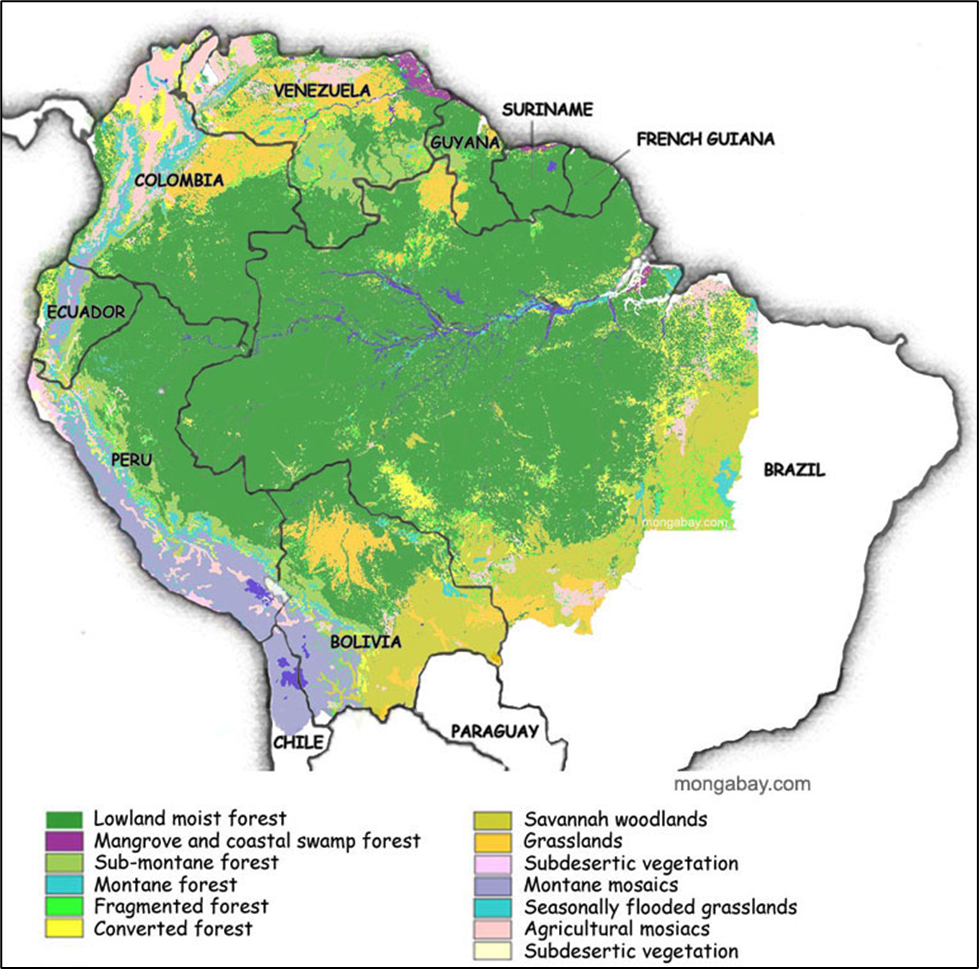
- Strategic Location in the Amazon: Hosting the event in Belem underscores the rainforest’s critical role as a global carbon sink, absorbing billions of tons of CO2 annually. It’s a bold move by Brazil to highlight how deforestation threatens not just local ecosystems but planetary stability.
- Escalating Climate Urgency: As extreme weather intensifies—from floods in Europe to heatwaves in Asia—COP30 arrives at a time when global temperatures have already breached 1.5°C in some months, pushing leaders to confront the gap between commitments and reality.
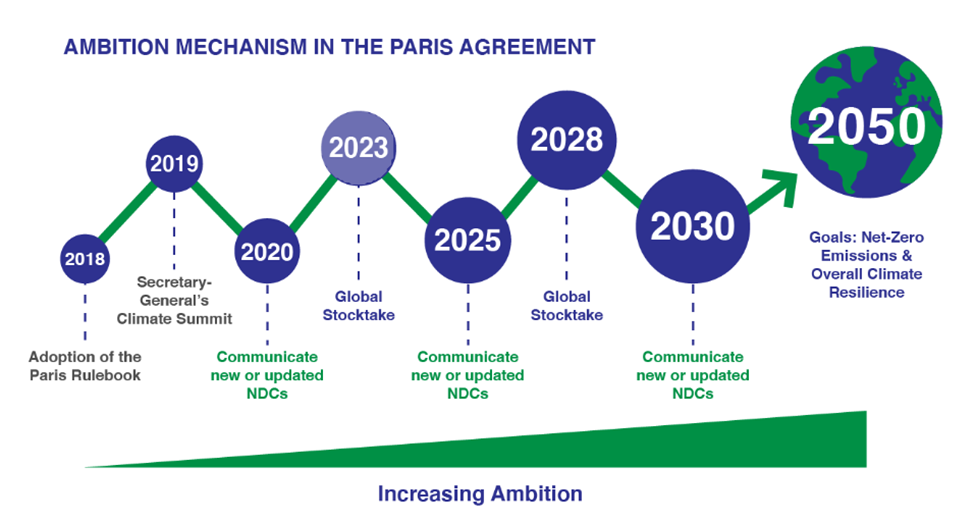
- From Pledges to Progress: Building on milestones like the 1992 Rio Earth Summit (which birthed the UNFCCC) and the 2015 Paris Agreement, this COP demands updated Nationally Determined Contributions (NDCs) that align with limiting warming to 1.5°C.
Imagine the Amazon as Earth’s lungs: it’s home to 10% of the world’s biodiversity and regulates rainfall patterns across South America. Yet, scientists warn of a tipping point—if deforestation hits 20-25% or temperatures rise 2-4°C, vast swathes could turn into dry savannah, releasing stored carbon and accelerating climate chaos.
Historical Context and Global Frameworks
- The roots of COP30 trace back to foundational environmental pacts. The UNFCCC, established in 1992, promotes “common but differentiated responsibilities” (CBDR), recognizing that developed nations, with their historical emissions, bear more burden than developing ones. The Paris Agreement amplified this by committing countries to voluntary NDCs, reviewed every five years, with a focus on mitigation, adaptation, and finance.
- Brazil’s role adds a layer of intrigue. As a BRICS member and G20 leader, it has halved deforestation rates under recent policies, positioning itself as a bridge between the Global North and South. This echo’s broader themes in international relations, where climate talks intersect with trade, security, and human rights.
Key Issues and Agendas at COP30
COP30’s agenda revolves around ramping up ambition, securing funds, and ensuring justice.
| Agenda Item | Core Focus Areas | Expected Outcomes and Innovations |
| NDC Ambition | Aggressive cuts in greenhouse gases (GHGs), enhanced transparency, and long-term strategies aiming for net-zero by mid-century. | Nations to submit revised NDCs for 2035, with Brazil pledging 59-67% emission reductions from 2005 levels. Emphasis on robust monitoring via the Enhanced Transparency Framework. |
| Climate Finance | Mobilizing $1.3 trillion annually for developing countries, including grants for adaptation and debt relief. | Launch of innovative models like Brazil’s Tropical Forests Forever Facility (TFFF), a $125 billion fund rewarding forest conservation through performance-based payments, backed by a $1 billion Brazilian pledge. This shifts from charity to investment. |
| Fossil Fuel Phase-Out | Setting clear timelines to end coal, oil, and gas dependency, while scaling renewables. | Push for global commitments, inspired by COP28’s UAE Consensus. Brazil’s renewable energy surge (e.g., hydropower and biofuels) could inspire transitions in oil-reliant economies. |
| Adaptation and Justice | Strengthening resilience for vulnerable nations, operationalizing the Loss and Damage Fund, and integrating indigenous knowledge. | Focus on equity, with calls for reforms in global institutions. Indigenous groups from the Amazon will advocate for rights, linking to broader biodiversity goals under the Convention on Biological Diversity (CBD). |
These agendas aren’t isolated—they tie into Sustainable Development Goals (SDGs), like SDG 13 (Climate Action) and SDG 15 (Life on Land). For instance, the TFFF innovates by treating forests as assets, offering returns to investors while funding conservation, a fresh take on blending economics with ecology.
India’s Stake in COP30
As a rapidly growing economy vulnerable to climate impacts—like erratic monsoons and coastal erosion—India approaches COP30 with a mix of ambition and pragmatism. A signatory to the UNFCCC and Paris Agreement, India champions CBDR, demanding technology transfers and finance from developed nations to fuel its green transition.
- Renewable Energy Push: India’s National Solar Mission and targets for 500 GW of non-fossil capacity by 2030 mirror Brazil’s shift to renewables, offering lessons in policy integration.
- Forest Governance Lessons: The Amazon’s challenges highlight the need for strong legal frameworks, credible monitoring (e.g., via satellite tech), and indigenous involvement—relevant for India’s own forests under the Forest Rights Act, 2006.
- Diplomatic Balancing: India will advocate for updated NDCs that prioritize development, while pushing for the Loss and Damage Fund to address disasters like the 2023 Himalayan floods.
- Broader Relevance: This aligns with India’s LiFE (Lifestyle for Environment) initiative, promoting sustainable living, and its role in groups like G77+China for climate justice.
NOTE: Think of this as a case study in how climate diplomacy influences India’s foreign policy, from bilateral ties with Brazil to multilateral forums.
Challenges Ahead
Despite the optimism, COP30 faces headwinds:
- Finance Gaps: Developed nations have fallen short on the $100 billion annual pledge from 2009, eroding trust and stalling progress in the Global South.
- Implementation Deficits: Ambitious NDCs often lack enforcement, leading to “greenwashing.” Global bodies like the UNFCCC struggle with gridlock, sparking ideas for a new UN Climate Council for accountability.
- Amazon-Specific Risks: Ongoing illegal logging, mining, and weak policies threaten the region, despite Brazil’s efforts. Conflicting interests, like agribusiness, complicate enforcement.
- Geopolitical Tensions: Rising protectionism and conflicts (e.g., in Ukraine) divert attention from climate goals, while unequal vaccine access during COVID-19 highlighted justice issues that persist in climate talks.
These hurdles underscore the need for reforms, perhaps integrating climate into UN Security Council discussions for binding resolutions.
The Way Forward: Turning Talk into Transformation
COP30 could redefine climate governance by centering forests, equity, and innovation. Success hinges on:
- Policy Enforcement: Strengthening national laws and international oversight to close the ambition-action gap.
- Collaborative Frameworks: Enhancing UNFCCC with tech-sharing platforms and indigenous-led initiatives.
- Public Engagement: Mobilizing citizens through education and incentives, making climate action a shared responsibility.
For India and the world, this summit is a reminder that sustainability isn’t optional—it’s essential for growth. By learning from the Amazon, nations can safeguard biodiversity, regulate climates, and protect livelihoods. As we edge closer to irreversible tipping points, COP30 isn’t just about survival; it’s about thriving in a resilient future. Source: In Brazil, COP30 and the moment of truth – The Hindu
UPSC CSE PYQ
| Year | Question |
| 2025 | Write a review on India’s climate commitments under the Paris Agreement (2015) and mention how these have been further strengthened in COP26 (2021). In this direction, how has the first Nationally Determined Contribution (NDC) intended by India been updated in 2022? |
| 2021 | Describe the major outcomes of the 26th session of the Conference of the Parties (COP) to the United Nations Framework Convention on Climate Change (UNFCCC). What are the commitments made by India in this conference? |
| 2017 | Climate change’ is a global problem. How will India be affected by climate change? How Himalayan and coastal states of India will be affected by climate change? |