Context
Recently, the Defence Acquisition Council (DAC), chaired by Union Defence Minister Rajnath Singh, accorded the Acceptance of Necessity (AoN) for capital acquisition proposals worth approximately ₹3.60 lakh crore.
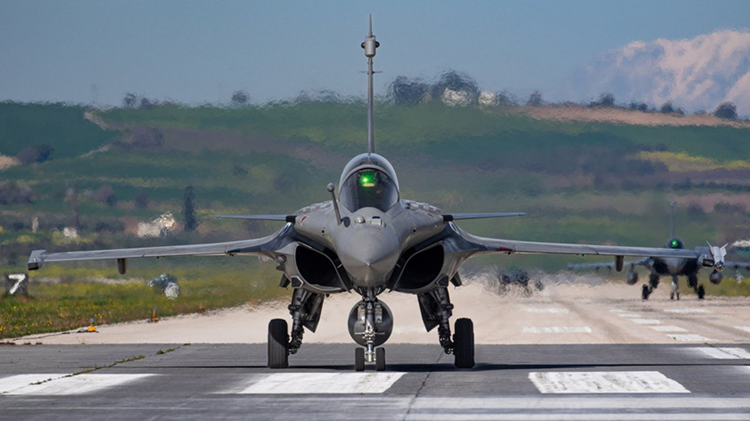
The most prominent approvals include the procurement of 114 Multi-Role Fighter Aircraft (MRFA), specifically the Rafale, for the Indian Air Force and six additional Boeing P-8I Poseidon long-range maritime reconnaissance aircraft for the Indian Navy.
1. The 114 Rafale (MRFA) Project
- Operational Need: The Indian Air Force (IAF) currently operates about 29-30 squadrons, far below the sanctioned strength of 42 squadrons.
- Procurement Model: Out of the 114 jets, approximately 18 will be in fly-away condition from France, while the remaining 96 will be manufactured in India through a collaboration between Dassault Aviation and Indian partners (HAL/Private sector).
- Indigenous Content: The deal mandates nearly 50-60% indigenous content, supporting the Atmanirbhar Bharat initiative.
- Capabilities: The Rafale is a 4.5-generation “omni-role” aircraft equipped with the Meteor (Beyond Visual Range air-to-air), SCALP (cruise missile), and MICA missile systems.
2. P-8I Poseidon Maritime Aircraft
- Function: The P-8I is a Long-Range Maritime Reconnaissance and Anti-Submarine Warfare (LRMR-ASW) aircraft.
- Manufacturer: It is manufactured by Boeing (USA) and is a variant of the P-8A Poseidon used by the US Navy.
- Equipment: It features a Magnetic Anomaly Detector (MAD) (specific to the Indian version), AGM-84 Harpoon anti-ship missiles, and Mk-54 lightweight torpedoes.
- Strategic Role: These aircraft are “force multipliers” in the Indian Ocean Region (IOR), used for surveillance, search and rescue, and tracking enemy submarines.
3. Defence Acquisition Council (DAC)
- Authority: The DAC is the highest decision-making body in the Ministry of Defence for new acquisitions.
- Composition: It is chaired by the Union Minister of Defence and includes the Chief of Defence Staff (CDS) and the three Service Chiefs.
- The AoN Step: The Acceptance of Necessity (AoN) is the initial regulatory hurdle. It does not mean a contract is signed but signals that the government agrees the equipment is a necessity.





Q. With reference to the recent approvals by the Defence Acquisition Council (DAC), consider the following statements:

1. The 'Acceptance of Necessity' (AoN) granted by the DAC represents the final financial clearance and the signing of the procurement contract.

2. The P-8I aircraft is a multi-mission platform primarily designed for long-range anti-submarine warfare and maritime surveillance.

3. Under the current MRFA proposal for 114 Rafales, the majority of the aircraft are intended to be manufactured within India.

Which of the statements given above are correct?

(a) 1 and 2 only
(b) 2 and 3 only
(c) 1 and 3 only
(d) 1, 2 and 3

Correct Answer: (b)

Explanation
•	STATEMENT 1 IS INCORRECT: The AoN is only the first step in the procurement process. Final financial approval is granted by the Cabinet Committee on Security (CCS), chaired by the Prime Minister, after cost negotiations.
•	STATEMENT 2 IS CORRECT: The P-8I Poseidon is indeed a specialized aircraft for Anti-Submarine Warfare (ASW) and maritime reconnaissance.
•	STATEMENT 3 IS CORRECT: A major highlight of the 114-jet MRFA deal is the indigenization aspect, where 96 of the jets are slated for domestic production.