Why in the News
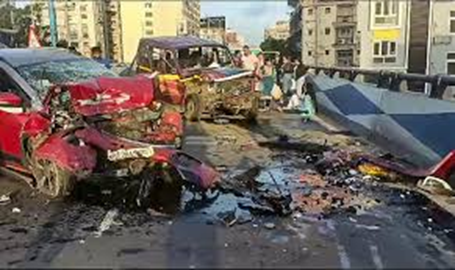
Recently, a tragic highway accident near Chevella, close to Hyderabad, claimed 19 lives after a gravel-laden truck swerved to avoid a pothole and collided with a bus. The incident highlighted yet again the grim and recurring pattern of fatal road accidents in India and the urgent need for infrastructure reform and licensing overhaul.
Background
- India records one of the highest numbers of road fatalities globally, with over 400 deaths per day — roughly equivalent to the crash of a full transcontinental flight daily.
- Despite the alarming frequency, road crashes rarely spark institutional reform or urgent action comparable to aviation disasters.
- The Chevella tragedy exemplifies systemic failures — poor infrastructure, inadequate driver testing, and lack of enforcement of safety standards.
The Chevella Accident — A Snapshot
- The truck driver attempted to avoid a pothole and rammed into a passenger bus.
- The road lacked dividers, streetlights, and proper signages — basic safety requirements on a National Highway (NH-163).
- The crash underscores how infrastructural neglect combines with human error to create fatal outcomes.
Key Issues Highlighted
- Human Error and Systemic Neglect
- Government documents often identify human error as the leading cause of accidents.
- However, deeper structural and vehicular issues remain unaddressed, including poor road design and weak vehicle monitoring systems.
- Faulty Licensing System
- Driving licence tests in India focus mainly on basic vehicle-handling skills rather than safe driving practices or awareness of road safety rules.
- No mandatory safety training is required before obtaining a licence.
- In contrast, countries with better safety records include tests that filter out risky behaviors like tailgating and arbitrary lane changes.
- Corruption and Inefficiency in RTOs
- The current system of certifying and monitoring drivers and vehicles is described as “broken and corrupt.”
- Navigating Regional Transport Offices (RTOs) is an unpleasant experience for most citizens, further eroding compliance and transparency.
- Faulty Infrastructure and Poor Compliance
- One in five accidents are head-on collisions, even on four-lane highways — a clear indication of wrong-side driving and absence of proper road dividers.
- States have failed to mandate compliance with Indian Roads Congress (IRC) guidelines, as required under the Motor Vehicles Act.
- Common road defects include:
- Potholes and dangerous curves
- Poor drainage systems
- Unprotected bridge parapets and concrete objects along highways
- Lack of crash barriers or energy absorbers
- Lack of Pedestrian Infrastructure
- Pedestrians, bus passengers, and two-wheeler riders form the majority of road accident victims.
- The absence of safe sidewalks, crossings, and road discipline continues to make Indian roads a hazard for vulnerable users.
- Deficient Post-Crash Medical Response
- In Hyderabad, victims received immediate medical aid due to nearby healthcare facilities.
- However, in many states — such as Bihar — fatality rates are double because of inadequate trauma care and emergency infrastructure.
Proposed Reforms and Recommendations
- Establish License Seva Kendras
- Suggested by the SaveLIFE Foundation to replicate the model of Passport Seva Kendras, ensuring transparent, digitised, and safety-oriented licence issuance.
- Mandate Safety Training for Drivers
- Introduce compulsory modules on road safety, hazard perception, and defensive driving.
- Rectify Infrastructure Gaps
- Repair potholes, install dividers, streetlights, and warning signages on all highways.
- Install Crash Barriers and Safety Devices
- Mandate collision-risk warning devices on commercial vehicles — relatively low-cost yet effective safety technologies.
- Enhance Pedestrian Safety Measures
- Develop proper footpaths, zebra crossings, and protective infrastructure in both urban and rural areas.
- Ensure Strict Compliance with IRC and MV Act Norms
- Enforce uniform national standards for highway design and safety audit implementation.
- Expand Trauma Care Infrastructure
- Establish accessible emergency medical centres along highways and improve ambulance response systems.
Way Forward
- An urgent overhaul of the road transport system is essential, encompassing infrastructure, licensing, vehicle monitoring, and trauma care.
- Without systemic reforms, road accidents will continue to claim hundreds of lives daily, disproportionately affecting poorer and more vulnerable citizens.
- Road safety must move beyond perfunctory probes to become a sustained national mission rooted in accountability and reform.
Conclusion
The recent Chevella accident underlines the urgent need for a comprehensive overhaul of India’s road transport ecosystem. Strengthening infrastructure standards, licensing procedures, driver education, and trauma response systems must become national priorities. Without institutional accountability and strict enforcement, India’s roads will continue to remain a public hazard, claiming thousands of preventable lives every year.
Road Sector in India
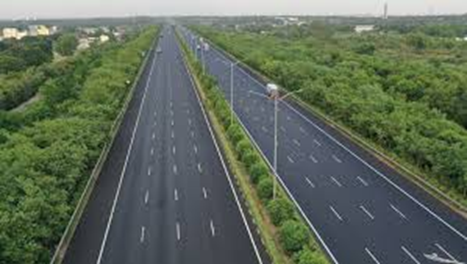
India possesses the second-largest road network in the world, playing a pivotal role in the nation’s economic connectivity and development. The country’s National Highways (NHs) form the primary arterial system, covering a total length of 1,46,145 km.
The Government of India has launched several flagship programs to modernize and expand this network, including the Bharatmala Pariyojana, which subsumes the earlier National Highways Development Project (NHDP) and other key initiatives such as the Special Accelerated Road Development Programme for the North-East Region (SARDP-NE).
Expansion of the National Highway Network
- The length of India’s National Highway network has witnessed remarkable growth:
- 2004: 65,569 km
- 2014: 91,287 km
- 2024: 1,46,145 km
- The length of four-lane and above NH stretches expanded 2.6 times, from 18,371 km in 2014 to 48,422 km in 2024.
- Operational High-Speed Corridors rose dramatically from 93 km in 2014 to 2,138 km in 2024.
- The pace of NH construction also improved substantially, increasing 2.8 times from 12.1 km per day (2014–15) to 33.8 km per day (2023–24).
Global Context
- The total global road length is approximately 3.09 crore km, of which only 1.5 crore km are usable throughout the year.
- The North American continent accounts for 35% of the world’s all-weather roads.
Advantages of Road Transport
- Cost Efficiency: Roads are cheaper to construct, repair, and maintain than railways.
- Door-to-Door Connectivity: Enables direct delivery without additional loading or unloading.
- Suitable for Perishable Goods: Ideal for transporting goods like vegetables and dairy products.
- Accessibility: Facilitates transport even in hilly, remote, and challenging terrains.
- Flexibility: Allows for flexible routes and schedules.
- Short-Distance Efficiency: Best suited for short and medium-distance travel and freight.
Benefits of Road Transport Infrastructure in India
- Robust Demand
- Commercial vehicle production reached 7,52,022 units in FY20, reflecting the growing importance of India’s road transport sector.
- In November 2020, passenger vehicle wholesale sales rose by 9% year-on-year, driven by festive season demand.
- Policy Support
- 100% Foreign Direct Investment (FDI) is permitted in the road sector under the automatic route, subject to regulations.
- In December 2020, the Ministry of Road Transport and Highways (MoRTH) announced plans to develop an additional 60,000 km of National Highways over the next five years.
- In January 2021, MoRTH sought a budgetary allocation of ₹1.4 trillion for FY22, about 40% higher than the FY21 allocation.
- Attractive Opportunities
- The Government aims to build 65,000 km of National Highways at a total cost of ₹5.35 lakh crore (US$ 741.51 billion) by 2022.
- Under the National Infrastructure Pipeline (FY19–25), ₹111 lakh crore (US$ 1.4 trillion) has been earmarked for infrastructure projects, with the road sector accounting for 18% of the total capital expenditure.
- Higher Investments
- Transfer to the National Investment Fund (NIF): Estimated at ₹6,070 crore (US$ 868.51 million) for 2019–20.
- In April 2020, the government targeted road construction worth ₹15 lakh crore (US$ 212.80 billion) over the next two years.
1. National Highways
- Constructed and maintained by the Central Government through the National Highways Authority of India (NHAI).
- Connect state capitals, ports, major cities, and railway junctions.
- Expanded from 19,700 km (1951) to 1,32,500 km (2019).
- Constitutes about 2% of the total road length.
2. State Highways
- Managed by respective State Public Works Departments (PWDs).
- Provide connectivity between National Highways, district headquarters, towns, tourist centres, and minor ports.
- Total length: 1,75,000 km (2016–17), forming 3% of the total network.
3. District Roads
- Constructed and maintained by Zila Parishads and State PWDs.
- Link district headquarters with towns and large villages.
- Most are metalled roads providing accessibility to rural areas.
- Total length: 5,86,000 km (2016–17), accounting for 10% of total roads.
Strategic and Expressway Development
- Border Roads Organisation (BRO)
- Established in 1960, BRO is responsible for constructing and maintaining strategic roads in border and high-altitude areas, especially in the northern and north-eastern regions.
- It also undertakes snow clearance operations and builds roads of strategic military importance.
- Expressways
- The highest class of roads in India’s road hierarchy.
- Designed as controlled-access highways, allowing regulated entry and exit via slip roads.
- As of 2020, 1,642 km of expressways have been completed.
- Government plans to develop 22 new greenfield expressways (7,500 km) by 2025, including:
- The Delhi–Mumbai Expressway (1,320 km), India’s largest, targeted for completion by 2023.
- Built under the Toll-Operate-Transfer (TOT) model, where toll rights are auctioned every 15–20 years.
Challenges in India’s Road Transport
- Deteriorating Infrastructure: Poor road conditions contribute to accidents, reduced fuel efficiency, and higher pollution. In 2023, India recorded 4,80,583 road accidents, causing 1,72,890 deaths and 4,62,825 injuries. Optimal fuel efficiency occurs at 60–80 km/h, but low urban speeds increase fossil fuel use and emissions. India aims to halve road-related fatalities (currently 11% of global deaths) by 2030 under its net-zero 2070 commitment.
- Environmental and Health Concerns: Road transport is a major source of emissions (14% of global GHG in 2018) and urban air pollution, causing 1.67 million pollution-related deaths in 2019. Over 140 million Indians, mostly poor, breathe air exceeding WHO limits tenfold, with vehicles contributing over a quarter of pollution.
- Planning and Design Deficiencies: Poor engineering and design lead to congestion, accidents, and environmental costs. Highways like Delhi-Gurgaon and Dwarka Expressways lacked pedestrian crossings and provisions for two- and three-wheeled vehicles, resulting in early accidents.
- Capacity and Congestion Issues: Road expansions lag behind rising demand. Cities such as Bengaluru face severe congestion (3rd in TomTom Traffic Index 2024). Toll charges divert trucks to congested city roads. Measures like odd-even schemes often increase vehicle ownership instead of reducing congestion.
- Neglected Demand Management: Industrial and stakeholder practices often ignore mobility regulations, burdening poorer commuters. Effective demand management could offer cost-efficient, eco-friendly transport solutions.
- Safety Gaps: Unsafe roads result from inadequate buffer lanes, few crash barriers, and poor signage. Most projects lack integration of origin-to-destination (OD) traffic data with Electronic Toll Collection systems.
- Urban Road Neglect: Urban roads receive less attention than rural roads, causing low speeds, time loss, poor last-mile connectivity, parking problems, and poor coordination with public transport.
- PPP and Administrative Delays: Disputes between authorities and private partners delay projects like widening two-lane roads to four lanes, inconveniencing users.
Way Forward
- Safe Road Design: Ensure roads comply with Indian Roads Congress standards and enhance on-site material testing.
- Adoption of Innovative Technology: Use sensors, intelligent transport systems, and smart infrastructure to improve safety and traffic efficiency.
- Regular Road Maintenance: Prioritize resurfacing, pothole repair, and drainage system upkeep.
- Investment Growth: Explore road bonds, green bonds, and other financing options to attract maximum FDI for highway development.
- Lane Capacity Measurement: Focus on lane kilometers rather than total road kilometers to assess and enhance road capacity effectively.
- Enhanced Public-Private Partnerships (PPPs): Encourage private sector participation in financing, constructing, operating, and maintaining roads.
- Investment Mobilization and Private Participation: Attract private sector investment by revisiting PPP models, including the Hybrid Annuity Model (HAM). Explore financing options such as road bonds and green bonds to make the sector financially appealing for domestic and foreign investors.
- Efficient Execution of Bharatmala Projects: Fast-track land acquisition, environmental clearances, and other statutory approvals to ensure timely project completion.Establish a regulatory body to resolve disputes and arbitration issues promptly, mitigating delays.
- Effective Regulation: Implement and enforce strict standards for materials, safety (fire, evacuation, accessibility), environmental compliance, and vehicle registration policies (BH-series, e-vehicles). Independent inspections and penalties for violations are essential.
- Promotion of Cycling: Encourage cycling to reduce traffic congestion, emissions, and health risks. Cycling improves cardiovascular health, mental wellbeing, and space efficiency, freeing areas for parks and public transport infrastructure.
- Global Example: The Netherlands, with its pan-European Master Plan for Cycling (2021), demonstrates cycling’s triple benefits: boosting local economies via green jobs, enhancing public health, and mitigating climate change.
Key Road Sector Initiatives in India
- PM Gati Shakti National Master Plan (NMP)
- Launched in 2021, the NMP integrates multiple Ministries, including Railways and Roadways, for coordinated planning and execution of infrastructure projects.
- India’s Logistics Performance Index ranking improved from 44 in 2018 to 38 in 2023.
- National Logistics Policy launched in 2022; 26 states have adopted state-level logistics policies.
- Bharatmala Pariyojana
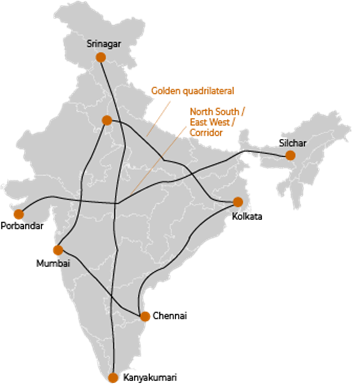
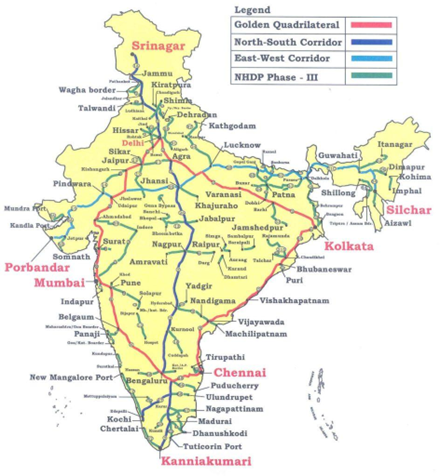
- Initiated in 2017, aims to develop ~26,000 km of Economic Corridors, along with Golden Quadrilateral and North-South & East-West Corridors, to handle most road freight traffic.
- Includes ring roads, bypasses, and elevated corridors to decongest cities and improve logistics efficiency.
- 18,926 km of roads completed by November 2024.
- Plans 35 Multimodal Logistics Parks capable of handling ~700 million metric tonnes of cargo.
- Pradhan Mantri Gram Sadak Yojana (PMGSY)
- Launched in 2000 to connect unconnected habitations, supporting poverty reduction.
- Has inspired similar state-level schemes like Mukhya Mantri Gram Sadak Yojana (MMGSY).
- Rural roads now constitute over 70% of India’s road infrastructure.
- Safety and Sustainability Measures
- Bharat New Car Assessment Programme: Provides safety ratings for passenger cars to empower consumers.
- India Sustainable Mobility Initiative: Aims to provide efficient mobility for 200 million urban dwellers by 2030 and reduce private vehicle use and GHG emissions through high-quality rapid transit, walking, and cycling infrastructure.
- Institutional Developments
- National Highways Authority of India (NHAI): Operational since 1995 to drive National Highway development.
- State Road Development Corporations: States reorganized road development, delinking expressway projects from PWD; Maharashtra led the way.
- National Highways Development Project (NHDP): Started in 1998, expanded in seven phases covering 49,260 km; completed in 2018, with remaining works integrated into Bharatmala Pariyojana.
- Financing and Contract Models
- Public-Private Partnerships (PPP) & Viability Gap Funding (VGF): Encouraged private investment by reducing financial risks.
- Model Concession Agreement (MCA): Introduced in 2000, evolving over time for better risk-sharing between PPP players and authorities.
- New Contracting & Asset Monetisation Models: Include Hybrid Annuity Model (HAM), Toll-Operate-Transfer (TOT), and Infrastructure Investment Trusts (InVITs), complementing traditional EPC and BOT models.