Why in the News?
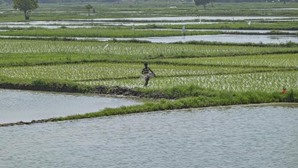
- Recently, a detailed study conducted by eight scientists of the Indian Council of Agricultural Research (ICAR), including its Director-General, Mangi Lal Jat, was published in the England-based international research journal, Land Degradation & Development.
- The study found that the unscientific use of fertilizers and climate change are majorly contributing to the degradation of organic carbon in arable areas across the country.
Key Features and Methodology of the Study
The six-year study, which commenced in 2017, was primarily coordinated by the ICAR’s Indian Institute of Soil Science in Bhopal.
Sample Size and Coverage:
- 2,54,236 soil samples were used to reach the conclusions.
- The samples covered 620 districts across 29 States.
- Both arable and barren land were covered, with the majority being arable land.
- This extensive and well-designed sample collection addresses the issue of very low samples flagged in an earlier United Nations’ Food and Agriculture Organisation (FAO) study approximately 25 years ago.
Significance of Organic Carbon:
- Organic carbon is not only a part of the chemistry of the soil but covers all aspects of the physics, chemistry, and biology of the soil.
- A negative correlation was found between low organic carbon and high deficiency of micronutrients in the soil.
Factors Impacting Soil Organic Carbon (SOC) Dynamics
The ICAR study identified both environmental/climatic and anthropogenic (human-induced) factors influencing SOC concentration.
I. Climatic and Topographical Factors
Temperature, rainfall, and elevation were noted as the three important factors deciding the organic carbon concentration in the soil, irrespective of the crops and cropping patterns.
- Elevation:
- A high correlation was found between organic carbon and elevation.
- If the elevation of the land is high (e.g., hills), the organic carbon content is high.
- If the land moves from hills to low land, the organic carbon content is low.
- Temperature:
- Organic soil carbon is negatively correlated with temperature.
- For example, in regions like Rajasthan and Telangana, where the temperature is very high, the organic carbon content is low.
- Climate change having an impact was noted, with rising temperature increasing the chances of further decline in soil organic carbon in the future.
- Rainfall:
- Rainfall was also established as a factor determining organic carbon, correlating with the phenomenon across the country.
II. Imbalanced Fertilizer Application (Anthropogenic Factor)
- The scientists developed an ‘agri-ecological base’ map to assess the impact of cropping systems and fertilizer use.
- The study found that wherever imbalanced fertilizer application was observed, the organic carbon content in the soil had declined.
- In States like Haryana, Punjab, and parts of western Uttar Pradesh, where fertilizer application was intensified and skewed towards urea and phosphorus, the generally scientific application was found to have negatively impacted soil organic carbon.
Implications
- The decline in SOC due to rising temperatures and imbalanced fertilizer use will not only impact soil health but will also affect carbon credit and heat emission from the soil.
- The map prepared by the scientists, assessing the impact of factors on organic carbon, can be utilized for:
- Making policy decisions.
- Particularly for the carbon credit mechanism.
- Assessing land degradation.
The findings underscore the urgent need for a shift towards balanced fertilizer application and the incorporation of climate change adaptation strategies in agricultural policy planning to preserve soil health.
Conclusion
- The ICAR study provides a robust, data-backed assessment highlighting the critical link between imbalanced fertilizer application and climate change with the degradation of soil organic carbon across India’s arable lands.
- The decline in SOC is projected to negatively impact soil health, carbon credit mechanisms, and heat emission from the soil.
- The developed agri-ecological base map serves as an essential policy tool for targeted interventions in land management and achieving sustainable agriculture.
Impact of Climate Change on Agriculture
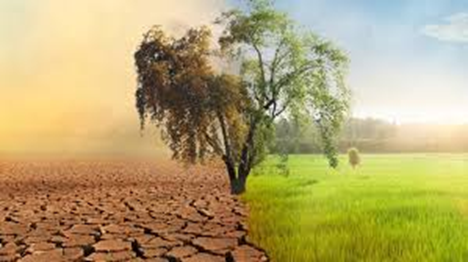
Climate change refers to long-term changes in the Earth’s temperature, rainfall patterns, wind, and other climatic conditions, largely driven by human activities like burning fossil fuels, deforestation, and industrialization.
Agriculture is highly climate-sensitive, making it vulnerable to temperature fluctuations, erratic rainfall, extreme weather events, and rising CO₂ levels, which directly impact crop productivity, livestock health, and food security.
Impact of Climate Change on Agriculture
Agriculture is one of the most climate-sensitive sectors because crop growth and livestock productivity depend on temperature, water availability, soil health, and seasonal patterns. Climate change can therefore affect food security, farmer livelihoods, and national economies, making adaptation and mitigation critical.
Positive Impacts of Climate Change on Agriculture
- CO₂ Fertilization Effect
- Elevated CO₂ can enhance photosynthesis and biomass in C3 crops like wheat, rice, and soybean.
- Potential yield increase: 5–10%, if water and nutrients are sufficient.
- Extended Growing Seasons in Cold Regions
- Warmer temperatures may allow double cropping or introduction of new crops in temperate and high-altitude regions.
- Example: Himalayan valleys could grow maize, soybean, and horticultural crops.
- Expansion of Cultivable Areas
- Previously uncultivable northern or high-altitude regions may become suitable for agriculture.
- This could increase food production potential regionally.
- Reduced Frost Damage in Certain Regions
- Slight warming reduces the risk of early-season frost, benefiting crops in cold regions.
- Example: Wheat in northern India may avoid frost-related yield losses.
- Possibility of Double Cropping
- Longer growing periods may allow farmers to harvest two crops annually in some regions.
- This increases overall farm income and productivity.
- Improved CO₂ Use Efficiency in Crops
- Some crops may utilize carbon dioxide more efficiently, increasing water-use efficiency and growth under moderate stress.
- Introduction of New Crop Varieties
- Warmer climates allow cultivation of horticultural crops, fruits, and vegetables in areas previously unsuitable.
- Example: Certain fruit varieties like apples and plums may now grow at higher elevations in India.
- Opportunities for Technological Interventions
- Climate change can encourage innovation in crop management, such as greenhouse farming, hydroponics, and precision agriculture, which can increase productivity sustainably.
Negative Impacts of Climate Change on Agriculture
- Decline in Crop Yields
- Rising temperatures during critical growth phases reduce productivity of staple crops such as wheat, rice, maize, and pulses.
- Example: ICAR (2020) reports that a 1°C increase in temperature can reduce wheat yield in India by 6%.
- Erratic Rainfall and Water Stress
- Changes in precipitation lead to droughts and floods, affecting planting schedules and irrigation.
- Case: Maharashtra drought 2019–20 caused a 20–25% reduction in cotton yield.
- Increased Frequency of Extreme Weather Events
- Cyclones, floods, and heatwaves damage crops, destroy infrastructure, and increase post-harvest losses.
- Example: Cyclone Amphan (2020) in West Bengal damaged rice and vegetable fields, affecting thousands of farmers.
- Soil Degradation
- Heavy rainfall leads to soil erosion; droughts cause salinization and desertification, reducing fertility.
- This affects long-term agronomic productivity and sustainability.
- Pest and Disease Proliferation
- Warmer and humid conditions favor increased pest infestation and crop diseases.
- Example: Brown planthopper outbreaks in Eastern India have caused significant losses in rice production.
- Impact on Livestock
- Heat stress reduces milk yield, fertility, and growth rates.
- Droughts affect fodder availability, leading to livestock mortality.
- Regional Disparities and Vulnerability
- Marginal and rain-fed farmers are most affected.
- Coastal areas like Sundarbans face salinity intrusion, impacting paddy cultivation.
- Food Security and Economic Implications
- Reduced productivity increases food prices and threatens rural livelihoods.
- IPCC AR6 estimates that unmitigated climate change could push 132 million people into hunger by 2050.
Agriculture’s Contribution to Climate Change
Scale of Emissions
- Agrifood systems account for ~33% of total anthropogenic emissions (including supply chains)
- Agriculture alone represents 20-25% of global emissions
- From farm activities: 11% of world total; from land-use changes: 9%
- Total agricultural emissions (2021): 10.89 GtCO₂eq
- Agriculture produces 42% of total methane and 75% of total nitrous oxide emissions.
Emissions Composition:
- Livestock and rice paddies: Primary CH₄ sources
- Manure and synthetic fertilizers: Primary N₂O sources
- Deforestation and peatland drainage: Primary CO₂ sources
Future Trajectory: Without intervention, emissions will increase by 30-40% by 2050 due to population growth and dietary changes.
Policy and Institutional Framework in India
India has implemented a comprehensive policy framework to address climate risks in agriculture:
- National Mission for Sustainable Agriculture (NMSA)
- Promotes climate-resilient agriculture practices, water conservation, and soil health management.
- Pradhan Mantri Fasal Bima Yojana (PMFBY)
- Provides crop insurance to protect farmers against droughts, floods, and extreme weather events.
- National Innovations in Climate Resilient Agriculture (NICRA)
- Focuses on research, demonstration, and capacity-building for climate-resilient crops and practices.
- State-Level Initiatives
- Example: Madhya Pradesh and Maharashtra provide subsidies for micro-irrigation and climate-resilient seeds.
- Integration with National Action Plan on Climate Change (NAPCC)
- NAPCC’s missions like National Water Mission and National Mission on Himalayan Studies support agriculture adaptation strategies.
- Extension Services and Farmer Awareness Programs
- Educate farmers about climate-smart practices, weather forecasts, pest alerts, and market linkages.
National Innovations on Climate Resilient Agriculture (NICRA)
- Initiation and Focus: NICRA was launched in 2011 by the Indian Council of Agricultural Research (ICAR). It focuses on strategic research, technology demonstrations, and capacity building to address the challenges posed by climate change in the agricultural sector.
- Alignment: NICRA aligns with India’s National Action Plan on Climate Change (NAPCC) 2008, which features eight missions, with four directly linked to agriculture.
| NICRA Objective | Focus Area |
| Strategic Research (Long Term) | Assessing the impact of climate change on agriculture, dairying, and fisheries simultaneously, and formulating adaptive strategies. |
| Technology Demonstrations | Implementing and showcasing climate-resilient agricultural technologies, with a priority on natural resource management, improving soil health, crop production, and livestock. |
| Capacity Building | Enhancing the capabilities of stakeholders in agriculture, including farmers and researchers. |
Research and Findings on Climate Change Impact
Research conducted under such frameworks provides critical insights into agricultural vulnerability and future projections.
- Climate Vulnerability: 151 climatically vulnerable districts have been identified across India.
- Impact on Crop Yields:
- Decreased Productivity: Potential decreases are projected for rice and maize in irrigated areas. Reduced productivity may also be experienced by rice and wheat in the Indo-Gangetic plains, as well as sorghum, potato, and maize in various regions.
- Increased Productivity: Some crops in certain regions could see an increase, such as soybean, groundnut, chickpea, and potato in Punjab, Haryana, and western Uttar Pradesh. Apple productivity in Himachal Pradesh may also increase.
- Impact on Livestock and Fisheries:
- Livestock: Heat stress negatively affects the reproduction traits of cows and buffaloes.
- Fisheries: Climate change affects ocean currents, acidification, temperature, and food availability, thereby impacting fish production.
Government Steps and Technological Interventions
I. Breeding Climate-Resilient Varieties
- Genetic Resource Utilization: Germ-plasm collection from various locations serves as the source material for breeding programs.
- Successful Releases: Varieties like Sahbhagidhan (paddy) mature in 105 days, demonstrating climate resilience.
- Ongoing Efforts: Development of heat and drought-tolerant wheat and pulses and flood-tolerant rice is underway.
II. Administrative Measures
- Implementation of NICRA and the promotion of crop diversification.
- Contingency Planning: District Agriculture Contingency Plans have been formulated by ICAR-Central Research Institute for Dryland Agriculture (CRIDA) for 648 districts to effectively address adverse weather conditions.
III. Precision Agriculture and Digital Interventions
- Precision Agriculture (PA) Overview: Positioned as the third wave of modern agricultural revolutions, PA utilizes Information Technology (IT), GPS guidance, sensors, robotics, and drones to optimize agricultural processes and achieve field-level management.
- Goals of PA:
- Crop Science: Matching farming practices closely to crop needs, such as providing precise fertilizer inputs.
- Environmental Protection: Reducing environmental risks through sustainable soil and water management.
- Economics: Boosting competitiveness through more efficient practices, including improved management of fertilizer usage and other inputs.
- Goals of PA:
- Mobile Applications and Digital India:
- Extension Systems: Low-cost, mobile phone-based agricultural extension systems have shown positive effects on yields and efficient input use.
- Site-Specific Recommendations: Mobile applications, under the Digital India initiative, provide site-specific recommendations to farmers, guiding them on the correct fertilization process for optimal soil health.
Way Forward / Adaptation Strategies for Climate Change in Agriculture
Agriculture is highly vulnerable to climate change, but effective adaptation and mitigation strategies can reduce risks, enhance resilience, and ensure food security and rural livelihoods. A multi-pronged approach combining technological innovation, policy support, resource management, and global best practices is essential.
Climate-Smart Agriculture (CSA)
- Use of drought- and heat-tolerant crop varieties, flood-resistant rice, and salt-tolerant crops.
- Adoption of crop diversification, intercropping, and improved cropping patterns.
- Sustainable practices: minimum tillage, organic manure, and cover cropping to improve soil health.
- Example: Swarna-Sub1 rice in flood-prone areas of Odisha and West Bengal.
Water Management
- Rainwater harvesting and farm ponds for dry-season irrigation.
- Micro-irrigation systems like drip and sprinkler to optimize water use.
- Watershed development and aquifer recharge to reduce dependency on erratic rainfall.
- Example: Micro-irrigation adoption in Rajasthan and Tamil Nadu has improved water-use efficiency.
Soil and Land Management
- Conservation tillage, mulching, and organic fertilization to maintain soil fertility and moisture.
- Agroforestry to prevent erosion, improve microclimate, and provide alternate income.
- Example: Mulching in rain-fed maize fields in Madhya Pradesh improves soil moisture by 20–25%.
Pest and Disease Management
- Integrated Pest Management (IPM) combining biological, cultural, and chemical control.
- Early warning systems for pest and disease outbreaks using satellite and climate data.
- Example: IPM in rice cultivation in Odisha reduced pesticide use by 40%.
Technology and Research
- Development of climate-resilient varieties tolerant to heat, drought, and flood.
- Adoption of digital platforms, mobile apps, and GIS-based advisory services.
- Precision farming using sensors, drones, and AI to optimize water, nutrients, and pesticides.
Global Best Practices
- Netherlands: Greenhouse farming for controlled environment agriculture.
- Israel: Drip irrigation for efficient water use.
- Japan: Flood-tolerant rice varieties and mechanized crop management.
- Australia: Climate risk mapping for regional crop planning.
Conclusion
- Climate change poses a complex challenge to agriculture through yield reduction, water stress, soil degradation, pest proliferation, and livestock impacts. While certain positive effects, such as CO₂ fertilization, expanded cropping areas, and longer growing seasons, exist, they are highly conditional.
- India’s policy framework, combined with technological innovation, climate-smart agriculture, water and soil management, pest control, and community-based strategies, provides a holistic pathway to safeguard food security, farmer livelihoods, and sustainable agricultural development in the era of climate change.