LINK: https://www.thehindu.com/opinion/op-ed/a-deep-cleaning-of-indias-electoral-rolls/article70376547.ece
Why in the News?
- Recently, the decision of the Election Commission of India (ECI) to revise electoral rolls in some States through a Special Intensive Revision (SIR) has been subject to public and legal scrutiny.
- This comprehensive revision exercise, exemplified by the SIR 2025 implementation, aims at reinforcing public trust in the democratic process by ensuring the accuracy and purity of the electoral rolls.
Background and Context
Constitutional and Legal Foundation
- Emphasis was made by Dr. B.R. Ambedkar during the introduction of the Representation of the People Bill (1950) that preparation of electoral rolls is a “condition precedent for election”, thereby making periodic and special revisions a statutory necessity.
- Article 326 provides the basis for universal adult franchise, and the constitutional scheme vests “superintendence, direction, and control” over electoral roll preparation in the ECI, thereby authorising it to undertake special revisions whenever required.
Types of Revisions
- Intensive Revisions, wherein entire rolls are rebuilt from the beginning.
- Summary Revisions, wherein incremental corrections are made based on claims and objections placed on draft rolls.
- The last major intensive revision was implemented during 2002–2003, after which special summary revisions became the norm.
Need for SIR 2025
- Rapid migration, expanding urbanisation, and heightened residential mobility resulted in electoral rolls becoming filled with duplicate entries, outdated information, and inaccuracies, which created the necessity for a thorough Special Intensive Revision.
Concerns and Challenges Raised
Judicial Challenges
- Implementation of SIR 2025 in Bihar during June 2025 led to several petitions in the Supreme Court, where the exercise was labelled unconstitutional and illegal, based on apprehensions that:
- Fresh enumeration and documentation required from already registered electors might violate the right to universal adult franchise.
- Such requirements could potentially result in mass deletion of voters.
Core Issue Behind Criticism
- Criticism overlooked the inherent complexity of verifying citizenship, which is the fundamental eligibility condition for voting.
- Unlike countries such as Germany and Canada, where civil registries and inter-agency information sharing exist, India lacks such mechanisms, making independent verification by ECI inevitable.
ECI’s Rationale and Constitutional Mandate
Objective of SIR 2025
- The endeavour was intended to ensure that only eligible citizens vote, as envisaged under Article 326, while ensuring that no eligible person is excluded and ineligible persons are removed.
Routine Nature of Roll Corrections
- It was emphasised that revision and verification of electoral rolls constitute a routine and necessary exercise, and such corrections do not automatically imply disenfranchisement or targeting of any group.
Administrative and Procedural Features of SIR 2025
Enhanced Verification Framework
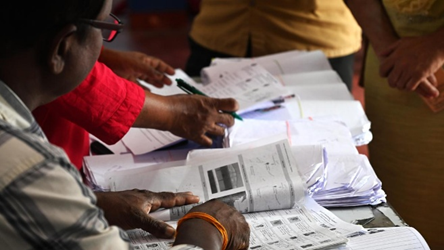
- A door-to-door physical verification of each elector was undertaken.
- The onus of citizenship proof continued to lie with applicants.
- The list of acceptable documents was significantly expanded from four items (2003) to eleven items, creating a more liberal and elector-friendly framework.
- At the suggestion of the Supreme Court, Aadhaar cards were accepted as identity proof.
Assistance Mechanisms
- Booth Level Officers (BLOs) provided active support by helping electors trace eligibility and obtain necessary documentation.
- Booth-level agents of recognised political parties were trained by the ECI to strengthen capacity-building.
Technological Improvements
- Digitisation of all supporting documents was undertaken for the first time.
- Enumeration forms were made available on online platforms.
- After publication of draft rolls, claims or objections could be filed through online systems.
- Provisions for engagement with political parties and sharing of electoral rolls were included in the guidelines.
Quantitative Assessment of SIR 2025
Verification Outcomes
- Over 7.5 crore entries in Bihar were subjected to verification.
- A total of 65 lakh electors were removed from the draft list.
Support Mechanisms for Claim/Objection Process
- Along with 1,60,813 Booth Level Agents (BLAs) of political parties, the Supreme Court deputed volunteers from the State Legal Services Authority to aid online submission of claims, objections, and corrections.
Claims and Objections Data
- A total of 2,53,524 claims and objections were filed.
- Of these, only 36,500 were claims for inclusion, representing 0.56% of total deletions.
- No appeals were filed against any deletion.
Interpretation of Numbers
- These figures indicate that the SIR 2025 process was largely founded on careful, accountable, and meticulous scrutiny, with minimal contestation at the claims stage.
Significance for Indian Democracy
Strengthening Institutional Integrity
- The implementation demonstrated that ECI’s constitutional duties would not be subordinated to convenience or political pressures.
- The exercise signified a clear, courageous, and accountable approach towards maintaining the integrity of the electoral process.
Importance of Undertaking Difficult Democratic Tasks
- The endeavour illustrated that democracies fortify themselves not by avoiding complex administrative tasks, but by executing them when they become necessary.
- SIR 2025 emerged as a vital effort in strengthening electoral credibility.
Way Forward
- Strengthened utilisation of technology-enabled verification systems may be ensured so that electoral roll management becomes more transparent, accurate, and accessible.
- Greater facilitation for citizens may be provided through widening of documentation categories and enhanced support by field-level officers to reduce friction during verification.
- Engagement between ECI, political parties, and civil society institutions may be deepened to reinforce participatory oversight in the roll revision process.
- Public communication strategies may be enhanced by ensuring that SIR procedures, objectives, and safeguards are clearly conveyed so that concerns regarding disenfranchisement are reduced.
Conclusion
- By embracing SIR, the ECI has asserted that its constitutional duties are being pursued with clarity, courage, and accountability, demonstrating that these duties will not be subordinated to convenience or political pressures.
- This effort is considered vital, as a democracy strengthens itself not by avoiding difficult tasks, but by undertaking them when it matters most, making SIR 2025 one such necessary effort to uphold the integrity of the electoral process.
UPSC MAINS PYQs
- Discuss the role of the Election Commission of India in the light of the evolution of the Model Code of Conduct. (2022)
- In the light of recent controversy regarding the use of Electronic Voting Machines (EVM), what are the challenges before the Election Commission of India to ensure the trustworthiness of elections in India? (2018)
- To enhance the quality of democracy in India the Election Commission of India has proposed electoral reforms in 2016. What are the suggested reforms and how far are they significant to make democracy successful? (2017)
- “The Indian party system is passing through a phase of transition which looks to be full of contradictions and paradoxes.” Discuss (2016)