Why In the News?
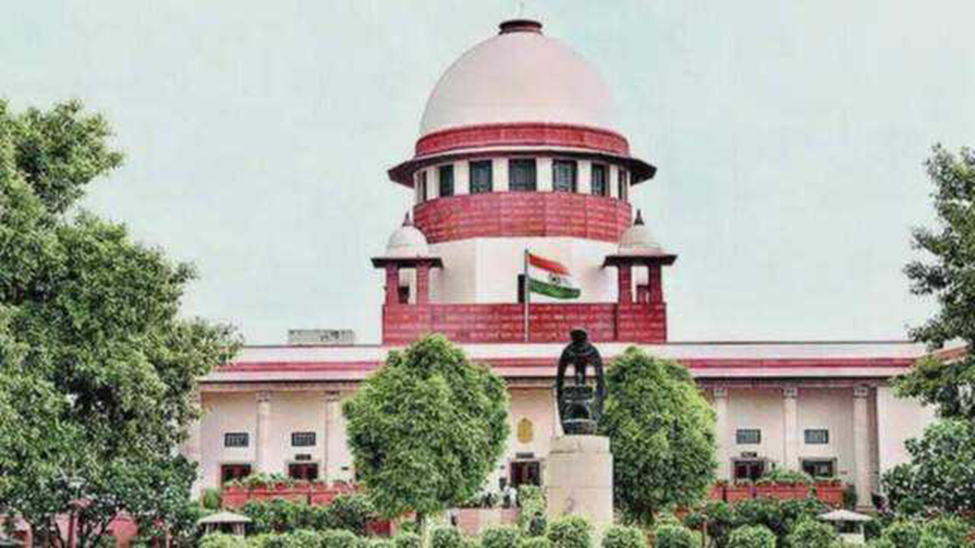
- Recently, the Supreme Court of India stayed a landmark order by the Calcutta High Court that had disqualified West Bengal MLA Mukul Roy under the Tenth Schedule. The High Court had, for the first time in judicial history, exercised its own constitutional authority to directly disqualify a lawmaker after the Assembly Speaker repeatedly refused to do so.
- However, the Supreme Court (led by CJI Surya Kant) put the disqualification in abeyance, raising critical concerns about the authenticity of electronic evidence (videos) in the age of Artificial Intelligence and the mandatory nature of Section 65B of the Evidence Act.
- Constitutional Provisions
- Article 102 – Disqualification of Members of Parliament (MPs)
- Article 191 – Disqualification of Members of State Legislatures (MLAs/MLCs)
- Grounds under both Articles are largely identical.
- Constitutional Grounds of Disqualification
- A person shall be disqualified if he/she:
- Holds an office of profit under the Government (with statutory exceptions)
- Is of unsound mind (declared by a competent court)
- Is an undischarged insolvent
- Is not a citizen of India or has voluntarily acquired foreign citizenship
- Is disqualified under any law made by Parliament (key link to RP Act, 1951)
- Statutory Grounds: Representation of the People Act, 1951
- Section 8 – Disqualification on criminal conviction
- For certain offences, disqualification starts from the date of conviction, not sentencing.
- Section 8A – Disqualification for corrupt practices during elections.
- Disqualification period usually includes term of sentence + 6 years after release.
- Anti-Defection Law
- Covered under the Tenth Schedule of the Constitution.
- Grounds:
- Voluntarily giving up party membership
- Voting against party whip (without permission)
- Decision-making authority:
- Speaker/Chairman of the House concerned
- Courts can review the decision after it is made.
- Who Decides Disqualification?
- President – MPs (on Election Commission’s opinion)
- Governor – MLAs (on Election Commission’s opinion)
- Speaker/Chairman – Anti-defection cases only
Q. With reference to the disqualification of Members of Parliament and State Legislatures, consider the following statements:
1.	Disqualification on the ground of defection is decided by the Election Commission of India.
2.	A sitting MP can be disqualified immediately upon conviction for certain criminal offences.
3.	The grounds of disqualification mentioned under Articles 102 and 191 of the Constitution are identical.

Which of the statements given above is/are correct?
(a) 2 only
(b) 2 and 3 only
(c) 1 and 3 only
(d) 1, 2 and 3

Correct Answer: (b) 2 and 3 only

Solution:
Statement 1 Incorrect: Disqualification due to defection is decided by the Speaker/Chairman, not the Election Commission.
Statement 2 Correct: Under Section 8 of the RP Act, 1951, disqualification can begin from the date of conviction.
Statement 3 Correct: Articles 102 and 191 provide largely identical grounds for disqualification of MPs and MLAs.