Why in the News?
Despite being the world’s largest producer of food grains and one of the fastest-growing economies, India continues to battle a deep nutritional crisis.
The Global Hunger Index 2024 ranked India among the lowest performers globally, with high levels of child wasting and stunting. At the same time, India faces a rising epidemic of lifestyle diseases such as obesity, diabetes, and cardiovascular disorders.
This paradox — of “malnutrition amid plenty” — highlights an urgent need for nutritional transformation, not merely food security.
Understanding the Problem: The Triple Burden of Malnutrition
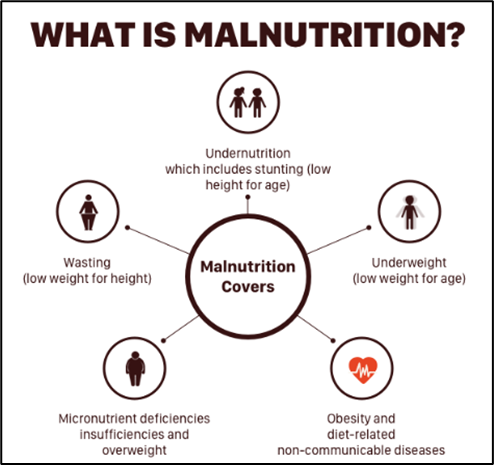
India’s nutritional challenge today is three-fold:
- Undernutrition — manifested in child stunting, wasting, underweight, and anaemia among women and adolescents.
- Micronutrient Deficiency (Hidden Hunger) — lack of vitamins and minerals like iron, iodine, zinc, and vitamin A despite sufficient calorie intake.
- Overnutrition and Diet-related NCDs — rising obesity, diabetes, and hypertension due to poor dietary diversity and excessive consumption of processed foods.
Thus, India is witnessing a “nutrition transition” — from scarcity to excess — but without balance or quality.

Current Status: Key Data Points
- NFHS-5 (2019-21):
- 35.5% of children under 5 are stunted.
- 32.1% are underweight.
- 57% of women aged 15–49 are anaemic.
- ICMR-NIN (2023): Only 10% of Indian adults consume the recommended quantity of fruits and vegetables daily.
- FAO (2023): Around 74% of India’s population cannot afford a healthy diet.
These indicators show that India’s challenge is no longer food availability but food quality and affordability.
Causes: Why Nutrition Fails Despite Food Abundance
- Agricultural Distortions
- Overemphasis on cereals (rice and wheat) due to the Green Revolution and MSP regime.
- Neglect of coarse grains, pulses, and horticulture, leading to dietary monoculture.
- Economic Inequality
- High cost of nutrient-rich foods (fruits, vegetables, milk, eggs, meat) compared to calorie-dense staples.
- Affordability gap limits access to healthy diets for poor households.
- Public Distribution & Policy Gaps
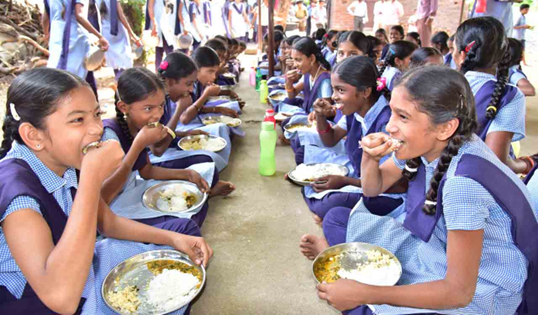
- PDS and Mid-Day Meal Scheme focus heavily on cereals, neglecting protein and micronutrient diversity.
- Lack of integration between agriculture, health, and nutrition policies.
- Behavioural & Cultural Factors
- Preference for polished rice, fried snacks, and processed foods.
- Declining traditional diets and cooking practices.
- Environmental Constraints
- Soil degradation, water scarcity, and climate change affect crop diversity and nutritional value.
- Industrial agriculture’s focus on yield over nutrition.
Need for Nutritional Transformation
- From Food Security to Nutrition Security
- India has largely achieved food self-sufficiency, but nutritional sufficiency remains elusive. We must move from “calorie-centric” policies to “nutrition-centric” policies.
- Building Nutrition-Sensitive Food Systems
- Food systems — from production to consumption — must aim to deliver safe, affordable, diverse, and sustainable diets.
- Human Capital Imperative
- Poor nutrition leads to cognitive deficits, low productivity, and higher disease burden — directly impacting India’s demographic dividend and economic growth.
- Alignment with SDGs
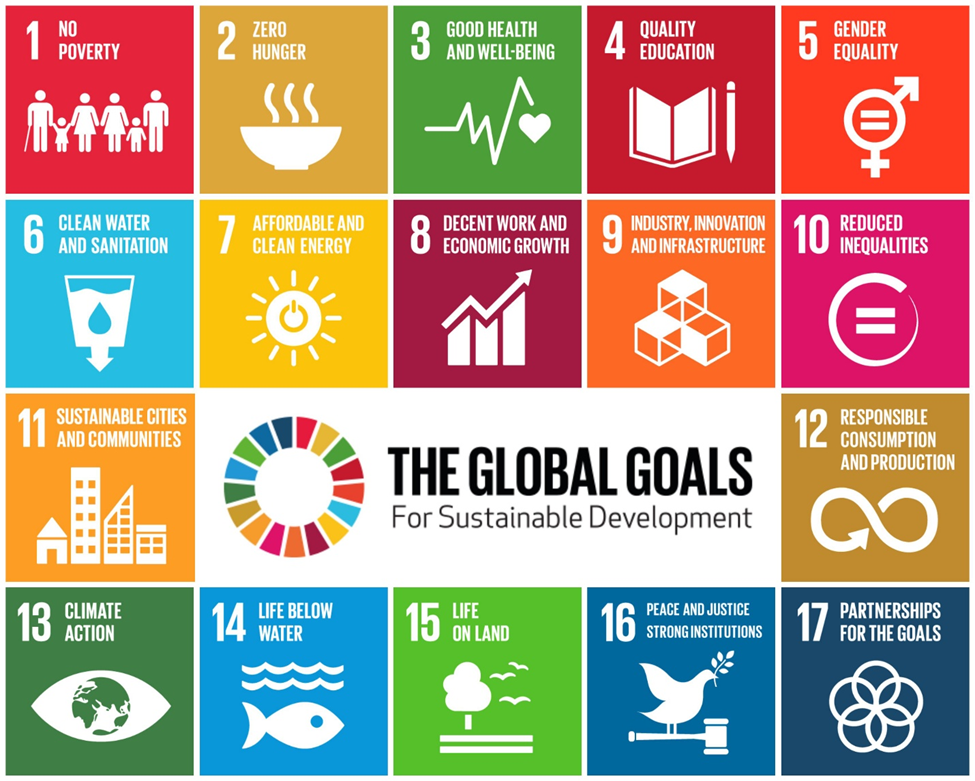
- Nutritional transformation supports multiple Sustainable Development Goals:
- SDG 2: Zero Hunger
- SDG 3: Good Health and Well-Being
- SDG 12: Responsible Consumption and Production
- SDG 13: Climate Action
- Nutritional transformation supports multiple Sustainable Development Goals:
Nutrition transition & diet quality
- Research shows that between 1990 and 2019, the average calorie intake in India rose from ~1,726 kcal/day to ~2,266 kcal/day — an increase of ~24%.
- Over the same period, the prevalence of overweight, obesity and type-2 diabetes increased significantly (e.g., diabetes from ~3.4% to ~12.7%).
- According to the Global Nutrition Report India profile: ~9.0% of adult women and ~10.2% of adult men are estimated to have diabetes; obesity prevalence is 6.2% for women and 3.5% for men (lower than regional averages).
- Studies show a shift in Indian diets: increased industrially processed foods, higher share of animal foods / however dietary diversity remains low, and micronutrient adequacy is poor.
- One assessment of India’s food systems (23 measures, 14 indicators) found that while many health and environmental indicators can improve with coordinated interventions, significant trade-offs remain (e.g., nitrogen pollution, obesity) in the Indian context.
Government Initiatives
| Initiative | Objective / Focus |
| Poshan Abhiyaan (2018) | Comprehensive strategy for convergence across ministries to reduce stunting, wasting, anaemia. |
| Saksham Anganwadi & POSHAN 2.0 (2021) | Upgraded ICDS with focus on fortified food, behavioural change, digital monitoring. |
| Mid-Day Meal / PM-POSHAN | Nutritional support to schoolchildren; diversification to millets and local foods. |
| Fortification Programmes | Rice, salt, and edible oil fortification to tackle micronutrient deficiencies. |
| National Nutrition Mission (NNM) | Real-time data monitoring and behaviour change communication. |
| Millet Mission & International Year of Millets 2023 | Promoting traditional, climate-resilient, nutrient-rich millets. |
Despite these initiatives, outcomes remain modest due to poor inter-departmental coordination, leakages, and insufficient awareness.
Challenges Ahead
- Fragmented Governance: Nutrition scattered across multiple ministries.
- Data Deficiency: Limited real-time nutrition surveillance.
- Cultural Resistance: Slow dietary behaviour change.
- Affordability Barrier: Cost of nutrient-dense foods remains high for the poor.
- Urban Food Environment: Surge in ultra-processed, high-sugar foods targeting youth.
- Climate Change: Threat to food diversity and micronutrient content.
🔹 Way Forward: A Holistic Nutrition Transformation Strategy
1. Policy Integration
- Synchronize agriculture, health, education, and social welfare policies.
- Adopt a Food Systems Approach integrating production, processing, marketing, and consumption.
2. Diversified Agriculture
- Incentivize pulses, millets, fruits, vegetables, oilseeds, and animal husbandry.
- Introduce MSP and procurement diversification for nutrient-rich crops.
3. Food Fortification & Biofortification
- Expand biofortified varieties of rice, wheat, maize, and millets (e.g., zinc rice, iron millet).
4. Nutrition Education & Behavioural Change
- Community campaigns on balanced diets, cooking practices, and junk-food risks.
- Leverage schools, Anganwadis, and social media for awareness.
5. Strengthen Safety Nets
- Reform PDS to include millets, pulses, and fortified foods.
- Ensure Mid-Day Meals meet WHO-FAO dietary diversity norms.
6. Address Urban Malnutrition
- Regulate food advertising, improve labelling, and encourage healthy eating in schools/workplaces.
7. Climate-Resilient Nutrition
- Promote sustainable farming, organic methods, and reduce food waste and losses.
Conclusion
- India stands at a critical juncture — from food sufficiency to nutritional sufficiency. Without addressing the root causes of malnutrition, the promise of our demographic dividend and economic prosperity will remain unrealized. A nutrition-sensitive, climate-resilient, and inclusive food system is not just a health necessity but a national imperative.
- As Mahatma Gandhi once said, “There are people in the world so hungry that God cannot appear to them except in the form of bread.” Today, India must ensure that the bread — and every meal — is nutritious, equitable, and sustainable.
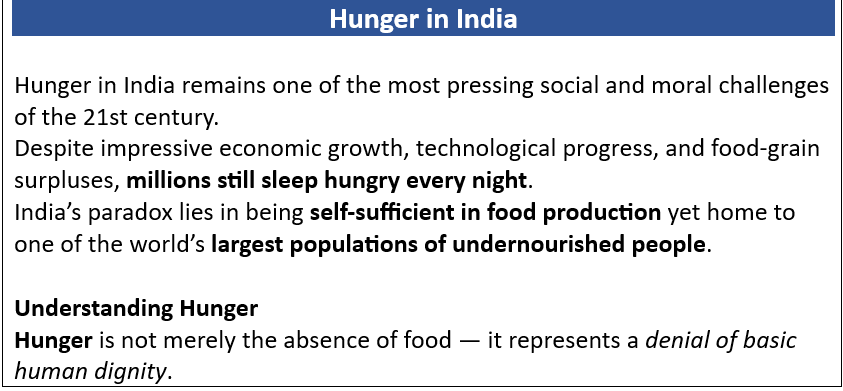
According to FAO, hunger is defined as chronic undernourishment, where caloric intake is insufficient to meet minimum dietary energy requirements.
Hunger manifests in three major forms:
- Chronic Hunger – Persistent inadequacy of food intake over time.
- Hidden Hunger – Deficiency of essential micronutrients such as iron, vitamin A, and zinc.
- Acute Hunger – Short-term severe food deprivation often caused by disasters or conflict.
Status of Hunger in India: Major Reports
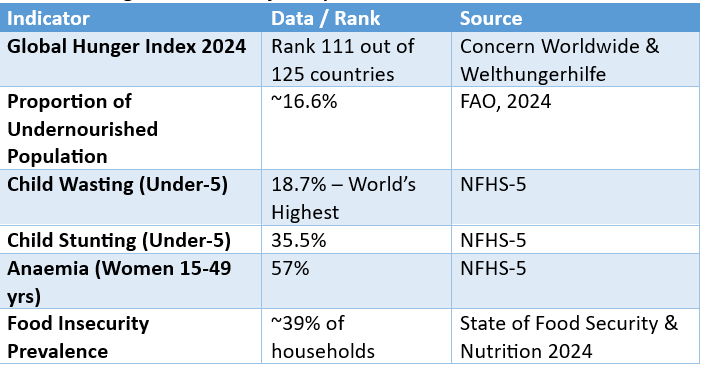
These numbers reveal that India’s hunger problem is not of food scarcity but of food inequity, poor access, and malnutrition.
Causes of Hunger in India
1️⃣ Poverty and Income Inequality
- Low purchasing power among marginalized sections reduces access to nutritious food.
- Informal workers and rural poor remain the most vulnerable.
2️⃣ Agricultural and Distribution Imbalances
- Overproduction of cereals; underproduction of pulses, fruits, and vegetables.
- Weak storage and logistics systems cause ~30–40% post-harvest food loss.
3️⃣ Public Distribution System (PDS) Gaps
- PDS often limited to wheat and rice, ignoring protein and micronutrient needs.
- Leakages, corruption, and exclusion errors persist.
4️⃣ Gender Inequality
- Women often eat last and least in households, leading to intergenerational malnutrition.
5️⃣ Climate and Environmental Factors
- Droughts, floods, and erratic monsoons affect crop yields.
- Climate change threatens small farmers and food prices.
6️⃣ Urban Hunger
- Migrant labourers and slum dwellers suffer from “invisible hunger” — not counted in rural statistics.
Government Initiatives to Tackle Hunger
| Programme | Focus Area |
| National Food Security Act (2013) | Legal entitlement to subsidised food grains for ~75% of rural and 50% of urban population. |
| PM-Garib Kalyan Anna Yojana (PMGKAY) | Free distribution of 5 kg foodgrains/month during and post-pandemic period. |
| POSHAN Abhiyaan | Nutrition-centric mission to reduce stunting, wasting, anaemia. |
| Integrated Child Development Services (ICDS) | Supplementary nutrition, health, and education for children and mothers. |
| Mid-Day Meal / PM-POSHAN Scheme | Nutritional meals for school children; improves enrolment and nutrition outcomes. |
| Annapurna Scheme & Antyodaya Anna Yojana | Food security for senior citizens and poorest households. |
| Millet Mission & International Year of Millets 2023 | Promote nutritious, climate-resilient coarse grains. |
Judicial and Policy Perspective
- Right to Food is implicit under Article 21 (Right to Life) of the Constitution.
- In PUCL v. Union of India (2001), the Supreme Court recognized food as a legal right, directing governments to universalize mid-day meals and strengthen PDS.
- NITI Aayog’s National Nutrition Strategy (2017) called for convergence among ministries to achieve “Kuposhan Mukt Bharat” (Malnutrition-Free India).
Challenges and Emerging Issues
- Food Inflation: Rising prices of pulses, milk, fruits erode real access to nutritious diets.
- Regional Inequality: BIMARU states continue to show high hunger indicators.
- Urbanization: Growing food deserts and dependence on ultra-processed foods.
- Climate Change: Threatens food availability, crop diversity, and nutritional value.
- Data Gaps: Inadequate real-time monitoring of hunger and nutrition.
Way Forward
1️⃣ Strengthen Food Systems
Move from calorie-centric to nutrition-centric production and distribution.
Promote millets, pulses, horticulture, and animal husbandry.
2️⃣ Integrate Social Protection
Combine PDS + ICDS + Mid-Day Meal with health and sanitation programmes.
3️⃣ Address Urban Hunger
Develop community kitchens, food banks, and digital inclusion of migrant workers.
4️⃣ Women-Centric Nutrition
Empower women in decision-making, ensure nutrition literacy, and address anaemia.
5️⃣ Climate-Smart Agriculture
Adopt resilient cropping systems, reduce post-harvest losses, and ensure sustainable diets.
Conclusion
- Hunger in India is not only an economic or administrative issue — it is a moral and ethical question that tests the nation’s commitment to justice and equality. To eradicate hunger, India must go beyond welfare distribution and ensure dignified access to nutritious food for all citizens.
- As the Father of the Nation reminded us: “To a hungry man, God can appear only as bread.” Achieving Zero Hunger (SDG 2) is thus not merely a target — it is a national responsibility.
Source: Does India need nutritional transformation? | Explained – The Hindu
| Year | Question |
| 2021 | What are the salient features of the National Food Security Act, 2013? How has the Food Security Bill helped in eliminating hunger and malnutrition in India? |
| 2019 | Food Security Bill is expected to eliminate hunger and malnutrition in India. Critically discuss various apprehensions in its effective implementation along with the concerns it has generated in WTO. |
| 2013 | Food Security Bill is expected to eliminate hunger and malnutrition in India. Critically discuss various apprehensions in its effective implementation along with the concerns it has generated in WTO.1 |
| 2013 | India needs to strengthen measures to promote the pink revolution in food industry for ensuring better nutrition and health. Critically elucidate the statement. |