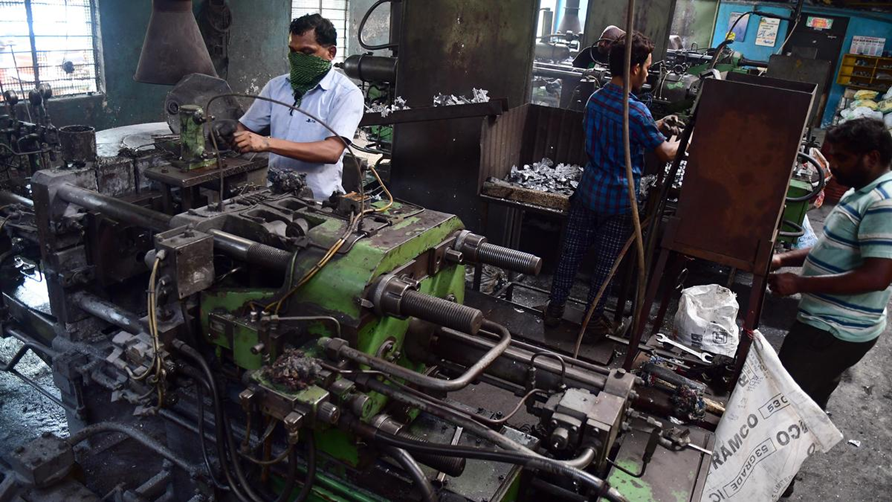
Why in the News?
India has implemented the long-awaited four modernised Labour Codes on 21 November 2025, consolidating multiple central labour laws into a simplified regulatory framework. This marks one of the most significant labour reforms in independent India, intended to strengthen workers’ rights, improve enterprise competitiveness, and support the goal of a developed India.
Evolution of Labour Framework in India
India’s labour laws previously developed incrementally across decades. This resulted in fragmentation, overlapping definitions, and complex compliance for employers and workers alike. Recognising the need to reflect growing diversity in the workforce — particularly the rise of informal, gig, and platform-based employment — comprehensive reform was undertaken between 2015 and 2019, culminating in the four Codes.
The reform aligns labour regulation with a dynamic economic landscape, where employment trends show declining unemployment, growing formalisation, and one of the world’s largest and youngest workforces — over 643 million workers.
Overview of the Four Labour Codes
| Labour Code | Objective | Major Provisions |
| Code on Wages, 2019 | Ensure fairness in wages and payment | Universal minimum wages, national floor wage, timely payment, clarity on working hours |
| Industrial Relations Code, 2020 | Improve industrial harmony and dispute resolution | Easier registration, rules for strikes/lockouts, streamlined dispute settlement |
| Code on Social Security, 2020 | Expand social protection to all segments of workforce | ESIC/EPF coverage expansion, gig/platform worker inclusion, social security funds |
| OSH & Working Conditions Code, 2020 | Strengthen workplace safety | Workplace standards, safety committees, preventive health checks, 48-hour weekly limit |
Key Areas of Impact
1️⃣ Formalisation and Decent Work – The Codes emphasise registration, standard definitions, and transparent procedures. This encourages enterprises to formalise, improving worker protection and long-term economic productivity.
2️⃣ Social Security Expansion – For the first time, the law explicitly includes gig and platform workers, acknowledging digital livelihoods. A dedicated Social Security Fund aims to finance contributory benefits for such workers.
3️⃣ Women Empowerment in Workforce
- Night-shift permission with safety safeguards
- Better maternity benefits
- Enhanced arrangements for childcare and working flexibility
These measures can help India improve currently modest female labour participation (~32–33%).
4️⃣ Enhancing Workplace Safety & Well-being
The OSH Code mandates universal minimum standards across sectors:
- National floor wage promotes wage equity
- Safety committees and health checks reduce workplace hazards
- Better coordination of labour inspections improves accountability
Workplace dignity is now recognised as essential to productivity and national growth.
Economic Significance
The new framework supports:
- MSMEs through simplified compliance
- Industrial growth via predictable regulation
- Investment attraction by improving labour governance
- Youth employment through job-rich market expansion
It integrates labour reform into broader national goals like digitalisation, formalisation, and a competitive manufacturing ecosystem.
Challenges Going Forward
Despite clear advantages, success depends on:
- State-level readiness — enforcement capacity and timely rules
- Clarity in gig worker contributions — practical funding mechanisms
- Awareness among informal workers — enabling access to entitlements
- Balancing protections and flexibility — avoiding over-regulation of small units
These issues require cooperative federalism and sustained institutional support.
Balanced Way Ahead
- Phased implementation with assistance for smaller enterprises
- Strengthening digital systems for registration and compliance
- Targeted outreach to informal and gig workers
- Stronger monitoring of workplace safety and women-centred provisions
Effective execution will determine whether these reforms truly enhance equity, industrial harmony, and workforce productivity.
Conclusion
The Labour Codes represent a transformational shift in India’s social and economic governance. By simplifying laws, expanding protections, and recognising emerging forms of work, they seek to align labour policy with India’s aspirations of inclusive and sustainable growth. The upcoming years will be crucial — as timely, uniform and worker-friendly implementation will define whether these reforms deliver a stronger, more secure, and future-ready labour ecosystem.
Source: Enabling a modern and future-ready labour ecosystem – The Hindu
UPSC CSE PYQ
| Year | Question |
| 2025 | “India’s labour reforms aim to simplify regulatory frameworks, yet concerns persist about their impact on worker security.” Discuss. |
| 2024 | Discuss the challenges and way forward in ensuring universal social security for India’s workforce in the context of expanding gig and platform work. |
| 2023 | Examine how labour law reforms can contribute to improving industrial productivity and employment generation in India. |
| 2022 | The rise of gig & platform economy in India poses new challenges for worker rights and social protection. Suggest policy measures. |
| 2021 | Discuss the significance of labour codes in promoting ease of doing business while ensuring worker welfare. |
| 2021 | Critically examine the implications of consolidation of labour laws for federalism and state autonomy. |
| 2020 | What are the problems faced by the MSME sector regarding labour regulations? How can reforms address them? |
| 2019 | Examine the issues related to contract labour and suggest reforms to safeguard rights without hurting industrial growth. |