Why in the News?
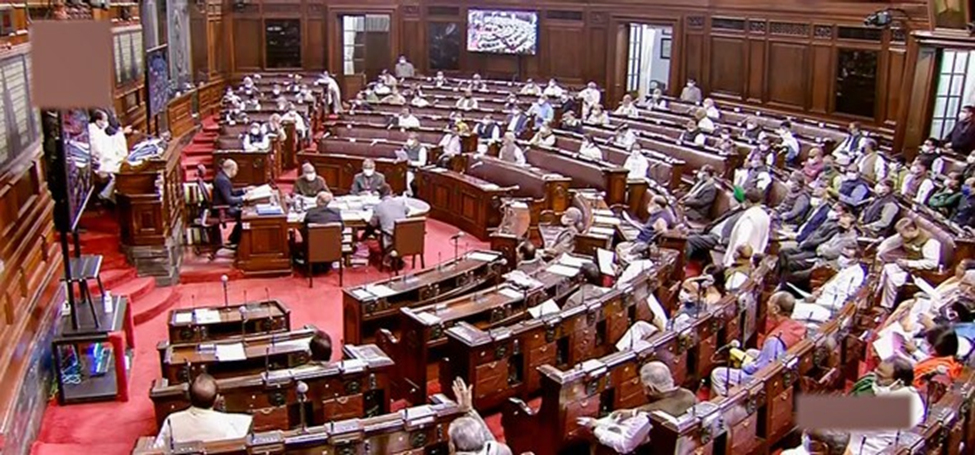
The Winter Session of Parliament commenced on December 1 and is scheduled to conclude on December 19, featuring 15 sittings across 19 days — one of the shortest sessions in recent years. This comes amid heightened tensions between the government and the Opposition, concerns over curtailed legislative scrutiny, and a packed agenda of key Bills with significant governance implications.
Parliament as a Democratic Space Under Strain
- The government asserts full readiness to discuss issues, while cautioning against theatrics in Parliament.
- The Opposition criticizes the truncated session duration and claims exclusion from diplomatic engagements with foreign dignitaries.
- The prevailing political landscape reflects deep mistrust, limiting constructive debate and affecting Parliament’s role as a deliberative forum.
Key Legislative Agenda and Political Stakes
The government has outlined an ambitious legislative plan consisting of around 14 Bills, including reforms touching criminal justice, education regulation, arbitration, and infrastructure.
| Major Legislative Items | Stated Purpose | Underlying Concerns / Implications |
| Jan Vishwas (Amendment of Provisions) Bill, 2025 | Simplification of criminal justice procedures | Quality of justice vs speed; rights of the accused; institutional readiness |
| Higher Education Commission of India Bill, 2025 | Restructuring higher education regulatory framework | Centralisation concerns; university autonomy; State–Centre friction |
| National Highways (Amendment) Bill | Facilitating infrastructure expansion | Land acquisition, environmental safeguards, federal coordination |
| Atomic Energy Bill | Updating regulatory framework in atomic sector | Strategic autonomy; regulatory independence; safety protocols |
| Arbitration & Conciliation (Amendment) Bill | Strengthening alternative dispute resolution | Investor confidence; institutional arbitration capacity |
| National Security/Health Security Cess Bill | Repackaged levy on tobacco products | Fiscal transparency; use of cesses; public health funding |
Additionally, electoral reforms are expected to be debated, including the possibility of synchronised polls and concerns over electoral roll integrity.
Flashpoints Likely to Shape the Session
- Contentious federal issues, especially in education
- Disputes over electoral reforms, including rollout feasibility
- National security debate following recent attacks in Delhi
- Economic concerns (price rise, farmers’ issues)
- Political allegations on misuse of federal agencies
The friction over agenda-setting and discussion time may lead to disruptions, reducing Parliament’s output further.
Challenges to Effective Parliamentary Governance
- Short duration weakens legislative scrutiny – Bills risk being passed without deep committee evaluation or stakeholder consultation.
- Polarised politics limits consensus-building – Sharp government–Opposition hostility affects quality debate.
- Federal tensions intensifying – Legislation on subjects with State stakes (like higher education) may aggravate Centre–State relations.
- Impact on Parliamentary productivity – Disruptions and adjournments impede oversight and accountability functions.
Why this Session Matters
This session tests India’s democratic maturity on several fronts:
- Can legislation remain consultative in a compressed timeline?
- Will Parliament prioritise national issues over political competition?
- Can institutional coordination be restored amid distrust?
The answers to these questions will reflect:
- The health of India’s parliamentary democracy
- The strength of cooperative federalism
- The effectiveness of national governance mechanisms
Way Forward
- Ensure greater reliance on Parliamentary Committees for detailed scrutiny.
- Maintain structured debate time on major reforms with clear agenda scheduling.
- Strengthen Centre–State dialogue to avoid unilateral legislative overreach.
- Foster a constructive parliamentary culture centred on reasoned debate rather than disruption.
- Enhance transparency in fiscal and institutional reforms to build public trust.
Conclusion
The Winter Session is more than a legislative calendar — it reflects India’s democratic character. In a deeply polarised environment, preserving Parliament as a forum for informed debate, negotiation, and accountability becomes crucial.
Delhi’s winter may be cold, but India’s democratic vitality depends on ensuring that Parliament does not freeze in deadlock — and instead retains the warmth of deliberation and cooperation.
Source: Freeze and thaw: On the winter session of Parliament – The Hindu
UPSC CSE PYQ
| Year | Question |
| 2023 | Discuss the role of the Opposition in a Parliament. In the light of the functioning of Indian Parliament, do you think that Opposition is losing its significance? |
| 2022 | “The Indian Constitution has provisions for holding joint sessions of the two Houses of Parliament.” Explain circumstances & necessity. |
| 2021 | Do you agree that the Indian Parliament is an empowered institution? Justify your answer. |
| 2016 | Why do you think the committees of Parliament are considered to be useful? |
| 2014 | “The strengthened role of Parliament is necessary for India’s democratic maturity.” Comment. |