PM’s Vision for Scientific Innovation in India
Why in the News?
Prime Minister Narendra Modi, while addressing the inaugural session of the Emerging Science Technology and Innovation Conclave (ESTIC) in New Delhi, emphasized the need to shift India’s focus from food security to nutrition security. He highlighted the role of scientific innovation and research in tackling malnutrition, improving agriculture, and fostering sustainable technologies.
Key Highlights of PM’s Address
Fostering Inspiration and National Pride
- PM Modi congratulated India’s women’s cricket team for winning the ICC Women’s World Cup 2025, calling their achievement a source of inspiration for millions of citizens.
- He also highlighted the successful launch of India’s heaviest communication satellite (GSAT-7R/CMS-03), showcasing India’s advancing technological capabilities.
21st Century as an Era of Innovation
- The Prime Minister described the current century as one of “exponential transformation”, emphasizing the need for global collaboration in emerging science, technology, and innovation (STI) domains.
- He noted that the Emerging Science Technology and Innovation Conclave (ESTIC) was conceived to facilitate international cooperation and foster partnerships in cutting-edge scientific research.
Enhancing India’s Research and Innovation Ecosystem
Research Funding and Institutional Support
- Anusandhan National Research Foundation (ANRF): Established to promote research across universities and institutions.
- ₹1 Lakh Crore R&D and Innovation Fund: Facilitates private sector–led high-risk, high-impact research projects, strengthening India’s innovation ecosystem.
- Ease of Conducting Research: Reforms in financial rules, procurement, and regulatory frameworks to accelerate lab-to-market transitions.
Indicators of Growth in Science and Technology
- R&D expenditure doubled in the last decade; patent registrations increased 17-fold.
- India ranks as the world’s 3rd largest startup ecosystem, with 6,000+ deep-tech startups in sectors such as clean energy, advanced materials, and semiconductors.
- Bio-economy growth: From $10 billion in 2014 to $140 billion in 2025.
Priority Areas in Emerging and Strategic Sectors
- Progress in green hydrogen, quantum computing, deep-sea research, and critical minerals.
- Focus on inclusive innovation: “When science is scaled, innovation becomes inclusive, and technology drives transformation.”
- Digital Public Infrastructure (DPI): Connectivity to 2 lakh+ gram panchayats; widespread mobile and digital access supports large-scale policy implementation.
Promoting Women’s Participation in Science
- Annual patent filings by women increased from <100 to 5,000+.
- Women now constitute 43% of STEM enrolments, exceeding the global average.
- Active participation in space missions and scientific leadership highlights gender inclusivity.
Fostering Scientific Temper Among Youth
- Atal Tinkering Labs (ATLs): 10,000 labs engaging 1 crore students, with plans to expand to 25,000.
- PM Research Fellowship: 10,000 fellowships over the next five years.
- NEP 2020: Promotes STEM education in local languages for wider access.
- Establishment of new universities, including 7 IITs and 16 IIITs.
Artificial Intelligence and Ethical Technology
- India AI Mission: ₹10,000 crore to democratize AI access.
- India is shaping a global framework for human-centric and ethical AI.
- Hosting of Global AI Summit 2026 announced.
Future Directions for Scientific Innovation
Scientists are encouraged to:
- Transition from food security to nutrition security and develop biofortified crops.
- Create low-cost fertilizers, bio-fertilizers, and soil health enhancers.
- Map genomic biodiversity for personalized medicine.
- Innovate in affordable clean battery storage.
- Achieve self-reliance (Atmanirbharta) in critical technologies and inputs.
Way Forward
- Promote collaboration among government, academia, industry, and startups.
- Encourage ethical, inclusive, and sustainable innovation.
- Support young scientific talent and strengthen global partnerships in frontier technologies.
- Link research outcomes to societal applications and impact.
Conclusion
ESTIC 2025 reinforces India’s ambition to lead in ethical and inclusive science and innovation. By empowering women, youth, and researchers, India is transforming from a technology consumer to a creator and exporter of innovation, embodying “Jai Vigyan, Jai Anusandhan” and moving toward a knowledge-driven, self-reliant, technologically empowered nation.
Science and Research Developments in India
- Doubling R&D Investment: India’s research and development expenditure has doubled over the last decade, reflecting increased commitment to scientific growth.
- Patents and Start-Ups: The number of patents registered has increased 17-fold, and deep-tech start-ups have grown to approximately 6,000, indicating a surge in innovation.
- Anusandhan National Research Foundation Fund: A fund of ₹1 lakh crore has been made operational to support R&D across public and private sectors, enabling substantial investment in scientific research.
About ESTIC
- Emerging Science Technology and Innovation Conclave (ESTIC) replaces the Indian Science Congress, which has a long-standing history but has seen declining participation in recent years.
- The conclave focuses on quantum science, bioengineering, energy-environment, and climate-related research, providing a platform for collaboration between scientists, technologists, and policymakers.
Significance for India
- The PM’s emphasis on nutrition security aligns with national goals to combat malnutrition and achieve sustainable development.
- Fostering innovation in agriculture, healthcare, and clean energy will help India strengthen its food and nutrition ecosystem, support rural livelihoods, and enhance scientific self-reliance.
Food Security
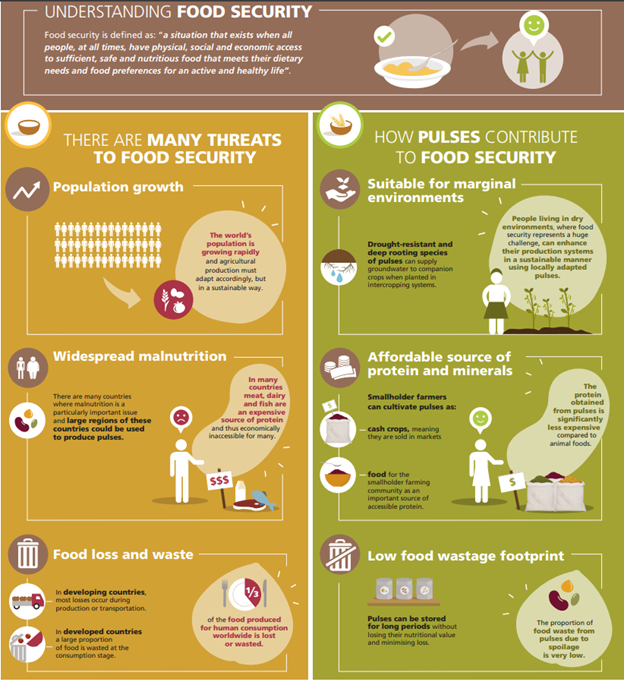
Food Security in India encompasses both the availability of food and people’s ability to access it. It ensures that all individuals have sufficient, safe, and nutritious food throughout the year to maintain a healthy and productive life. In India, food security is not only about producing enough food but also about ensuring equitable distribution, affordability, and nutritional quality.
According to the World Food Programme, nearly 195 million people in India are undernourished, highlighting the magnitude of the challenge. Additionally, approximately 43% of Indian children suffer from chronic malnutrition, which adversely affects their health, education, and future productivity. In the Global Food Security Index 2022, India was ranked 68th out of 113 countries, underlining the urgent need for systemic reforms to strengthen food security mechanisms.
Need for Food Security in India
Food security is vital for India due to its large population and socio-economic conditions. Ensuring food security is not just about production but also about accessibility, affordability, and nutritional adequacy. The key reasons for its importance include:
- Rising Population – With a population exceeding 1.3 billion, consistent food supply is essential to meet growing demand.
- Nutritional Security – High rates of malnutrition and undernourishment, especially among children, make access to nutritious food critical for health outcomes.
- Agricultural Dependence – A significant portion of the population relies on agriculture for livelihood; stable food systems sustain rural incomes and economic stability.
- Climate Vulnerability – Climate change and unpredictable weather make resilient food systems necessary to withstand natural disasters and crop failures.
- Reducing Poverty and Inequality – Affordable food is crucial for lifting marginalized communities out of hunger and poverty.
- National Stability – Food insecurity can trigger social unrest and economic instability, making it a critical component of national security.
Current Status of Food Security and Hunger in India
- Food Security Overview: According to the International Food Security Assessment (2022-32), around 333.5 million people in India were food insecure in 2022-23, with projections indicating a decline to 24.7 million in the next decade.
- Rural Dietary Gaps: About 63.3% of rural residents (over 527 million people) are unable to afford a nutritionally adequate diet, even if 100% of their income were spent on food.
- Hunger Indicators: NSSO data shows 3.2% of the population does not meet the minimum threshold of 60 meals per month, while 2.5% of Indians (3.5 crore people) may lack two square meals per day.
- Global Hunger Index: India ranks 111th out of 125 countries (GHI 2023), below Pakistan and Sudan, reflecting persistent challenges in nutrition and food access, though some critique the index for emphasizing early-age mortality over actual hunger.
Why Food Security Has Not Eliminated Hunger
Inefficiencies in the Public Distribution System (PDS)
- Despite reforms, PDS suffers from leakages, corruption, and exclusion errors, leaving over 90 million eligible people without entitlements.
- The Covid-19 pandemic highlighted gaps, particularly for migrant workers, prompting the One Nation, One Ration Card initiative, whose implementation remains incomplete.
Income Inequality and Poverty
- Though India reduced multidimensional poverty (24.82 crore people over nine years), income disparities remain high, with the top 10% and 1% earning 57% and 22% of national income, respectively.
- Nutritional outcomes are affected, with 35.5% of children under five stunted as per NFHS-5 (2019-21).
Nutritional Nutritional Challenges and Dietary Diversity
- Food security often emphasizes calorie sufficiency rather than nutritional adequacy.
- India faces a triple burden of malnutrition: undernutrition, micronutrient deficiencies, and obesity.
- Calorie intake gaps: Rural poorest 5% consume 1,564 kcal/day vs. 2,172 kcal required; urban poorest consume 1,607 kcal/day vs. 2,135 kcal required.
- Estimated deprivation: 17.1% rural and 14% urban populations do not meet minimum nutritional expenditure thresholds.
Urbanization and Changing Food Systems
- Urban poor face unique food insecurity challenges, with 51% of Delhi slum households experiencing food insecurity.
- PMGKAY expansion addresses urban hunger, but distribution and nutritional gaps persist.
Gender Disparities
- Women often eat last and least, contributing to malnutrition; anemia prevalence among women aged 15–49 is 57%.
Limited Dietary Diversity
- Policies focus heavily on cereals (wheat and rice), ignoring nutrient-rich foods like pulses and millets.
- India’s wheat production increased 40% since early 2000s, highlighting cereal-centric priorities.
Post-harvest Losses and Food Waste
- 30–40% of fruits and vegetables are wasted due to inadequate storage and transport.
- Government initiatives like the Agriculture Infrastructure Fund have disbursed only ₹28,171 crores out of ₹43,391 crores sanctioned, showing slow progress.
Water, SaWater, Sanitation, and Hygiene (WASH) Challenges
- Poor WASH conditions lead to nutrient malabsorption and illness.
- Over 163 million people lack access to clean water; 21% of communicable diseases are water-related.
Global Trends in Food Security
Progress Amid Persistent Inequalities
- Global food production has increased due to technological advancements in agriculture, such as the Green Revolution and genetically modified crops.
- Despite this, food insecurity remains widespread, with over 735 million people facing hunger globally in 2022, marking a rise from pre-COVID levels (FAO, 2023).
Africa: The Epicentre of Hunger
- Sub-Saharan Africa continues to be the most food-insecure region due to climatic shocks, infrastructural deficiencies, conflict, and poverty.
- Countries like Somalia, South Sudan, and Ethiopia frequently experience famines and rely heavily on food aid.
- Desertification and irregular rainfall, particularly in the Sahel belt, exacerbate vulnerability.
South Asia: Adequate Production but Persistent Malnutrition
- Despite overall food availability, undernutrition remains high due to poor distribution, poverty, and gender disparities.
- India, Pakistan, and Bangladesh face high levels of child malnutrition and micronutrient deficiencies (“hidden hunger”).
Southeast Asia: Improved Access but Emerging Urban Challenges
- Countries like Vietnam, Thailand, and Indonesia have better food availability, yet face urban food insecurity and dietary transitions.
- Rising obesity and non-communicable diseases reflect the double burden of malnutrition.
Latin America and the Caribbean: Economic Crises and Food Insecurity
- Political instability and economic downturns (e.g., Venezuela, Haiti) have caused hunger spikes, despite fertile agricultural lands.
- Inequitable land ownership and export-oriented agriculture reduce local food access.
Developed Nations: High Availability but Unequal Access
- While food abundance exists, issues such as food waste, over-nutrition, and poor dietary quality create insecurity for vulnerable populations (e.g., migrants, elderly, homeless) in countries like the USA and UK.
Regional Trends in India
- India shows a paradox: national food sufficiency coexists with regional disparities and household-level insecurity.
- Determinants of regional variation include agro-climatic diversity, socio-economic inequalities, infrastructure gaps, and governance.
- Policy measures like the NFSA (2013) and Targeted PDS (TPDS) address insecurity but effectiveness varies regionally.
North-Western Region: Surplus with Strong Access
- States: Punjab, Haryana, Western Uttar Pradesh
- Characteristics: Green Revolution heartland, high productivity, reliable irrigation, and strong procurement infrastructure.
- Food Security Status: High availability and access, but limited nutritional diversity and environmental concerns (soil salinity, groundwater depletion).
Eastern and Central Region: Plenty with Poverty
- States: Bihar, Jharkhand, Chhattisgarh, Odisha, Eastern UP, West Bengal
- Characteristics: High population density, abundant water, rainfed agriculture, frequent floods and droughts, weak market access.
- Food Security Status: Moderate-to-high availability, but poor economic and physical access, high malnutrition, especially among tribal and SC communities.
Western and Dryland Region: Climate-Stressed and Vulnerable
- States: Rajasthan, Gujarat, parts of Maharashtra and Madhya Pradesh
- Characteristics: Arid to semi-arid, low rainfall, dependence on rainfed agriculture, frequent droughts, and livestock reliance.
- Food Security Status: Low availability and access; seasonal migration affects stability; government food schemes remain crucial.
Southern Region: Diversified and Nutrition-Sensitive
- States: Tamil Nadu, Kerala, Karnataka, Andhra Pradesh, Telangana
- Characteristics: Good governance, diversified crops, robust health and nutrition services, high literacy and female empowerment.
- Food Security Status: Better access and utilization (Kerala, Tamil Nadu), with regional variations in Karnataka and Telangana; emphasis on nutrition-sensitive agriculture and kitchen gardens.
North-Eastern Region: Remote and Fragile
- States: Assam, Arunachal Pradesh, Manipur, Meghalaya, Mizoram, Nagaland, Tripura, Sikkim
- Characteristics: Mountainous terrain, ecological fragility, smallholder farming, high transport costs, weak supply chains.
- Food Security Status: Physical access constrained; seasonal shortages persist despite local self-sufficiency; government schemes face logistical bottlenecks.
Urban India: Market-Dependent and Vulnerable
- Characteristics: Growing urban poor, informal employment, food deserts in slums, reliance on market-based access, dietary shifts.
- Food Security Status: Economic access is the main barrier; PDS reach is uneven, with migrant workers and homeless most at risk.
Measures to Ensure Food Security-Way Forward
A comprehensive approach is required to ensure food security in India, addressing production, distribution, and sustainability. Key measures include:
- Sustainable Agricultural Practices – Promoting organic farming, agroforestry, and integrated pest management improves soil health, reduces chemical dependency, conserves water, and ensures long-term productivity.
- Irrigation and Water Management – Expanding access to irrigation, promoting efficient systems like drip and sprinkler irrigation, and encouraging rainwater harvesting help stabilize agricultural yields.
- Research and Technology – Developing high-yielding, drought-resistant, and pest-tolerant crops, along with modern tools like precision farming, remote sensing, and digital advisory platforms, enhances farm efficiency and output.
- Climate Change Adaptation – Crop diversification, crop rotation, and agroecological practices increase resilience to climate shocks. Early warning systems safeguard farmers from losses.
- Storage and Cold Chain Infrastructure – Modern warehouses, silos, and cold chain facilities reduce post-harvest losses, improve farmers’ income, and maintain stable food supplies.
- Strengthening Food Distribution Systems – Efficient logistics, streamlined supply chains, and strong linkages between farmers and markets ensure timely and equitable food access across the country.
Government Initiatives for Food Security
The Indian government has launched multiple schemes and policies to tackle food insecurity and improve nutrition. Major initiatives include:
- National Food Security Act (NFSA), 2013 – Guarantees subsidized food grains to nearly two-thirds of India’s population, ensuring access and affordability.
- Public Distribution System (PDS) – Supplies essential food items like rice, wheat, and sugar at subsidized rates to vulnerable groups.
- Mid-Day Meal Scheme – Provides cooked meals to school children, improving nutrition and encouraging school attendance.
- Integrated Child Development Services (ICDS) – Focuses on the health and nutrition of children under six years, as well as pregnant and lactating women.
- National Nutrition Strategy – Aims to reduce malnutrition and enhance the nutritional status of children, women, and adolescents.
- Pradhan Mantri Krishi Sinchai Yojana (PMKSY) – Expands irrigation facilities, reduces dependence on monsoons, and enhances agricultural productivity.
- Rashtriya Krishi Vikas Yojana (RKVY) – Provides need-based planning and funding to strengthen agriculture and allied sectors.
- National Mission for Sustainable Agriculture (NMSA) – Promotes climate-resilient agriculture and efficient use of natural resources.
National Food Security Mission (NFSM)
The National Food Security Mission was initiated in October 2007 after a resolution by the National Development Council (NDC). Its goal was to increase production by 10 million tonnes of rice, 8 million tonnes of wheat, and 2 million tonnes of pulses by the end of the Eleventh Five-Year Plan (2011–12).
The Mission focused on:
- Improving seed quality
- Managing soil health
- Promoting efficient farming practices
The NFSM successfully achieved and even surpassed its production targets, significantly strengthening India’s food security framework.
National Food Security Act (NFSA), 2013
The NFSA 2013 is a landmark legislation that recognizes food as a legal right. It aims to provide access to adequate quantities of quality food at affordable prices for vulnerable populations.
Key Features of NFSA:
- Targeted Coverage – Covers nearly two-thirds of India’s population, including households under Antyodaya Anna Yojana (AAY).
- Entitlements – Eligible individuals receive 5 kg of food grains per month at subsidized rates; AAY households get 35 kg per month. Nutritional support is provided to pregnant women, lactating mothers, and children through ICDS and Mid-Day Meal Scheme.
- Subsidized Prices – Rice at Rs. 3/kg, wheat at Rs. 2/kg, and coarse grains at Rs. 1/kg.
- PDS Reforms – Digitization of records, doorstep delivery, and grievance redressal mechanisms enhance transparency and efficiency.
- Grievance Redressal – Dedicated channels at state and district levels allow beneficiaries to report entitlement denial or irregularities.
Conclusion:
Food security in India is a multi-dimensional challenge requiring strong agricultural practices, technological innovation, efficient distribution systems, and robust government policies. Programs like NFSM, NFSA, PDS, and nutrition-focused initiatives collectively strengthen India’s food security framework, addressing both hunger and malnutrition, while also supporting economic stability and national well-being.
UPSC MAINS PYQs
1. Explain various types of revolutions that took place in agriculture after Independence in India. How these revolutions have helped in poverty alleviation and food security in India? (2017)
2. Food Security Bill is expected to eliminate hunger and malnutrition in India. Critically discuss various apprehensions in its effective implementation along with the concerns it has generated in WTO. (2019)
3. What are the salient features of the National Food Security Act, 2013? How has the Food Security Bill helped in eliminating hunger and malnutrition in India? (2021)nitation, and Hygiene (WASH) Challenges