
After reading this article you can solve this model question for UPSC Mains
Jordan is a vital pillar of stability for India's "Link West" policy. Discuss the geopolitical significance of this relationship for India, highlighting the key challenges to advancing this strategic partnership. (150 Words)
Why in news?
India-Jordan relationship is defined by its strategic elevation during the 75th anniversary of diplomatic ties, marked by PM Modi’s first full bilateral visit in 37 years (Dec 2025).
Introduction
India and the Hashemite Kingdom of Jordan share a warm and time-tested relationship, formalized with the establishment of diplomatic ties in 1950. Jordan is a crucial partner in India’s “Link West” policy, serving as a pillar of moderation and stability in a volatile West Asian region. The relationship is currently celebrating its 75th Anniversary (2025).
How Have India-Jordan Deepened Their Bilateral Relationship?
1. Political and Diplomatic Pillars
The relationship is characterized by sustained high-level exchanges and a deep convergence on key geopolitical issues.
- High-Level Visits (Recent Momentum):
- King Abdullah II’s State Visit to India (Feb-Mar 2018): A watershed moment, focusing on counter-terrorism and signing 12 agreements/MoUs. He also addressed a conference on ‘Islamic Heritage: Promoting Understanding & Moderation’.
- PM Narendra Modi’s Full Bilateral Visit (Dec 2025): The first full bilateral visit by an Indian Prime Minister in 37 years, marking the 75th anniversary of ties. This visit elevated the partnership and resulted in five key agreements (see recent events).
- Other Engagements: Regular Foreign Office Consultations (FOCs) and meetings on the sidelines of international summits (e.g., G7, UNGA) maintain momentum.
- Shared Strategic Vision (Countering Extremism):
- Both nations share a clear and consistent stance against terrorism, extremism, and radicalization. Jordan, under King Abdullah II, is a strong proponent of moderation in the Arab world.
- Cooperation: Focus on information sharing, capacity building, and developing a counter-narrative against radical ideologies. Jordan has consistently condemned terror acts in India.
- Multilateral Support: Jordan supports India’s candidature for a permanent seat in the expanded UN Security Council (UNSC) and cooperates on the World Trade Organization (WTO) and other international forums.
2. Economic and Trade Cooperation
Economic ties are the foundation of the relationship, driven primarily by India’s need for crucial fertilizer inputs.
- Trade Volume: Bilateral trade was valued at approximately USD 2.875 billion in 2023-24. India is Jordan’s 4th largest trading partner.
- Strategic Imports: India is critically dependent on Jordan for fertilizer security. Key imports are Phosphates, Potash, and Phosphoric Acid, vital for India’s agricultural sector and food security.
- Key Exports: India exports machinery, pharmaceuticals, cereals (like Basmati rice), frozen meat, and organic/inorganic chemicals to Jordan.
- Flagship Joint Venture (Investment):
- Jordan India Fertilizer Company (JIFCO): A joint venture between IFFCO (India) and the Jordan Phosphate Mines Company (JPMC), commissioned in 2015. This USD 860 million project produces phosphoric acid, a key raw material for DAP/NPK fertilizers, ensuring a dedicated supply chain for India.
- Indian Investment: Indian and Non-Resident Indian (NRI) investments are substantial, totaling around USD 1.5 billion, particularly in the textiles/garment sector (Qualified Industrial Zones-QIZ) and the fertilizer industry.
3. Security, Defence, and Emerging Cooperation
Cooperation is expanding beyond trade into high-tech and strategic sectors.
- Defence Cooperation: An MoU on Defence Cooperation was signed in 2018, providing a framework for:
- Military training and joint exercises.
- Defence industry collaboration and procurement.
- Counter-terrorism and cyber security cooperation.
- This marks a strategic step in establishing India’s strategic imprint in the Levant and Red Sea region.
- Digital and Tech (Recent Focus):
- India-Jordan Centre of Excellence in IT: Inaugurated in 2021 at Al-Hussein Technical University, fully funded by India, equipped with a PARAM Supercomputer. It aims to train thousands of Jordanian professionals.
- Latest Agreement (Dec 2025): Letter of Intent on sharing India’s successful digital solutions (like UPI, Aadhaar-stack) for Jordan’s digital transformation.
- New Sectors (Recent Agreements):
- MoU on New and Renewable Energy (Dec 2025).
- MoU on Water Resources Management & Development (Dec 2025). This is critical given Jordan’s water-scarce environment.
4. People-to-People and Development Partnership
Soft power and community ties act as a strong bridge.
- ITEC & ICCR: India actively supports Jordan’s human resource development through the Indian Technical and Economic Cooperation (ITEC) programme. The number of slots has been consistently utilized and recently increased to 50 slots annually, along with ICCR scholarships.
- Indian Diaspora (Data Point): Jordan hosts a sizeable Indian community of over 17,500 people, primarily employed in the textiles, construction, and manufacturing sectors.
- Cultural Exchange: The “Twinning Agreement” between Petra (Jordan) and Ellora (India) (Dec 2025) will boost heritage conservation, tourism, and academic exchange. Jordan also provides e-Visa/Visa-on-Arrival to Indian tourists.
Geopolitical Significance for India:
Jordan’s location and political stability render it strategically vital for India’s West Asia Policy, serving multiple critical purposes.
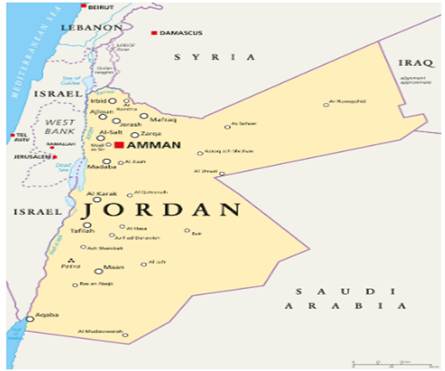
- Pillar of Stability in a Volatile Region: Jordan is recognized as a moderate and stable monarchy, strategically positioned adjacent to volatile nations like Syria, Iraq, and Israel/Palestine. Partnering with Jordan allows India to maintain a robust diplomatic presence and access the region’s heartland without being directly drawn into the complexities and conflicts of its neighbours, enabling a policy of non-interference while maintaining influence.
- Key to West Asia Balance: Jordan’s neutral and respected standing, particularly its role as the custodian of Muslim and Christian holy sites in Jerusalem, helps India diversify its West Asia outreach beyond traditional partners (GCC/Israel). This relationship facilitates a balanced and nuanced approach to the Israel-Palestine issue, where King Abdullah II is a highly respected and influential voice, especially concerning the Gaza issue and regional de-escalation efforts.
- Energy and Food Security Link: The relationship is a direct contributor to India’s national security, particularly food security. The dedicated supply of vital agricultural inputs like Phosphates and Potash through the Jordan India Fertilizer Company (JIFCO) project ensures the stability of India’s domestic food production chain, insulating it from global price volatility and supply disruptions.
- Counter-Radicalization and Moderate Narrative: Jordan actively promotes a moderate Islamic narrative globally, including the widely cited Amman Message. This is critical for India’s domestic security interests and global counter-terrorism diplomacy, providing a valuable partner in developing a counter-narrative against religious extremism and radicalization.
Key Challenges in India–Jordan Bilateral Relations:
1. Economic and Trade Imbalances
The current economic relationship suffers from structural issues, despite India being Jordan’s 3rd or 4th largest trading partner.
- Trade Composition: The bilateral trade, valued at USD 2.875 billion (2023-24), is heavily dominated by India’s imports of just a few commodities, mainly Phosphates and Potash for fertilizer security. This reliance makes the economic partnership transactional and susceptible to fluctuations in global commodity prices and fertilizer demand.
- Target vs. Reality: Although a recent high-level visit (Dec 2025) set an ambitious target of doubling trade to USD 5 billion over five years, achieving this requires significant diversification of Indian exports beyond traditional items (machinery, pharmaceuticals, and cereals) and encouraging more reciprocal Jordanian investments in India.
- Absence of Comprehensive FTA: Unlike India’s strategic partners in the GCC, the absence of a comprehensive Free Trade Agreement (FTA) or Preferential Trade Agreement (PTA) acts as a potential hurdle, maintaining tariffs and complicating market access for a wider range of goods.
2. Low Depth in Defence Cooperation
Despite the signing of an MoU on Defence Cooperation in 2018, the partnership remains nascent, especially compared to India’s deepening defence ties with other West Asian states.
- Limited High-End Exercises: There is a lack of high-visibility, regular, and large-scale joint military exercises that could significantly enhance interoperability and strategic trust.
- Defence Trade: Defence procurement and co-production between the two countries are minimal. India needs to actively offer its indigenous defence platforms and technology (like patrol vessels, radars, or missile systems) to Jordan to evolve the relationship from merely training-based to a supplier-consumer framework.
- Focus Constraint: Jordan’s primary security alignment is traditionally with the US and Western powers. India needs to carve out a compelling niche, leveraging its strategic autonomy and non-aligned defence philosophy to become a preferred, reliable partner in areas like counter-insurgency training and specialized technology.
3. Geopolitical Vulnerability and Regional Distractions
Jordan’s difficult location and regional dependencies pose persistent risks that can affect the bilateral relationship.
- Regional Instability: Jordan is situated in a volatile neighbourhood, bordering Syria, Iraq, and the Israeli-Palestinian territories. Instability, particularly the prolonged Gaza conflict, necessitates Jordan’s constant focus on border security and humanitarian crises, often diverting its attention and resources from bilateral economic initiatives.
- Impact of the Palestine Issue: The Palestine issue is central to Jordan’s foreign policy and domestic stability (due to its large Palestinian refugee population). While India and Jordan have a shared vision of a stable West Asia, any shifts in India’s policy concerning the Israel-Palestine issue can create diplomatic sensitivities in Amman, potentially causing friction or requiring careful balancing.
4. Need for Greater Visibility and People-to-People Links
The bilateral relationship, while warm at the political level, lacks a strong public and commercial foundation.
- Low Awareness: Despite the cultural affinity (e.g., Bollywood interest), public awareness in both countries about the scale and strategic significance of the partnership is relatively low. This limits the mobilization of soft power resources and restricts people-to-people movement beyond the existing diaspora community (around 17,500 people).
- Limited Tourism and Academic Exchange: While tourism has been growing and the “Twinning Agreement” between Petra and Ellora is a positive step, the volume of tourist and academic exchange remains low compared to India’s ties with other major destinations. This restricts the long-term, organic growth of mutual understanding and professional collaboration.
Steps Needed to Advance India–Jordan Strategic Partnership:
1. Diversifying Economic and Trade Ties
Moving beyond the reliance on the fertilizer trade is the most crucial step for sustainable economic engagement.
- Finalize and Implement Key Agreements: Expedite the finalization and implementation of the Double Taxation Avoidance Agreement (DTAA) review and explore a Preferential Trade Agreement (PTA) to reduce tariffs and facilitate wider trade.
- Sectoral Diversification: India must actively push cooperation into Jordan’s priority sectors. Key areas include Renewable Energy (MoU signed in Dec 2025), Water Resources Management (critical for water-scarce Jordan), Fintech, and Digital Technologies. India should leverage its expertise to help Jordan meet its UN Sustainable Development Goals (SDGs) related to water and energy.
- Promote Investment in High-Tech: Encourage Indian investment in Jordan’s non-traditional sectors, leveraging Jordan’s skilled workforce and its proximity to Western markets. The success of the Jordan India Fertilizer Company (JIFCO) joint venture should be replicated in areas like IT, pharmaceuticals, and infrastructure.
2. Deepening Security and Strategic Dialogue
Strengthening the security architecture will underline the ‘Strategic’ component of the partnership.
- Institutionalize Strategic Dialogue: Establish regular, institutionalized dialogues at the National Security Adviser (NSA) level for consultations on regional security, counter-terrorism, and de-radicalization. Utilize Jordan’s expertise in the Aqaba Process (a multilateral counter-terrorism platform).
- Enhance Defence Cooperation: Move beyond basic training to joint exercises focused on cyber security, counter-insurgency, and specialized military medical services, leveraging the 2018 MoU. India should offer indigenous defence technology (e.g., BrahMos, LCA Tejas components) to become a reliable defence supplier, integrating Jordan into India’s defence ecosystem.
- Support Global Initiatives: Jordan’s intent to join Indian-led global initiatives like the International Solar Alliance (ISA), Global Biofuel Alliance (GBA), and the Coalition for Disaster Resilient Infrastructure (CDRI) (outcomes of the Dec 2025 visit) must be fast-tracked to expand strategic alignment on climate change and sustainable development.
3. Leveraging Digital and Capacity Building
India’s strength in digital public infrastructure (DPI) and human resource development must be fully utilized.
- Promote DPI and Fintech: Actively support Jordan’s digital transformation by sharing India’s successful population-scale digital solutions, such as the Aadhaar-stack and UPI/RuPay digital payment systems, as was agreed upon in the Letter of Intent (Dec 2025). This can streamline Jordan’s economy and enhance financial inclusion.
- Scale up ITEC and Skill Development: Increase the number of slots under the Indian Technical and Economic Cooperation (ITEC) programme and tailor courses specifically for Jordanian professionals in areas like cybersecurity, AI, and renewable energy technologies to meet local demand.
- Collaborate on Health and Education: Strengthen cooperation in affordable healthcare, pharmaceuticals, telemedicine, and medical training, using India’s cost-effective models to build Jordan’s institutional capacity.
4. Enhancing People-to-People Connectivity
Facilitating greater contact and cultural exchange builds long-term goodwill and commercial opportunities.
- Improve Connectivity: Encourage direct flight routes between major Indian and Jordanian cities to boost tourism, trade, and business travel, capitalizing on the simplified e-Visa process for Indian tourists.
- Promote Cultural and Academic Exchange: Fully utilize the Twinning Agreement between Petra and Ellora (Dec 2025) to promote heritage conservation, tourism, and academic research. Encourage scholarships and exchange programs between universities.
- Harness Diaspora Potential: Engage the significant Indian diaspora in Jordan (17,500 people, especially in textiles) to act as a bridge for trade, investment, and cultural promotion
Conclusion
The India-Jordan partnership is evolving from a transactional relationship centered on fertilizers to a comprehensive, strategic alliance encompassing defence, digital technology, and water security. Sustaining this momentum through the agreed-upon $5 billion bilateral trade target and deeper security cooperation will solidify Jordan’s role as a reliable and trusted gateway for India in the tumultuous West Asian landscape.