What is the H-1B Visa?
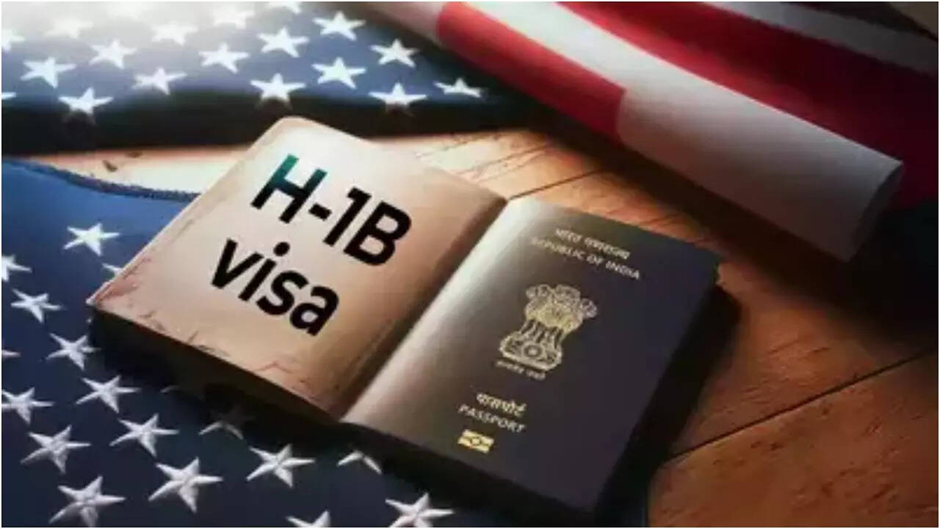
- Classification: It is a non-immigrant visa issued by the United States.
- Purpose: Allows U.S. employers to temporarily employ foreign workers in “specialty occupations” that require theoretical or technical expertise.
- Target Sectors: Primarily utilized in Science, Technology, Engineering, and Mathematics (STEM), as well as finance, architecture, and medicine.
Key Features & Eligibility:-
- Educational Requirement: The applicant must hold at least a Bachelor’s degree or its equivalent in the specific field.
- Sponsorship: It requires a U.S. employer to act as a sponsor; individuals cannot apply for it themselves.
- Duration: Issued initially for 3 years, extendable for another 3 years (Total maximum of 6 years).
- Dual Intent: Unlike many other visas, H-1B holders are allowed “dual intent,” meaning they can apply for a Green Card (Permanent Residency) while working.
- Dependents: Spouses and children (under 21) can accompany the holder on an H-4 visa.
The “Cap” and Selection Process:-
- Annual Limit: There is a Congressional cap of 85,000 visas per fiscal year.
- Regular Cap: 65,000 visas.
- Master’s Cap: Additional 20,000 reserved for those with a Master’s degree or higher from a U.S. institution.
- Selection Mechanism: Historically conducted via a random lottery system when applications exceed the cap.
- Proposed Reforms: Recent proposals aim to shift from a lottery to a wage-weighted selection, prioritizing higher salaries to prevent abuse and protect domestic wages.
Recent Developments :-
- Domestic Renewal Pilot: In 2024, the U.S. launched a pilot program allowing eligible Indian H-1B holders to renew their visas within the U.S., eliminating the need to travel back to India for stamping.
- Modernization Rule: The U.S. Citizenship and Immigration Services (USCIS) has introduced a “Beneficiary Centric” selection process to curb the practice of multiple employers filing for the same individual to game the lottery.
Significance for India:-
- Largest Beneficiary: Indian nationals consistently receive over 70% of all H-1B visas issued annually.
IT Sector Backbone: It is a critical enabler for the Indian IT services industry (e.g., TCS, Infosys) to deploy talent for on-site projects in the U.S.
Q. With respect to the key features and eligibility of the H-1B visa, consider the following statements:
1. It is a non-immigrant visa that strictly prohibits the holder from applying for permanent residency (Green Card).
2. The visa is initially issued for a period of 3 years and can be extended for a maximum total duration of 6 years.
3. Individuals can directly petition for this visa themselves without the need for an employer sponsor.

Which of the statements given above is/are correct?
(a) 2 only
(b) 1 and 2 only
(c) 2 and 3 only
(d) 1, 2 and 3

Answer: a
Explanation:

Statement 1 is incorrect: The H-1B visa allows for "dual intent," meaning holders can apply for a Green Card while working.
Statement 2 is correct: The validity is 3 years initially, extendable by another 3 years, totaling a maximum of 6 years.
Statement 3 is incorrect: A U.S. employer must act as a sponsor; individuals cannot apply for the visa themselves.