Context
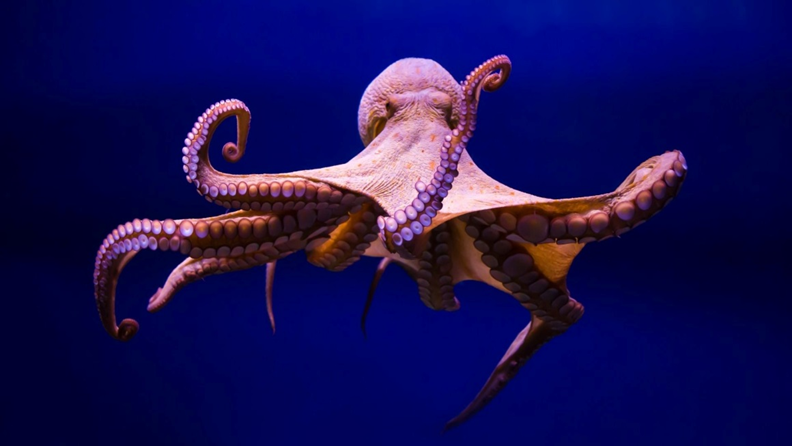
Recent scientific research has redefined our understanding of the hectocotylus, a specialized arm in male octopuses. Previously regarded solely as a reproductive tool for sperm delivery, it is now recognized as a sophisticated sensory organ capable of “tasting” and identifying mates through chemical detection, even in complete darkness.
1. Functional Evolution: From Delivery to Detection
- Traditional Understanding: Historically, scientists viewed the hectocotylus primarily as a mechanical appendage used to transfer spermatophores (sperm packets) into the female’s mantle cavity.
- The New Discovery: Research indicates that the arm functions as a chemosensory organ. It allows the male to detect progesterone, a hormone present in the female’s skin and reproductive tract.
- Mechanism: By physically touching the female, the male “tastes” the hormonal signals. This sensory assessment ensures reproductive success during the rare and brief encounters between solitary octopuses.
2. The Role of CRT1 Receptors
- The CRT1 Receptor: Scientists have identified a specific receptor called CRT1 that triggers mating behavior.
- Evolutionary Origin: CRT1 evolved from ancient neurotransmitter receptors.
- Dual Functionality:
- 1. Predation: Similar receptors are used by octopuses to hunt prey by sensing chemicals on the seafloor.
- 2. Reproduction: Over millions of years, CRT1 specialized to recognize progesterone with high affinity, facilitating mate identification.
3. Biological and Evolutionary Significance
- Efficiency in Darkness: The ability to sense hormones through touch allows cephalopods to locate the female oviduct for insemination in the deep sea or nocturnal environments where visual cues are absent.
- Integrated Appendage: The hectocotylus represents a “merged” evolutionary innovation, combining sensory assessment and gamete delivery into a single limb.
- Biodiversity: This discovery highlights how minute changes in protein structures (like the CRT1 receptor) can lead to complex new behaviors and drive the vast biodiversity found in marine ecosystems.
With reference to the hectocotylus in octopuses, consider the following statements:

1. The hectocotylus contains receptors such as CRT1 that help in detecting chemical signals from females.
2. The CRT1 receptor is exclusively used for reproduction and has no role in other biological functions.

Which of the statements given above is/are correct?
(a) 1 only
(b) 2 only
(c) Both 1 and 2
(d) Neither 1 nor 2