Why in the News?
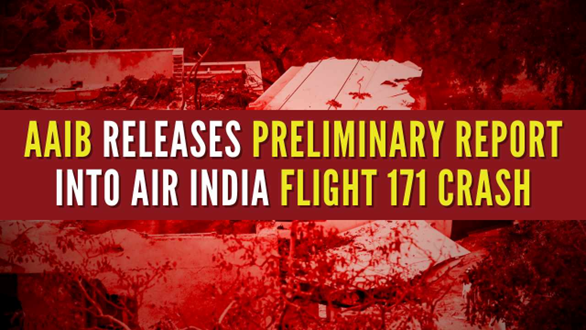
- On June 12, 2025, the crash of Air India Flight AI-171 occurred at Ahmedabad airport, resulting in the death of all 234 passengers and crew members aboard.
- As of November 2025, the Ministry of Civil Aviation (MoCA) has delayed the release of the full Aircraft Accident Investigation Bureau (AAIB) report, which has intensified public distrust and obstructed necessary aviation safety reforms.
Background of the Incident
- Crash Details:
- Air India Flight AI-171 was scheduled to depart from Ahmedabad when it encountered a dual engine failure during the takeoff phase, which forced an aborted departure and ultimately led to the crash.
- The aircraft involved was a Boeing 787 Dreamliner that had previously logged extensive hours of safe operation without any similar incidents.
- Timeline of Events:
- On June 12, 2025, the crash took place, claiming the lives of all 234 passengers and crew members on board.
- On June 15, 2025, the Aircraft Accident Investigation Bureau (AAIB), operating under the Ministry of Civil Aviation (MoCA), downloaded the black box data in Delhi for initial analysis.
- On July 22, 2025, investigators recovered the wreckage from the debris field and commenced preliminary data analysis.
- On September 4, 2025, the U.S. National Transportation Safety Board (NTSB) provided relevant information to support the ongoing investigation.
- Immediate Response:
- Following the incident, authorities issued an order mandating enhanced command protection protocols to prevent similar occurrences.
- However, the Ministry’s prolonged delay in making public disclosures has permitted the unchecked spread of misinformation, such as unproven theories involving sabotage or electrical malfunctions.
Insights from the Preliminary Report
- The preliminary findings from the investigation, although not yet fully disclosed to the public, suggest that procedural and systemic lapses were the primary causes rather than any inherent defects in the aircraft itself.
- Key Excerpts:
- Cockpit Dynamics: According to standard Air India procedures, the copilot was responsible for handling the controls during takeoff, as the captain typically hands over after the initial ascent phase. Data from the Cockpit Voice Recorder (CVR) shows that the rotation speed reached approximately 85 knots at 08:08:35, immediately followed by a distress call from the crew.
- Engine Failure Sequence:
- Interruptions in the fuel control switches and the overall fuel supply system caused both engines to become starved of fuel, leading to a complete power loss.
- A transitional cutoff occurred in the dual fuel supplies, which investigators believe was likely triggered by an electrical power shutdown, as indicated in the CVR transcript at exactly 08:04 A.M.
- Crew Response: The copilot, in their monitoring role, was tasked with executing non-normal checklists during the emergency, but critical mandatory call-outs such as “Your Controls” appear to have been overlooked, possibly due to the assumption that the engines had shut down from the power loss.
- Absence of Wild Speculation: In stark contrast to the sensational narratives circulating on social media, the preliminary report deliberately avoids any unverified claims and instead concentrates on factual, straightforward findings, including details on the takeoff roll time and data from the crash recorder.
- If these preliminary details are fully corroborated in the complete report, they would clear the aircraft’s design of any blame while pointing to significant gaps in procedural training and crew preparedness.
Demands for Transparency and Reforms
- The persistent delay in releasing the full report, which now exceeds 100 days, poses a serious risk of further eroding public confidence in aviation authorities and postponing vital corrective measures.
- Prominent stakeholders, including aviation expert Mohan A. Captain a former regional director for Boeing have publicly urged the immediate release of the report to effectively quash ongoing speculation and restore trust.
- Key Demands:
- The AAIB must publish the complete report without any redactions, ensuring that it includes full transcripts from the Cockpit Voice Recorder (CVR) and a detailed analysis of the Flight Data Recorder (FDR).
- A national aviation safety dashboard should be established to enable real-time tracking of incidents, with integrated data streams from the Ministry of Civil Aviation (MoCA), the Directorate General of Civil Aviation (DGCA), and relevant international bodies.
- Enhanced training programs for pilots must be mandated, with a specific focus on redundancies in fuel supply systems and protocols for handling electrical faults.
- Policy Recommendations:
- India should align its practices more closely with global standards, noting that the U.S. Federal Aviation Administration (FAA) and the UK’s Civil Aviation Authority (CAA) have already cleared operations of the Boeing 787; this alignment could facilitate stronger bilateral cooperation on safety enhancements.
- Perceptions of whitewashing or cover-ups need to be addressed through full transparency in disclosures, drawing lessons from historical cases like the 1975 and 2019 United Kingdom aviation accidents where investigators had unrestricted access to all data.
- As short-term safeguards, fuel supply systems on all Indian carriers should undergo retrofitting, and mandatory simulation exercises for dual-engine failure scenarios must be implemented across the fleet.
- If authorities fail to take decisive action, the consequences could intensify, leaving pilots under undue stress from lingering unanswered questions and fostering a broader public perception of regulatory incompetence and negligence.
Implications for Aviation Governance
- Regulatory Challenges:
- The manner in which the Ministry of Civil Aviation (MoCA) has managed the investigation exemplifies systemic delays in achieving investigative transparency, which stands in sharp contrast to the swift and efficient approaches adopted by international bodies, such as the NTSB’s rapid sharing of critical data.
- Economic and Safety Nexus:
- With India’s aviation sector poised for approximately 10% annual growth, the unresolved nature of such high-profile crashes threatens to undermine investor confidence and disrupt key revenue streams from tourism and related industries.
- International Dimensions:
- Ongoing collaborations between Boeing and foreign regulatory entities underscore the pressing need for harmonized safety norms under the International Civil Aviation Organization (ICAO) frameworks, especially in light of geopolitical tensions influencing U.S.-India aviation partnerships.
About Aircraft Accident Investigation Bureau
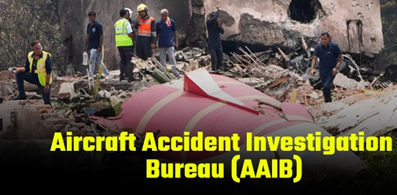
- The Aircraft Accident Investigation Bureau (AAIB) is an independent body under the Ministry of Civil Aviation, Government of India, responsible for investigating aircraft accidents and serious incidents.
- Established :
- July 2012
- Under Rule 5 of the Aircraft (Investigation of Accidents and Incidents) Rules, 2012.
- Primary goal :
- Determine the causes of accidents
- Recommend safety measures.
- It operates in compliance with Annex 13 of the International Civil Aviation Organization (ICAO).
- The Bureau’s findings and safety recommendations are crucial for improving aviation safety standards and preventing future accidents in India.
Conclusion
- The tragedy of Air India Flight AI-171 calls for far more than mere mourning; it demands immediate and resolute action, starting with the release of the full report to properly honor the victims and to strengthen the safeguards protecting India’s airspace.
- By choosing to prioritize empirical evidence over any form of evasion or delay, the Ministry of Civil Aviation (MoCA) has the opportunity to convert this profound loss into a foundational element of enhanced aviation resilience across the nation.
- This case serves as a stark and poignant reminder that the essence of effective governance ultimately rests on unwavering accountability otherwise, rampant speculation will overshadow the pursuit of truth, and unnecessary delays will continue to imperil countless futures.