After Reading This Article You Can Solve This UPSC Mains Model Question:
What introduces friction into the ties between India and the United States is that Washington is still unable to find for India a position in its global strategy, which would satisfy India’s national self-esteem and ambitions. Explain with suitable examples. (GS-2, International Relations)
Context:
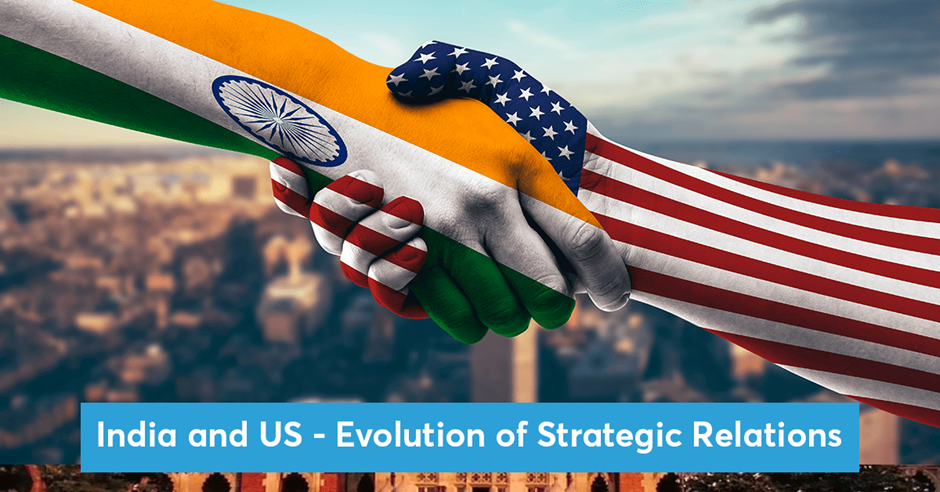
The year 2025 presents a “Dual-Track” dynamic in India-US relations. While political optics have faced headwinds marked by the postponement of the India-hosted Quad Leaders’ Summit and trade frictions institutional cooperation, particularly in defence and technology, has accelerated, insulating the partnership from diplomatic volatility.
Background:
- Post-Independence (1947-1990): Characterized as “Estranged Democracies” due to Cold War geopolitics and US proximity to Pakistan.
- The Turnaround (2000-2005): President Clinton’s visit (2000) and the 2005 New Framework for Defence Cooperation laid the groundwork.
- The Watershed Moment (2008): The India-US Civil Nuclear Deal ended India’s nuclear apartheid and de-hyphenated India from Pakistan in US policy.
- Strategic Upgrade (2016-2018): Designated as a “Major Defence Partner” (2016) and granted STA-1 Status (2018), granting India access to high-level technology comparable to NATO allies.
- Institutional Deepening (2018–2025): This era cemented strategic interoperability, moving beyond buyer-seller ties. It commenced with India securing STA-1 status (2018) and signing the remaining foundational pacts (COMCASA, 2018; BECA, 2020). The focus subsequently shifted to tech co-development under iCET (2023), culminating in the 2025 Defence Framework renewal and the HAL-GE jet engine deal.
The Strategic Backbone: Defence & Technology
Defence remains the “major pillar” of the partnership, insulated from political shifts.
A. Foundational Agreements
- GSOMIA (2002): General Security of Military Information Agreement (Protection of classified intelligence).
- LEMOA (2016): Logistics Exchange Memorandum of Agreement (Refuelling and berthing facilities).
- COMCASA (2018): Communications Compatibility and Security Agreement (Access to encrypted communication systems).
- BECA (2020): Basic Exchange and Cooperation Agreement (Sharing of real-time geospatial intelligence).
B. Recent Milestones (2024-2025)
- Defence Framework Agreement (2025): A 10-year pact enhancing interoperability and information sharing.
- HAL-GE Deal (2025): Agreement for F414 jet engines, signifying a shift from “buyer-seller” to “co-development”.
- SOSA (2024): Security of Supply Arrangement to ensure mutual priority support for defence goods.
- INDUS-X: The India-US Defence Acceleration Ecosystem connecting defence startups and academia.
C. New Frontiers: Space & Infrastructure
- NISAR (July 2025): Launch of the NASA-ISRO Synthetic Aperture Radar satellite for earth observation.
- Quad Ports Conference (2025): Inaugural focus on resilient port infrastructure in the Indo-Pacific.
Challenges:
Despite strategic convergence, structural irritants persist.
- Economic & Trade:
- GSP Withdrawal: The US removed India from the Generalized System of Preferences (duty-free access) in 2019; restoration remains pending.
- Tariff Wars: US tariffs on steel/aluminum and India’s retaliatory measures create trade dampeners.
- IPR Issues: India is consistently placed on the USTR’s “Priority Watch List” for Intellectual Property Rights enforcement.
- Geopolitical Divergence:
- US-Pakistan Relations: Renewed US engagement with Pakistan (port access, F-16 sustenance) raises security concerns in New Delhi.
- Digital Sovereignty: Disagreements over India’s Data Localisation norms (RBI guidelines) and digital taxation (Equalisation Levy).
Way Forward:
- Supply Chain Integration: Leverage the “China Plus One” strategy to integrate India deeper into US global value chains, specifically in semiconductors and pharmaceuticals.
- FTA Negotiations: Move towards a Free Trade Agreement or a “mini-trade deal” to resolve tariff anomalies and GSP restoration.
- Deepening iCET: Expand the Initiative on Critical and Emerging Technology (iCET) to cover AI, quantum computing, and biotechnology.
- Institutionalising Dialogue: Ensure mechanisms like the 2+2 Ministerial Dialogue continue regardless of political leadership changes.
Conclusion
The India-US partnership has matured into a “Global Strategic Partnership,” driven by mutual necessity rather than just shared values. While political optics may fluctuate, the institutional depth—built on foundational agreements and defence ties—acts as a shock absorber. The future trajectory depends on successfully navigating trade headwinds while consolidating cooperation in the Indo-Pacific theatre.