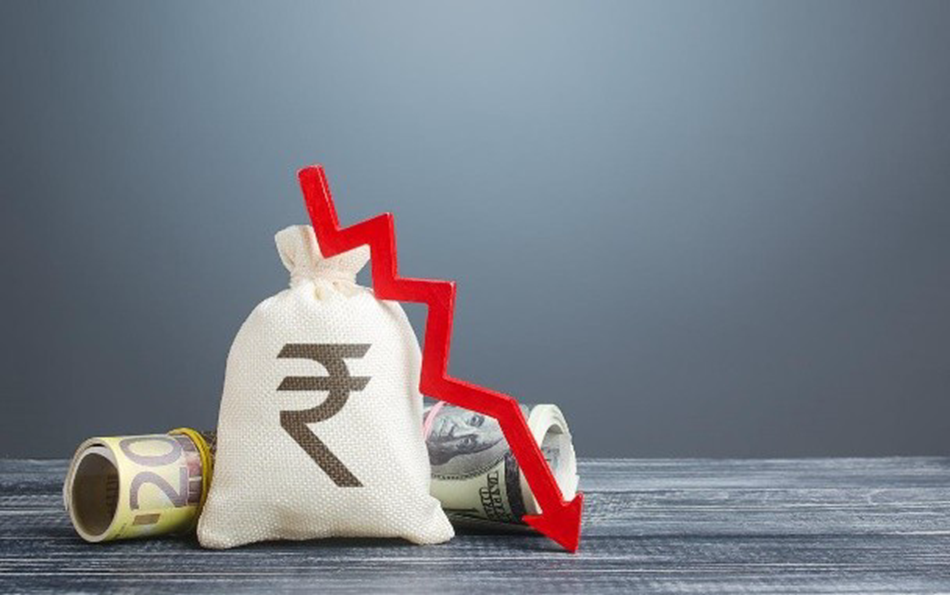
Context : The Indian Rupee (INR) has depreciated by 4.3% against the US Dollar (USD) in the calendar year 2025 (Jan-Dec).
- Asian Standing: Analysts categorize INR as the worst-performing currency in the Asian region for this period.
- Exchange Rate: The currency breached the 89.66 mark against the USD in the spot market (November 2025), surpassing the RBI-defended level of 88.8.
Devaluation vs. Depreciation
- Devaluation: A deliberate downward adjustment of the currency’s value by the Central Bank. It is a policy tool often used to boost export competitiveness.
- Depreciation: A decline in currency value driven by market forces (supply and demand), capital flows, and global economic sentiment.
Drivers of Rupee Depreciation
Domestic Triggers
- Inflationary Pressure: High domestic inflation erodes purchasing power and increases production costs, reducing export competitiveness.
- Trade Deficit: High import volume (especially crude oil) creates excess demand for foreign currency.
- Fiscal Deficit: Persistent imbalances signal structural economic weakness.
- Policy Uncertainty: Frequent shifts in exchange rate policies can rattle investor confidence.
External Catalysts
- Global Dollar Strength: Aggressive rate hikes by the US Federal Reserve (Fed) strengthen the Dollar Index (DXY), weakening emerging market currencies.
- US Tariffs: The imposition of a 50% tariff by the US administration has severely hit Indian exports.
- Capital Flight: Foreign Portfolio Investors (FPIs) withdraw funds seeking safer yields in the US/EU markets.
- Geopolitical Instability: Conflicts (e.g., Russia-Ukraine) disrupt supply chains, spiking energy prices and inflating the import bill.
Economic Implications
- Imported Inflation: Costlier imports (fuel, electronics) push up domestic consumer prices.
- Current Account Deficit (CAD): Higher import bills worsen the CAD, straining forex reserves.
- Debt Servicing: External Commercial Borrowings (ECBs) and government debt denominated in dollars become more expensive to service.
- Investment Climate: Volatility triggers capital flight as foreign investor confidence wanes.
- Export Paradox: While a weaker rupee theoretically aids exports, high input costs (due to inflation) often negate the competitive advantage.
Strategic Interventions
- 1.Monetary Measures (RBI)
- Forex Intervention: Selling dollars from reserves to absorb excess liquidity and arrest volatility.
- Policy Rate Hikes: Increasing the Repo rate to widen the interest rate differential, attracting foreign capital.
- Currency Swaps: Utilizing bilateral swap agreements to pay for trade in local currencies, bypassing the dollar.
2. Fiscal Measures (Government):
- Import Substitution: Promoting domestic manufacturing (e.g., Make in India) to reduce reliance on imported goods.
- Export Promotion: Incentivizing exporters to boost foreign currency earnings.
- FDI Liberalization: Easing regulations to attract long-term stable capital (Foreign Direct Investment).
3. The Strategic Outlook
- Structural Reforms: Move towards a robust, defined exchange rate framework to minimize speculative attacks.
- Self-Reliance: Focus on energy independence (renewables) to reduce the oil import burden.
- Reserve Diversification: Accumulate a multi-currency forex basket to reduce over-reliance on the US Dollar.