Context
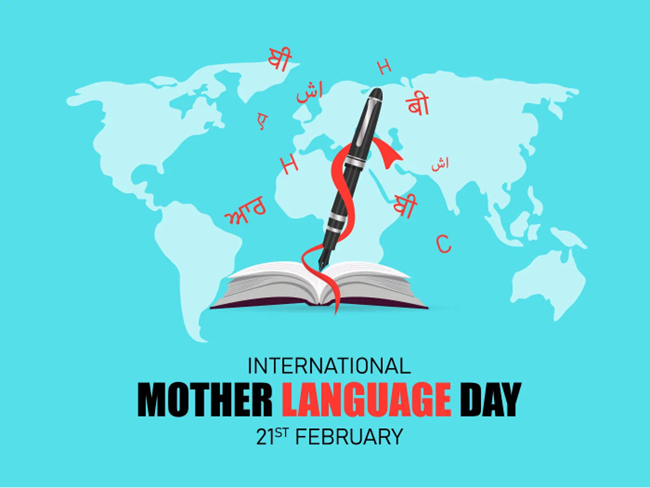
Recently, on February 21, 2026, the global community observed International Mother Language Day, marking the Silver Jubilee (25th anniversary) of its first worldwide celebration in 2000. According to reports in The Hindu and The Indian Express, the day was commemorated in India with high-level events emphasizing the integration of technology and mother tongues under the 2026 theme, “Youth voices on multilingual education.” This year’s observance is particularly significant as it coincides with the midpoint of the International Decade of Indigenous Languages (2022–2032), prompting renewed calls for the preservation of India’s 197 endangered languages.
1. Historical Evolution
- The Origin: The initiative to observe this day was a proposal by Bangladesh to honor the martyrs of the 1952 Language Movement (Bhasha Andolan).
- The 1952 Incident: On February 21, 1952, students in Dhaka were killed by police fire while protesting for the recognition of Bengali as a national language of Pakistan.
- Recognition: UNESCO approved the proclamation in 1999, and the first official celebration was held in 2000. The UN General Assembly formally recognized the day in its 2002 resolution.
2. Theme 2026: Youth & Technology
- Theme: “Youth voices on multilingual education.”
- Significance: It highlights the role of young people in using digital tools and AI to revitalize underrepresented languages and ensure inclusive education.
3. Constitutional Safeguards in India
India provides extensive protection for linguistic diversity:
- Article 29: Protects the right of any section of citizens to conserve their distinct language, script, or culture.
- Article 30: Grants linguistic and religious minorities the right to establish and administer educational institutions.
- Article 350A: Mandates that states and local authorities provide instruction in the mother tongue at the primary stage of education for linguistic minority children.
- Article 350B: Directs the appointment of a Special Officer for Linguistic Minorities by the President of India.
- Eighth Schedule: Lists 22 recognized languages. Currently, English is NOT included in this schedule.
4. UNESCO’s Categories of Language Endangerment
UNESCO classifies languages based on their “intergenerational transmission”:
- Vulnerable: Children speak the language, but it may be restricted to specific areas (e.g., home).
- Definitely Endangered: Children no longer learn the language as their mother tongue in the home.
- Severely Endangered: Spoken by grandparents; the parent generation may understand it but does not speak it to children.
- Critically Endangered: The youngest speakers are grandparents and older, and they speak it only partially and infrequently.
5. Government of India Initiatives
- NEP 2020: Encourages the medium of instruction to be in the mother tongue/regional language at least until Grade 5.
- Bhashini Initiative: An AI-led language translation platform to break language barriers in digital services.
- SPPEL: The “Scheme for Protection and Preservation of Endangered Languages” documents languages spoken by fewer than 10,000 people.
Q. With reference to International Mother Language Day and linguistic safeguards in India, consider the following statements:

1. The 2026 theme for International Mother Language Day focuses on the role of youth in multilingual education.

2. Article 350A of the Indian Constitution was part of the original document enacted in 1950.

3. According to UNESCO, a language is 'Definitely Endangered' if the parent generation understands it but does not speak it to their children.

Which of the statements given above is/are correct?

A) 1 only
B) 1 and 2 only
C) 2 and 3 only
D) 1, 2, and 3

Correct Answer: (A)

•	STATEMENT 1 CORRECT: The 2026 theme is "Youth voices on multilingual education," emphasizing youth as active agents in language revitalization.
•	STATEMENT 2 INCORRECT: Article 350A was not in the original Constitution; it was added by the 7th Constitutional Amendment Act of 1956 following the States Reorganisation Commission's report.
•	STATEMENT 3 INCORRECT: UNESCO classifies a language as 'Definitely Endangered' when children no longer learn it as a mother tongue in the home. The description provided (parents understand but don't speak to children) refers to 'Severely Endangered'.