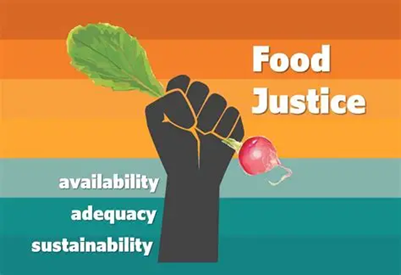
Why in the news?
- The new EAT-Lancet Commission report on “healthy, sustainable and just food systems” has highlighted that food systems are central to multiple overlapping planetary crises (climate, biodiversity, water, pollution) and that food alone drives five of the six breached planetary boundaries and about 30% of global greenhouse-gas (GHG) emissions.
- The report also flags stark biogeochemical imbalances (notably nitrogen surplus more than twice the safe limit) and warns that current responses—without deeper policy change—will only partly return food systems to safety by mid-century.
Context and Significance
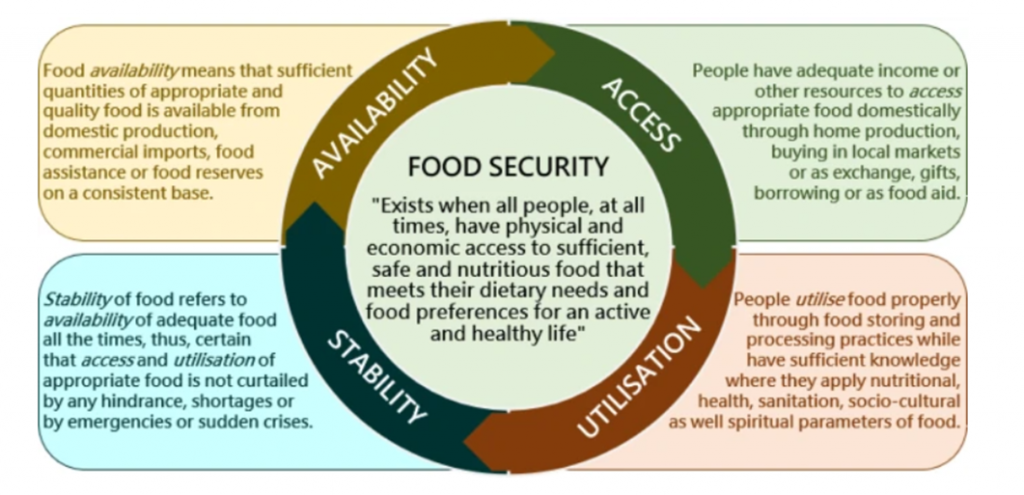
Food systems connect agriculture, nutrition, public health, rural livelihoods, trade and the environment. Any policy on food must therefore balance nutrition security, affordability, equity/justice, and environmental sustainability — all high-priority themes in public policy and governance.
Key findings
- Food systems drive ~30% of global GHG emissions and are central to five breached planetary boundaries.
- Animal-source foods account for most agricultural emissions; grains dominate nitrogen, phosphorus and water use.
- Current agriculture leads to a global nitrogen surplus >2× the safe limit.
- Combining measures (cutting food loss, productivity gains, dietary shifts) is necessary — diet shifts alone are insufficient to return systems to safety by mid-century.
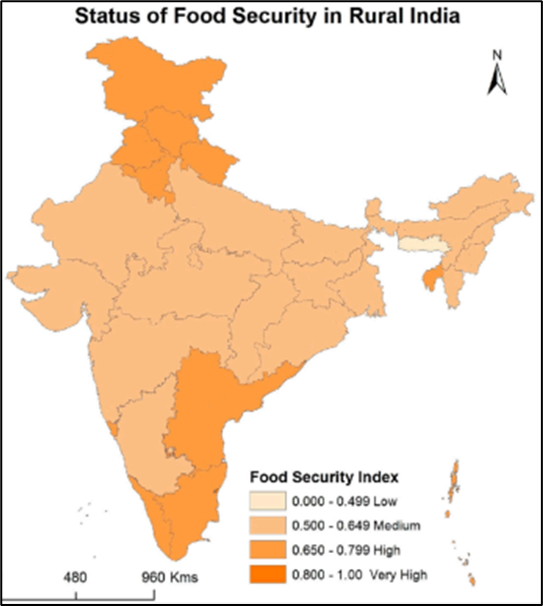
- For India: moving from a cereal-heavy to a more diverse diet (more vegetables, fruits, nuts, legumes) is recommended by benchmarks for 2050 — but this raises affordability and price-shock concerns because many of these foods are imported or supply-constrained in parts of India.
- The report warns of market concentration, weak incentives to prevent labour/ecological harm, and undue corporate influence that can stall change. It calls for stronger collective bargaining and regulatory representation for small producers and consumers.
Detailed analysis
1. Environmental dimension
- Emissions: Animal-based foods are emission-intensive. Reducing ruminant meat consumption (or improving production efficiency) is essential for mitigation.
- Biogeochemical flows: Overuse of nitrogen & phosphorus (fertilizers) → water pollution, eutrophication, health hazards. India’s fertilizer policy and cropping patterns are central here.
- Water & soils: Intensive cereal irrigation leads to groundwater depletion (policy concern: implicit incentives to extract groundwater). Soil degradation threatens productivity and resilience.
- Supply-side interventions needed: water-efficient irrigation, crop diversification, soil restoration, reduce food loss in value chains, expand cold-chains to lower dependence on fossil-fuelled transport/processing.
2. Nutrition & affordability
- Dietary transition recommended: more vegetables, fruits, legumes, nuts; less reliance on cereals and unhealthy processed foods.
- Affordability challenge: increased demand for diverse foods can raise consumer prices, especially where supply is limited or foods are imported. This threatens food justice for poor households.
- Policy instruments: fiscal measures (targeted subsidies, price supports for nutrient-rich crops), procurement reforms (include nutrient-dense items in PDS/midday meals), public investments to lower supply costs (cold-chains, regional processing).
3. Justice & social/political economy
- Justice = equitable access to healthy diets + protecting livelihoods of small producers.
- Cultural/political constraints: diets are anchored in religion, caste, convenience, and meal-time procurement commitments (e.g., midday meals), making purely diet-first strategies politically and socially sensitive.
- Corporate & market concentration: may capture value chains, distort incentives, and marginalise smallholders. Strengthening collective bargaining and consumer representation is necessary.
4. Policy trade-offs & contested assumptions
- The report’s assumption of GDP growth (127% in 30 years) is questioned in the article — policy should plan for lower growth and more frequent climate shocks.
- Efficiency paradox: unregulated efficiency gains can raise output and erase environmental savings (rebound effect) — requires complementary policy (caps, standards, pricing externalities).
- Diet vs supply approach: a mixed strategy is recommended — standards & regulations to cut harmful inputs; fiscal measures to make healthy foods affordable; supply reforms to tackle water and soil issues.
Important policy levers (what Government must do)
- Reform subsidies & procurement: shift from blanket input subsidies to targeted incentives for sustainable inputs and nutrient-dense crops; include fruits/vegetables/legumes in public procurement where feasible.
- Water governance: remove implicit incentives for open groundwater extraction; adopt pricing/rights reforms and invest in micro-irrigation.
- Fertilizer policy: rationalise nitrogen/phosphorus use; promote balanced fertilisation and soil health cards.
- Supply chain investment: invest heavily in cold-chains, regional processing, storage to reduce loss and lower prices of perishable nutritious foods.
- Standards & regulations: set environmental and labour standards across food value chains; curb undue corporate influence; enforce antitrust where market concentration harms small producers.
- Social safety nets: protect affordability via targeted cash transfers or subsidised nutrient-dense food for vulnerable groups; ensure midday meals and ICDS procurement support local nutritious produce.
- Research & extension: support crop diversification, agroecological approaches and smallholder access to technology.
- Labour & collective bargaining: strengthen farmer/producers’ organisations and workers’ bargaining power in processing and retail sectors.
Key Government Initiatives
- National Food Security Act (NFSA), 2013: Legally entitles around two-thirds of the population to subsidised grains, ensuring economic access to food.
- Public Distribution System (PDS): Distributes essential commodities like rice, wheat, and sugar at subsidised rates to vulnerable households.
- Mid-Day Meal Scheme (MDMS): Provides cooked meals to school children, improving nutrition and promoting school attendance.
- Integrated Child Development Services (ICDS): Delivers nutrition, health care, and early education support for children under six and for pregnant/lactating women.
- National Nutrition Strategy (NNS): Targets reduction of malnutrition through convergence across ministries and data-driven interventions.
- Pradhan Mantri Krishi Sinchai Yojana (PMKSY): Expands irrigation coverage and promotes efficient water use to ensure stable agricultural output.
- Rashtriya Krishi Vikas Yojana (RKVY): Supports states with flexible funds to promote agricultural growth and crop diversification.
- National Mission for Sustainable Agriculture (NMSA): Encourages climate-resilient and resource-efficient farming practices for long-term food and livelihood security.
Environmental impacts by food group
| Food group | Major environmental pressure(s) | Policy focus |
| Ruminant meat (beef, lamb) | High GHG emissions (methane), land use | Reduce demand; improve livestock management |
| Other animal products (poultry, dairy) | Moderate emissions, water use | Efficiency + waste reduction |
| Cereals (rice, wheat) | High water use (rice), nitrogen/phosphorus runoff | Water-use efficiency, balanced fertilisation |
| Fruits/Vegetables/Legumes | Lower emissions per calorie, higher per-unit cost, perishability | Cold-chains, local production, price support |
| Processed foods | High energy and packaging footprint; health risks | Fiscal disincentives for unhealthy products; standards |
Challenges in implementing recommendations
- Affordability & political economy: shifting subsidies/ procurement faces resistance from producers and consumers used to subsidised cereals.
- Cultural resistance: dietary preferences linked to religion/caste/region require sensitive policy design.
- Coordination: measures span Ministries (Agriculture, Food & PD, Health, Environment, Water, Consumer Affairs) — requires integrated governance.
- Market power & corporate influence: regulation and antitrust enforcement needed but politically difficult.
- Data & monitoring gaps: measuring nitrogen flows, food-loss baselines, and diet quality at scale is challenging.
Way Forward
- Integrated Food Systems Policy: Develop a unified “National Food Systems Framework” that brings together agriculture, nutrition, water, environment, and health ministries under a single coordination mechanism — aligning targets on emissions, nutrition, and affordability.
- Food System Accounting in GDP: Introduce “Green Food Accounting” that factors in environmental externalities (like nitrogen surplus, groundwater depletion, and emissions) while evaluating agricultural productivity and subsidies.
- Localised Food Governance: Empower Panchayats and Urban Local Bodies to design locally appropriate food and nutrition plans — promoting local procurement, traditional crops, and decentralised storage infrastructure.
- Behavioural and Awareness Measures: Encourage dietary diversity through mass campaigns, school curricula, and media initiatives highlighting the health and ecological benefits of plant-based and regionally balanced diets.
- Technology and Innovation: Promote precision farming, AI-driven soil and water monitoring, and low-emission food processing technologies to reduce resource use and post-harvest losses.
- Agroecology and Climate-Resilient Farming: Scale up agroecological models, crop rotation, intercropping, and integrated nutrient management to maintain productivity while restoring ecosystems.
- Global and South–South Cooperation: Collaborate with developing nations under climate and food alliances to share sustainable agricultural technologies and best practices for nutrition-sensitive farming.
- Monitoring and Data Reforms: Establish a national database to track food loss, nutrient diversity, emissions, and affordability indicators — enabling evidence-based policymaking.
Conclusion
A just and sustainable food system is a policy goal that must reconcile competing priorities — nutrition, affordability, producer livelihoods and planetary boundaries. India needs a calibrated mix of supply-side reforms (water, soil, cold-chains), demand-side measures (fiscal nudges, procurement changes) and institutional safeguards (market regulation, collective bargaining) so that healthy diets become accessible without imposing environmental or social harm.
Source: Justice in food: On new EAT-Lancet Commission report – The Hindu
| Year | Question |
| 2013 | The Food Security Bill is expected to eliminate hunger and malnutrition in India. Critically discuss various apprehensions in its effective implementation along with the concerns it has generated in WTO. |
| 2015 | Livestock rearing has a big potential for providing non-farm employment and income in rural areas. Discuss, suggesting suitable measures to promote this sector in India. |
| 2018 | How has the emphasis on certain crops brought about changes in cropping patterns in recent past? Elaborate on the emphasis on millets production and consumption. |
| 2019 | What are the challenges and opportunities of the food processing sector in the country? How can income of the farmers be substantially increased by encouraging food processing? |