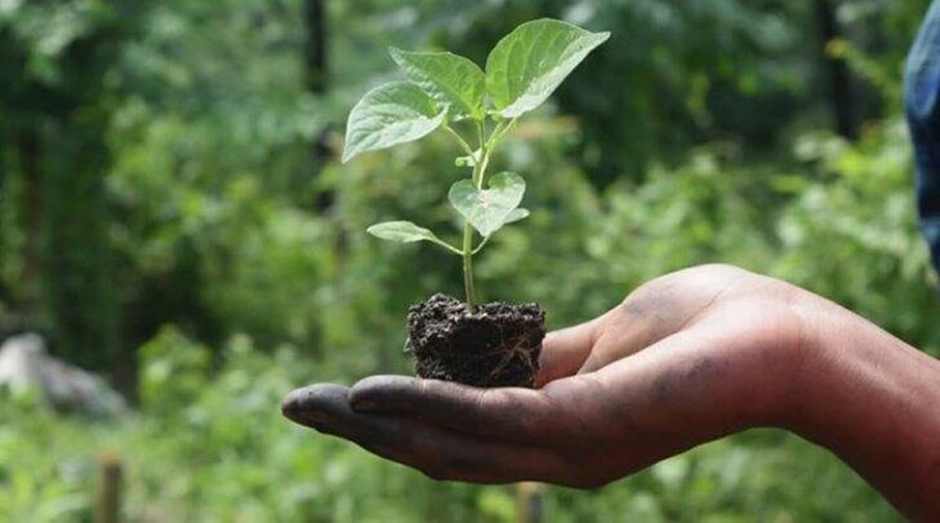
The Indian Council of Agricultural Research (ICAR) has formally directed all State and Central agricultural universities to introduce undergraduate and postgraduate courses, as well as research programmes, dedicated to natural farming.
Key Institutional Directives
- Curriculum Expansion: While natural farming was previously available as an elective, ICAR now mandates dedicated degree programmes.
- Policy Framework: The B.Sc. (Hons.) Agriculture – Natural Farming programme has been developed in alignment with:
- The National Education Policy (NEP) 2020.
- The recommendations of the Sixth Deans’ Committee.
- Implementation Timeline: Several universities initiated this in the 2023-24 academic session; the remaining institutions are urged to adopt it by the next academic year.
About Zero Budget Natural Farming (ZBNF):
Conceptual Framework
- Origin: Formulated in India by Subhash Palekar.
- Inspiration: The method traces its philosophical roots to Masanobu Fukuoka (Japanese farmer and philosopher).
- Core Philosophy: A farming technique aimed at zero production costs by eliminating:
- Reliance on chemicals.
- Expenditure on purchased inputs (credit-free agriculture).
The Four Wheels of ZBNF
- Beejamrit: Seed treatment using cow dung and urine.
- Jeevamrit: A fermented microbial culture to enhance soil activity.
- Acchadana: Mulching to maintain soil moisture.
- Waaphasa: Ensuring soil aeration and moisture retention.
Key Agronomic Practices
- Indigenous Inputs: Utilization of dung from indigenous cows (Bos-indicus), noted for high microbial concentration.
- Intercropping: Cultivation of monocot and dicot crops simultaneously to maintain soil nitrogen.
- Water Conservation: Construction of contours and bunds to preserve rainwater.
- Soil Revival: Restoration of local earthworm species through increased organic matter.
. Government Initiative: Bhartiya Prakritik Krishi Padhati (BPKP)
- Scheme Integration: ZBNF is promoted as Bhartiya Prakritik Krishi Padhati (BPKP), a sub-scheme under the Paramparagat Krishi Vikas Yojana (PKVY).
- Nature of Scheme: It is a Centrally Sponsored Scheme operational for the period 2019-2025.
- Objectives:
- To promote organic farming and restore soil health.
- Target coverage of 12 Lakh hectares across 600 major blocks.
- Financial Support: Provides assistance of ₹12,200 per hectare for three years specifically for cluster formation and capacity building.
What is the Adoption Landscape?
- National Status: Currently implemented in 11 states covering approximately 6.5 Lakh hectares.
- Leading State: Andhra Pradesh has adopted ZBNF on over 1 lakh hectares.
- Future Targets: Andhra Pradesh aims to transition its entire agricultural land pool (80 lakh hectares) to ZBNF by 2027.