Context
Recently, a high-level study has raised fresh alarms regarding the pervasive nature of microplastics, revealing their presence in nearly all Indian brands of salt and sugar, irrespective of whether they are packaged, loose, or organic. This development coincides with the ongoing international deliberations for a Global Plastics Treaty (2026), where negotiators are debating the inclusion of specific mandates to cap primary plastic production to curb the generation of these microscopic pollutants at the source.
1. Definition and Classification
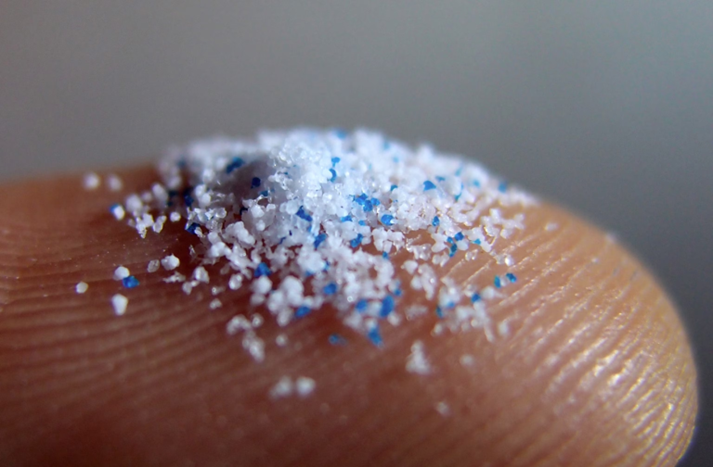
Microplastics are defined as solid plastic particles or synthetic polymer matrices that are insoluble in water and have a size ranging from 1 micrometer to 5 millimeters.
- Nanoplastics: These are even smaller particles, typically defined as being less than 100 nanometres in size. Due to their minute size, they can cross biological barriers (like the blood-brain barrier).
2. Primary vs. Secondary Microplastics
- Primary Microplastics: Intentionally manufactured small particles.
- Examples: Microbeads in exfoliating soaps/cosmetics, plastic pellets (nurdles) used in industrial manufacturing, and synthetic fibers from clothing.
- Secondary Microplastics: Formed from the fragmentation of larger plastic items (bottles, bags, fishing nets) through weathering processes like UV radiation, mechanical erosion (waves), and chemical degradation.
3. Impact on Health and Environment
- Biomagnification: Microplastics enter the food chain via ingestion by marine organisms (plankton, fish) and increase in concentration as they move up to higher trophic levels, eventually reaching humans.
- Human Health: Studies have detected microplastics in human blood, lungs, placenta, and breast milk. They can cause oxidative stress, inflammation, and potential DNA damage.
- Environmental Persistence: They are non-biodegradable and can persist in the environment for hundreds of years. They also act as “sponges” for Persistent Organic Pollutants (POPs) and heavy metals, making them toxic carriers.
4. Global and National Initiatives
- Global Plastics Treaty: A UN-led initiative (Intergovernmental Negotiating Committee) aiming for a legally binding international agreement by 2026 to end plastic pollution.
- Plastic Waste Management (Amendment) Rules, 2021 (India): Prohibited identified Single-Use Plastic (SUP) items and increased the thickness of plastic carry bags.
- Extended Producer Responsibility (EPR): Mandates producers, importers, and brand owners to ensure the processing of plastic packaging waste.
- UNEP’s ‘Clean Seas’ Campaign: A global movement to tackle marine litter and plastic pollution.
5. Detection Technologies
Recent studies utilize Raman Spectroscopy and Hyperspectral Imaging to identify the chemical signature of polymers at a microscopic level. Raman scattering allows scientists to differentiate between different types of plastics based on their molecular vibrations.
Q. With reference to Microplastics, consider the following statements:
1. Primary microplastics are those that result from the fragmentation of larger plastic objects like water bottles and fishing nets.
2. Nano plastics are generally defined as particles having a size smaller than 1 micrometer.
3. Microplastics have the capacity to absorb Persistent Organic Pollutants (POPs) from the surrounding environment.
4. India has currently implemented a complete ban on the manufacture of all types of primary microplastics.
How many of the statements given above are correct?
A. Only one
B. Only two
C. Only three
D. All four
Solution
Correct Answer: B (Only two)
STATEMENT 1 INCORRECT: Fragmentation results in Secondary microplastics. Primary microplastics are intentionally manufactured (e.g., microbeads).
STATEMENT 2 CORRECT: Nanoplastics are indeed smaller than 1 Micrometer.
STATEMENT 3 CORRECT: Due to their hydrophobic nature, microplastics can adsorb and carry toxic chemicals like POPs.
STATEMENT 4 INCORRECT: While India has banned certain Single-Use Plastics and regulated microbeads in specific cosmetic products, there is no complete ban on "all types" of primary microplastics used in industrial processes (like nurdles).