LINK: https://www.thehindu.com/opinion/op-ed/a-missing-link-in-indias-mineral-mission/article70353161.ece
Why in the News
- Recently, the Union Cabinet approved a ₹7,280 crore rare-earth magnet scheme and the G-20 framework on critical minerals has been finalised with value creation through refining and manufacturing as its centrepiece.
- These developments have highlighted the urgent need to develop domestic processing and refining capacity of critical minerals, an area where India continues to remain significantly weak despite progressive mining reforms.
Background and Context
The foundational importance of the midstream segment is being increasingly recognized globally and domestically, but a significant gap persists in India’s industrial capability.
Focus on Domestic Mining Reforms
- In recent years, the Mines and Minerals (Development and Regulation) Act has been amended to bolster domestic mining.
- These reforms were intended to support the sector through measures such as:
- Introduction of exploration licences.
- Use of national auctions.
- Facilitation of mining associated minerals.
- Establishment of a national mineral exchange.
- It has been observed that these reforms help with the digging of minerals but do not address the refining challenge.
Global Bottleneck
- The midstream segment—processing and refining—is identified as a global chokepoint.
- China’s dominance in this segment is substantial, controlling:
- Over 90% of rare earth and graphite refining.
- Nearly 80% of cobalt processing.
- 70% of lithium chemicals production.
Strategic Vulnerability and Exposure
- Digging without processing is noted as an act of exporting prosperity.
- The absence of domestic processing capacity exposes India’s supply chains to global shocks, which have intensified due to U.S.–China trade frictions leading to new tariffs and export restrictions.
- In October 2025, Beijing briefly weaponised these supply chains by imposing controls on crucial products and technologies like rare earth magnets, lithium-ion batteries, graphite anodes, and processing technologies, illustrating the vulnerability.
- India still imports almost all its lithium, nickel, and cobalt.
- The processing gap impacts not just the clean energy transition (solar panels, electric vehicles, wind turbines) but also vital sectors like semiconductors, telecommunications, automobiles, pharmaceuticals, and defence systems.
India’s Processing Lags and Quality Gaps
The Council on Energy, Environment and Water (CEEW) conducted a recent study identifying the critical minerals that India currently mines and processes for clean energy and defence, yet in each case, refining either lags behind in scale or quality.
Status of Key Critical Minerals
| Mineral | Domestic Production Status | Processing Gap |
| Graphite | Mined and Processed | Domestic purity reaches 92–99%, whereas batteries require 99.95% spherical graphite. |
| Rare Earths | Mined and Processed | Processed into oxides but not separated into the metals required for magnets. |
| Tin | Mined and Processed | Domestic production meets barely one per cent of total demand. |
| Others | Mined and Processed | The mineral list includes copper, silicon, titanium, and zirconium. |
Five-Point Strategy for Developing Critical Mineral Processing
A structured approach is required to close these gaps, demanding long-term investments, proprietary know-how, and a skilled workforce.
1. Transform Centres of Excellence (CoEs) into Innovation Engines:
- The nine CoEs under the National Critical Mineral Mission (NCMM) must spearhead applied research to produce high-purity compounds and materials aligned with downstream industry needs.
- The immediate focus should be on developing commercial-ready processing technologies (Technology Readiness Level 7–8) with clearly defined metrics for purity, recovery, cost, and waste.
- Collaborative projects involving IITs, NITs, industry, and think tanks must be accelerated to move innovations swiftly from the lab to the market.
2. Unlock Secondary Resources for Critical Minerals Recovery:
- India generates significant volumes of residues, which contain valuable critical minerals:
- Over 250 million tonnes of coal fly ash annually, containing light and heavy rare earths.
- Red mud from aluminium plants, holding gallium.
- Zinc residues, containing cobalt.
- Steel slag, carrying vanadium.
- Pilot projects at CSIR and IITs have demonstrated the feasibility of recovery.
- Scaling efforts could involve embedding recovery units in the proposed Critical Minerals Processing Parks, supported by incentives for utilizing mine tailings and residues, and co-funded with PSUs and state utilities.
- The Environment Ministry should streamline clearances for efficient utilization of secondary resources. The recently approved ₹1,500 crore critical minerals recycling scheme is noted as a promising start.
3. Train and Upskill a New Generation of Process Metallurgists and Technicians:
- The existing metallurgical workforce is primarily trained for bulk metals using pyrometallurgy.
- Critical minerals, found in low-grade ores, necessitate specialized skills in hydrometallurgical and advanced refining techniques.
- The ₹100 crore NCMM allocation for skilling should be utilized to fund train-the-trainer programmes, diploma courses, and new curricula developed in collaboration with industry.
- Apprenticeships at major refiners like Hindustan Copper, Hindalco, and Vedanta can provide essential hands-on experience, potentially creating thousands of skilled jobs in mineral-rich states like Odisha, Gujarat, and Jharkhand.
4. De-risk Investment through Demand Assurance and Financing Tools:
- Global mineral markets are often characterized by artificially low prices, which discourage new domestic entrants.
- India should consider adapting models like the U.S. Department of Defence’s deal with MP Materials, which utilized offtake commitments and price guarantees.
- The planned mineral stockpile can be transformed into an active market-maker, which would involve:
- Buying from domestic producers during market downturns.
- Releasing supply during periods of high demand.
- A dedicated window under the Ministry of Mines could manage this mechanism through long-term contracts.
- Key sectors like defence, pharmaceuticals, and electronics should be encouraged to source part of their inputs domestically, while processors are concurrently encouraged to meet stringent quality and reliability standards to anchor demand and attract private investment.
5. Link Mineral Diplomacy to Processing Capacity:
- Overseas acquisitions, such as the five lithium blocks in Argentina through Khanij Bidesh India Limited (KABIL) and exploration rights in Zambia, predominantly focus on raw ores.
- Real leverage is asserted to lie in processing strength.
- By demonstrating consistent high-purity refining across the seven minerals already handled, India can elevate global partnerships from mere buyer-seller deals to co-investment alliances.
- The announced Australia-Canada-India Technology and Innovation Partnership at the Johannesburg summit provides a template for co-developing processing technologies with major resource holders.
- The concept of critical minerals parks under the NCMM should serve as a platform for such partnerships.
- The Ministry of Commerce and Industry, alongside the Ministry of Mines, should integrate the processing of critical minerals, along with trade and investment opportunities, into bilateral and multilateral economic dialogues such as G-20, BRICS, and IPEF.
Way Forward
- CoEs must be mandated to function as outcome-driven research hubs delivering scale-ready technologies with commercial applicability, measurable through stringent purity and recovery benchmarks.
- Secondary resource utilisation must be elevated to national priority, supported by clearances, incentives, and co-funding to create steady domestic feedstock for processing parks.
- Workforce development must focus on hydrometallurgy and advanced refining, supported by structured industry-academia training pathways.
- Demand assurance tools including offtake contracts, price guarantees, and strategic stockpile operations must be institutionalised to de-risk investments.
- Mineral diplomacy must be recalibrated toward co-investment in refining technologies and establishment of integrated cross-border supply chains centred on processing hubs within India.
- Integrated Critical Minerals Processing Parks must be established as national anchors for mining-to-manufacturing value addition.
Conclusion
- India’s mineral mission has reached stage where upstream reforms are no longer sufficient, since strategic autonomy will depend on mastery of processing and refining, which convert raw ores into materials that power defence, electronics, semiconductors, pharmaceuticals, and clean energy.
- Control over refining equals control over future industrial power, and India must act decisively to develop midstream strength to transition from raw material supplier toward resilient and competitive industrial economy.
India’s Mineral Sector
India is one of the world’s most mineral-rich nations, endowed with the 4th largest coal reserves, 5th largest iron ore, 3rd largest limestone, and significant deposits of bauxite, manganese, and chromite. The mining sector contributes approximately 2.5% to India’s GDP (2024–25) and directly employs over 1.5 million people while supporting millions more in downstream industries.
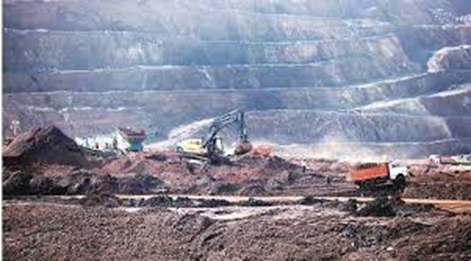
Despite this abundance, India remains heavily import-dependent for several key minerals (gold, copper, nickel, lithium, potash) and continues to grapple with legacy issues of illegal mining, environmental damage, and unsafe practices such as rat-hole mining. The ongoing reforms since 2015 and the launch of the National Critical Minerals Mission (2025) signal a
transformative phase for sustainable and technology-driven mining in India.
Concept of Mining and Mineral Resources
- Mining is the extraction of valuable geological resources from the earth for economic use.
- The classification of minerals in India is primarily based on the regulatory framework established by the Mines and Minerals (Development and Regulation) Act, 1957 (MMDR Act) and subsequent amendments. This classification determines the level of government control (Central vs. State) and the rules governing their concession, development, and taxation.
Minerals are broadly categorized into four main groups:
| Classification | Primary Governing Body | Allocation Method | Key Examples | Strategic Significance |
| Major Minerals | Central Government (Ministry of Mines) | Mandatory Auction (MMDR 2015 reform) for Prospecting Licence/Mining Lease. | Iron Ore, Bauxite, Manganese, Limestone, Gold, Copper. | Industrial Backbone; high-value, large-volume raw materials for steel, cement, and metal industries. |
| Minor Minerals | State Governments (Under Section 15 of MMDR Act) | Determined by respective State Minor Mineral Concession Rules (e.g., auction, tendering). | Ordinary Sand, Gravel, Brick-Earth, Marble, Granite. | Local Construction and infrastructure; revenue primarily collected by State governments. |
| Atomic Minerals | Central Government (DAE – Department of Atomic Energy) | Reserved traditionally for Public Sector Undertakings (PSUs) due to national security. | Uranium, Thorium (from Monazite). | Nuclear Energy and national strategic importance; high security regulation. |
| Critical & Strategic Minerals | Central Government (Ministry of Mines) | Exclusive Central Auction for 24 identified minerals (MMDR 2023). | Lithium, Cobalt, Nickel, Graphite, Vanadium, Rare Earth Elements (REEs). | Future Economy & National Security; essential for EVs, Green Technology, and Defense (NCMM Focus). |
Evolution of India’s Mineral Policy
India’s mineral policy evolution reflects a strategic shift from colonial extraction to State control, and finally to a transparent, liberalized, and technologically strategic regime.
| Phase | Duration | Key Policy Drivers | Core Objective |
| Colonial Extraction & Survey | Before 1947 | Mines Act 1901 introduced safety controls. Geological Survey of India (GSI) established (1851) for systematic mapping. | Resource Extraction driven by colonial industrial demand. |
| State Monopoly & Foundation | 1947–1991 | MMDR Act, 1957 enacted. Strong State control and establishment of Public Sector Undertakings (PSUs). | Planned Industrialization and promotion of Self-Reliance. |
| Economic Liberalization | 1991–2010 | National Mineral Policy 1993 opened the sector to Private and Foreign Direct Investment (FDI). Focus on modern exploration practices. | Market Reform and sector modernization. |
| Transparency & Accountability | 2015–2020 | MMDR Amendment Act, 2015, mandated the Auction-Only Regime. Established the District Mineral Foundation (DMF) for social equity. | Transparency, Revenue Maximization, and Social Welfare. |
| Critical Minerals & Strategy | 2021–Present | MMDR Amendment Act, 2023, gave Central Government exclusive auction rights for 24 Critical Minerals. Introduced the Exploration Licence (EL) to boost private exploration. | Strategic Autonomy for Green Energy, Technology, and Defense. |
Constitutional and Legal Framework
Constitutional Provisions
- Article 246 and Seventh Schedule:
Mining regulation is divided between the Union and States;- Union List: Regulation of major minerals and mines in public interest.
- State List: Regulation of minor minerals.
- Article 39(b): Ensures equitable distribution of material resources for common good.
- Fifth Schedule: Protects tribal land rights in mining regions.
- Article 300A: Right to property, important for land acquisition in mining areas.
Key Laws Governing Mining
- Mines and Minerals (Development and Regulation) Act, 1957.
- MMDR Amendments (2015, 2021, 2023) strengthening auctions and exploration.
- National Mineral Policy (2019) promoting sustainable and transparent mining.
- Forest Conservation Act (1980) and Environment Protection Act (1986) ensuring environmental safeguards.
- Coal Mines (Special Provisions) Act, 2015 enabling commercial coal mining.
- District Mineral Foundation (DMF): A statutory body created by the MMDR Act, 2015, ensuring a portion of the mining revenue (royalties) is compulsorily utilized for the welfare and development of mining-affected areas and people.
- Atomic Minerals Concession Rules, 2016 for beach sand and strategic minerals.
- Sustainable Mining Guidelines, 2016 and STAR Rating System by Ministry of Mines.
Significance of India’s Mining Sector
The significance of India’s mineral sector extends far beyond raw material supply; it is a geopolitical, economic, and environmental imperative for the nation’s future trajectory.
Economic Sovereignty and Industrial Value Addition
The mineral sector is crucial for realizing the vision of a $5 Trillion economy and the Atma Nirbhar Bharat (Self-Reliant India) initiative.
- Reduction of Import Bill: India’s heavy reliance on imported refined metals and critical minerals creates a massive trade deficit and vulnerability to global price shocks.
- Example Case (Copper): Although India mines copper ore, it relies significantly on imports for refined copper metal. Boosting domestic smelting and refining capacity, as encouraged by the NMP 2019, converts high-volume imports into high-value domestic production.
- Multiplier Effect on Core Industries: Minerals act as the fundamental input for the eight core sectors (Coal, Crude Oil, Natural Gas, Refinery Products, Fertilisers, Steel, Cement, and Electricity).
- Data Point: Every job created in the mining sector is estimated to generate 3 to 5 indirect jobs in downstream processing, manufacturing, and transport.
- Attracting Global Investment: The transparent auction regime (post-MMDR 2015) and policy stability, coupled with the opening of critical minerals to 100% FDI, position India as a more reliable and attractive destination for global mining majors, bringing in cutting-edge technology and exploration capital.
Green Energy Transition and Climate Leadership
Securing critical minerals is the non-negotiable prerequisite for achieving India’s ambitious climate targets and fulfilling its commitments under the Paris Agreement.
- Decarbonization Enabler: Minerals are the structural and functional components of clean energy infrastructure.
- Lithium and Cobalt: Essential for Li-ion batteries that power Electric Vehicles (EVs) and Grid Storage systems, crucial for balancing intermittent solar and wind power. India aims for 50% of its energy capacity to be non-fossil fuel-based by 2030.
- Rare Earth Elements (REEs): Elements like Neodymium and Dysprosium are indispensable for manufacturing the lightweight, high-power Permanent Magnets used in high-efficiency wind turbines and high-performance EV motors. Without these, large-scale deployment of high-efficiency renewables is severely constrained.
- Fueling the EV Roadmap: The successful outcome of the National Critical Mineral Mission (NCMM), focusing on Lithium, Nickel, and Graphite, directly determines the feasibility of India’s target for 30% EV penetration by 2030.
National Security and Strategic Autonomy
Supply chain control of specific minerals translates directly into geopolitical leverage and national security capability.
- Defense and Aerospace: Minerals like Titanium, Vanadium, and Tantalum are vital for specialized alloys used in defense equipment, jet engines, missile components, and nuclear reactors.
- Example Case (Defense): Indigenous development of high-strength, lightweight alloys for the Tejas fighter jet or missiles requires a secure supply of minerals that can withstand extreme temperatures and pressures.
- Technological Sovereignty: The ability to produce high-purity Silicon, Gallium, and Germanium is foundational for the success of the Semiconductor Mission, advanced telecommunications (5G/6G), and quantum computing. Reliance on external sources for these materials exposes India to potential technological embargoes.
- Mitigating Geopolitical Risk: The NCMM, through its international acquisition arm KABIL (Khanij Bidesh India Ltd.), actively diversifies supply chains away from regions that exercise oligopolistic control (e.g., China, which controls over 85% of global REE processing).
- This diversification is a risk-mitigation strategy against sudden trade disruptions or political weaponization of resource control.
Social Equity and Regional Development
The current policy framework ensures that mining contributes directly to the well-being and development of the communities most affected by the activity.
- District Mineral Foundation (DMF): This statutory mechanism ensures that mining revenue is channeled back to local communities.
- Magnitude: DMF has collected over ₹1,19,000 Crore nationally since its inception (as of 2025).
- Impact: These funds must be spent on high-priority areas like drinking water supply, health care, and education in mining-affected districts, thereby addressing historical injustices and transforming areas often plagued by poverty despite being mineral-rich.
- Employment Generation: Scientific mining, especially detailed exploration and processing plants, creates demand for highly skilled labor (geologists, metallurgists, engineers) and provides economic diversification beyond agriculture in mineral-rich states like Odisha, Jharkhand, and Chhattisgarh.
- Formalization and Safety: The push towards organized, large-scale, and regulated mining under the MMDR framework helps phase out dangerous, unscientific, and illegal practices like Rat-Hole Mining, improving worker safety and environmental standards across the sector.
Present Status of India’s Mineral Sector
India is a global leader in the production of several key bulk minerals but remains heavily reliant on imports for strategic ones.
Production Landscape
- India is among the global leaders in the production of iron ore, bauxite, limestone, coal, and chromite.
- Mineral sector currently contributes around 2.5% of India’s GDP, with the potential to reach 5%.
Import Dependence
- India remains heavily import-dependent for critical minerals:
- Lithium – 90% imports
- Cobalt – 80% imports
- Nickel – 70% imports
- Rare Earth Elements – almost entirely refined abroad
- India lacks processing and refining capabilities for most of these minerals.
Recent Developments
- Discovery of 5.9 million tonnes of lithium reserves in Jammu & Kashmir (Reasi).
- Auction of multiple critical mineral blocks including graphite, nickel, REEs.
- Establishment of KABIL for overseas sourcing from Argentina, Bolivia, Australia.
- India joining international frameworks for critical minerals.
Key Challenges in India’s Mineral Sector
1. Limited Exploration and Technological Gaps
- Inadequate adoption of modern technologies such as aeromagnetic surveys, drones, AI-driven geology, and hyperspectral imaging.
- Only a fraction of the OGP is fully mapped and explored.
2. Dependence on Imports for Critical Minerals
- Lack of domestic reserves for key minerals required for EVs and electronics.
3. Environmental Degradation
- Unscientific mining causes deforestation, soil erosion, air pollution, and water contamination.
- Mining belts often face acid mine drainage and loss of flora and fauna.
4. Rat-Hole Mining and Illegal Extraction
- Rat-hole mining, especially in Meghalaya, involves narrow tunnels where miners manually extract coal.
- It results in fatal accidents, toxic gas exposure, and frequent collapses.
- It leads to water pollution, including contamination of the Lukha river.
- It involves child labour and human trafficking.
- Illegal sand, bauxite, and iron ore mining is widespread across states.
5. Social and Tribal Rights Issues
- Conflicts over land acquisition, inadequate compensation, and displacement.
- Weak implementation of Forest Rights Act (FRA) and delayed consent processes.
6. Value Chain Weakness
- India exports low-value ores and imports high-value refined minerals.
- Absence of domestic smelting, refining, and battery-grade processing facilities.
7. Regulatory Bottlenecks
- Multiple clearances from various agencies increase project delays.
- Inconsistency in state-level mining regulations.
8. Safety and Labour Issues
- Accidents due to poor ventilation, blasts, and inadequate safety measures.
- Need for strict implementation of DGMS (Directorate General of Mines Safety) standards.
Global and Indian Best Practices & Policies
Global Best Practices
- Australia: Transparent auctions, cutting-edge exploration technology, ESG leadership.
- Canada: Indigenous participation through community development agreements.
- China: Complete dominance over the rare earth value chain from mining to processing.
- Finland: Strong circular economy with innovation in mineral recycling.
- South Africa: Efficient mechanised deep mining.
Indian Best Practices
- District Mineral Foundation (DMF) improving healthcare, education, and infrastructure in mining districts.
- Use of drone-based surveys by GSI and MECL.
- Odisha’s Integrated Mineral Logistics System ensuring traceability.
- Mine reclamation and eco-restoration in Jharkhand and Odisha.
- E-permitting and e-auction systems for transparency in mineral transactions.
Way Forward: Strategic Actions for a Transformed Indian Mining Sector
The future success of India’s mineral sector depends on its ability to execute a two-pronged strategy: maximising domestic resource utilisation and minimising supply chain risk for critical minerals.
- Permanently end rat-hole and illegal mining across the country through satellite + drone surveillance, joint Central–State task forces, and full rehabilitation-cum-skilling of affected workers into formal mining and allied sectors.
- Auction 500+ mineral blocks (including 150+ critical mineral blocks) with single-window clearance under 180 days and pre-embedded forest & environmental approvals to unlock ₹10 lakh crore+ in fresh investments.
- Complete 100 % national aerogeophysical and hyperspectral mapping by 2028 to discover hidden deposits of lithium, cobalt, nickel, rare earths, gold, and potash, raising exploration coverage from 10 % to over 50 % of Obvious Geological Potential.
- Build full domestic refining and value-addition capacity for lithium, cobalt, nickel, graphite, and rare earths through PPPs and strategic international partnerships, targeting 50 % value addition by 2035.
- Mandate 100 % mechanisation, automation, and digital monitoring in all large mines and achieve zero fatalities and world-class safety standards across the sector.
- Create a National Strategic Mineral Stockpile holding at least 90 days of consumption for all critical minerals and establish the India Mineral Index (IMI) as a global pricing benchmark.
- Establish a National Centre of Excellence for Critical Minerals and Sustainable Mining to drive indigenous technology, R&D, and skilled manpower for the entire value chain.
- Enact a dedicated Mine Closure and Rehabilitation Act with mandatory escrow funding, making every closed mine an environmental and social asset (solar parks, lakes, forests, or industrial hubs).
- Transform District Mineral Foundations into perpetual trusts that deliver higher Human Development Index than state averages in every mining district through world-class health, education, and infrastructure.
- Position India as the leading non-China supplier of critical minerals and a net exporter of processed aluminium, zinc, titanium, and select rare earth products, while becoming the global leader in battery and e-waste recycling.
Conclusion
- India stands at the cusp of a mining renaissance. From the dark, dangerous rat-hole mines of Meghalaya to the world-class automated underground operations of Hindustan Zinc, the journey reflects both the challenges and the immense possibilities.
- With transparent auctions, technology infusion, community participation through DMFs, and the bold National Critical Minerals Mission, India is rewriting its mining story — one that is responsible, remunerative, and resilient.
- The earth beneath our feet holds not just minerals, but the foundation of Atmanirbhar Bharat. It is time to dig deeper — sustainably, safely, and strategically.
UPSC MAINS PYQs
- Mineral resources are fundamental to the country’s economy and these are exploited by mining. Why is mining considered an environmental hazard? Explain the remedial measures required to reduce the environmental hazard due to mining. (2025)