Context
The ongoing LPG crisis has driven many rural households — especially in rural regions — back to firewood for cooking. This has renewed policy interest in improved biomass cookstoves as a sustainable, affordable, and cleaner alternative.
1. The Problem: LPG Crisis and Return to Firewood
- Many areas, especially rural regions, have reported going back to firewood due to rising LPG costs.
- Firewood use is seen as increasing drudgery for women and causing:
- Air pollution
- Health hazards (indoor air quality concerns)
- Traditional chulhas (mud stoves) waste most of their heat through poor airflow and have an efficiency of barely 10%.
2. Comparison: Traditional Chulhas vs. Improved Cookstoves (ICS)
| Feature | Traditional Chulha | Modern Improved Cookstoves (ICS) |
| Thermal Efficiency | Barely 10% | 38% to 45% |
| Fuel Consumption | High (wasteful airflow) | Cuts fuel use by up to two-thirds (66%). |
| Emissions | High soot, smoke, and health hazards. | Dramatically reduced smoke and harmful gases. |
| Key Technology | Open combustion. | Secondary aeration (catches soot before it turns to smoke). |
3. Sustainability and Fuel Diversification
- Firewood as a Renewable Resource: It remains sustainable only if the rate of extraction does not exceed the rate of regrowth.
- Alternative Biomass Fuels: Modern stoves are versatile and can run on:
- Pellets and Briquettes (made from sawdust).
- Agricultural Waste (reduces pressure on raw firewood).
4. Economics and Financing Mechanisms
- Upfront Costs: Household models are affordable (starting below ₹2,000), while commercial systems can exceed ₹20,000.
- Operating Costs: Firewood remains highly cost-effective compared to LPG during price surges.
- Carbon Finance: Emission savings from ICS can be tracked and converted into Carbon Credits. This creates a funding stream to make stoves even more affordable for lower-income families.
- Financing Partners: Microfinance, Corporate Social Responsibility (CSR) programs, and carbon finance are crucial for large-scale deployment.
5. Key Government Initiative
- Pradhan Mantri Ujjwala Yojana (PMUY): Launched in May 2016 by the Ministry of Petroleum and Natural Gas, PMUY provides LPG to rural poor households, reducing health and environmental risks from traditional fuels.
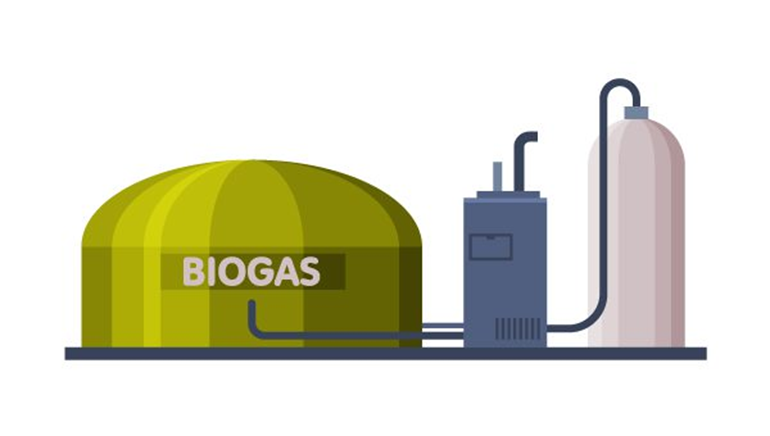
- National Biogas and Manure Management Programme (NBMMP): The Central Sector Scheme on NBMMP, launched in 1981–82, promotes family-type biogas plants through State Nodal Agencies, District Rural Development Agencies (DRDAs) and Khadi and Village Industry Commission (KVIC) centres.
With reference to clean cooking and related initiatives in India, consider the following statements:

1. Pradhan Mantri Ujjwala Yojana aims to provide LPG connections to rural and deprived households to reduce dependence on traditional fuels.

2. The National Biogas and Manure Management Programme promotes large-scale industrial biogas plants exclusively for urban areas.

Which of the statements given above is/are correct?
(a) 1 only
(b) 2 only
(c) Both 1 and 2
(d) Neither 1 nor 2

Answer: A

Explanation:
•  Statement 1 is Correct: Launched in May 2016, the Pradhan Mantri Ujjwala Yojana (PMUY) is a flagship scheme of the Ministry of Petroleum and Natural Gas. Its primary objective is to safeguard the health of women and children by providing clean cooking fuel (LPG) to BPL (Below Poverty Line) and deprived households, thereby reducing the reliance on traditional fuels like firewood and coal which cause heavy indoor air pollution.

•  Statement 2 is Incorrect: The National Biogas and Manure Management Programme (NBMMP)—now part of the Biogas Programme Phase-II—is primarily a Central Sector Scheme aimed at setting up family-type biogas plants. Its focus is largely on rural and semi-urban areas to benefit farmers and households by providing clean fuel for cooking and enriched organic manure for agriculture. It is not "exclusively for urban areas," nor is it limited to "large-scale industrial plants" (industrial-scale biogas is more closely associated with the SATAT or GOBAR-dhan initiatives).