Context
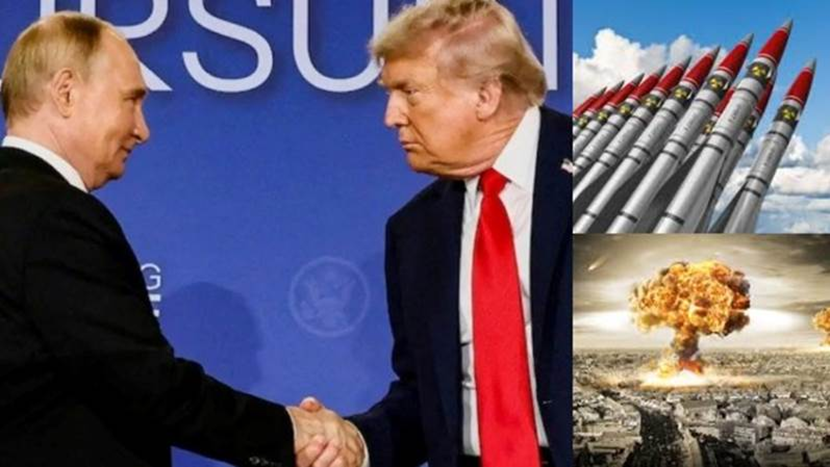
Recently, the global security landscape has reached a critical juncture as the New START (Strategic Arms Reduction Treaty), the final remaining pillar of bilateral nuclear arms control between the United States and Russia, is set to expire on February 5, 2026.
1. Basic Overview
- Full Name: Treaty between the United States of America and the Russian Federation on Measures for the Further Reduction and Limitation of Strategic Offensive Arms.
- Signatories: Signed by U.S. President Barack Obama and Russian President Dmitry Medvedev on April 8, 2010, in Prague.
- Timeline: It entered into force on February 5, 2011. Originally set for ten years, it was extended in 2021 for an additional five years, concluding in February 2026.
2. Core Limitations (The 700-800-1550 Rule)
The treaty imposes three central aggregate limits on strategic offensive arms:
- 700 Deployed: Limit on deployed Intercontinental Ballistic Missiles (ICBMs), Submarine-Launched Ballistic Missiles (SLBMs), and heavy bombers.
- 1,550 Warheads: Limit on nuclear warheads on deployed ICBMs, SLBMs, and heavy bombers (calculated by specific counting rules).
- 800 Launchers: Limit on both deployed and non-deployed ICBM launchers, SLBM launchers, and heavy bombers.
3. Verification and Transparency
To ensure neither side “cheats,” the treaty includes a robust verification regime:
- On-site Inspections: Up to 18 inspections per year divided into two types (Type One for operational bases and Type Two for non-deployed storage).
- Data Exchanges: Biannual exchange of detailed data on the status and basing of treaty-accountable systems.
- Bilateral Consultative Commission (BCC): A dedicated body that meets at least twice a year to resolve compliance issues and technical ambiguities.
- National Technical Means (NTM): Permission to use satellites and other remote sensing tools for monitoring without interference.
4. Current Challenges and “Suspension”
- Suspension by Russia (2023): In February 2023, Russia officially announced the “suspension” of the treaty, citing U.S. involvement in the Ukraine conflict.
- Operational Status: While Russia stopped providing notifications and allowing inspections, both nations have largely indicated they would continue to respect the central numerical limits (the 1,550 warhead cap) until the formal expiration in 2026.
Q. With reference to the ‘New START Treaty’, which was recently in the news, consider the following statements:
1. It is a multilateral treaty signed under the aegis of the United Nations to eliminate all tactical and strategic nuclear weapons.
2. The treaty limits the number of deployed strategic nuclear warheads for both the United States and Russia to 1,550 each.
3. Under the treaty's provisions, a state party can only extend the agreement once for a maximum period of five years.

How many of the statements given above are correct?
A) Only one
B) Only two
C) All three
D) None

Answer: B) Only two
Solution:
STATEMENT 1 IS INCORRECT: The New START is a bilateral treaty specifically between the United States and the Russian Federation, not a multilateral UN-led treaty. It focuses on strategic (long-range) weapons, not tactical ones.
STATEMENT 2 IS CORRECT: One of the core pillars of the treaty is the cap of 1,550 deployed strategic warheads for each side.
STATEMENT 3 IS CORRECT: According to the treaty text, it allowed for one single extension for a period of up to five years, which was exercised by Presidents Biden and Putin in early 2021.