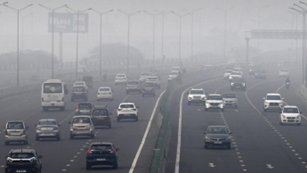
Why in the News
- The air quality index in North India was recently observed hovering near 400 (Very Poor/Severe), prompting a small and peaceful crowd near India Gate to express concern.
- This citizen demonstration was confronted by the Delhi government with a heavy police presence, including deployment of Rapid Action Force units, signaling the state’s approach of treating citizen engagement as a law-and-order rather than a governance problem, thereby attracting critical attention to the efficacy of the current administrative response to the persistent pollution issue.
Context and Scope of the Air Pollution Crisis
Air quality in North India during winter is commonly discussed as a Delhi issue, but monitoring stations have revealed a much wider crisis requiring a comprehensive, permanent institutional approach.
Geographical Extent and Shared Airshed
- Continuous Zone of Foul Air: Monitoring stations have revealed a continuous zone of foul air extending from areas around Islamabad to Bihar, indicating the pollution is not confined to the capital.
- Shared Airshed: Emissions from key sectors such as industry, power generation, transport, and agriculture circulate in this shared airshed, which must be recognized as the primary unit of governance for effective control.
- National Crisis: North India’s winter smog is merely the most visible part of a wider national crisis, as long-term analyses, such as the Air Quality Life Index, have shown that unsafe air is now the norm for most of India.
Citizen Engagement and State Response
- Shift in Public Response: Delhi’s middle class has historically responded to poor air quality primarily through personal measures like using air purifiers, closing windows, taking vacations, and expressing private dissatisfaction, but the recent protests suggest a shift in public engagement is occurring.
- Governance Failure: State response, characterized by policing rather than engagement, suggests that the government views these gatherings as a threat to political embarrassment rather than addressing the core issue of public safety and governance inadequacy.
Institutional Fragmentation and Inadequate Response
Present regulation, monitoring, and enforcement arrangements are demonstrably insufficient across States and sectors, largely due to a fragmented governance structure that treats the permanent condition as a seasonal emergency.
Fragmented Authority
- Split Jurisdiction: Authority is currently split among various bodies, including central ministries, State departments, municipal bodies, and specialized regulators.
- Partial Authority: Each of these bodies possesses partial jurisdiction and operates with mixed incentives, contributing to the fragmentation of the response mechanism.
Role of Commission for Air Quality Management (CAQM)
- Mandate: The Commission for Air Quality Management (CAQM) was specifically created to address this fragmentation of authority and is empowered to direct emissions control, coordinate among States and agencies, and impose sanctions.
- Intervention Gap: Despite its strong mandate, the CAQM’s interventions have not matched the scale or persistence of the problem, encouraging only bursts of action instead of demanding permanent institutions to tackle the permanent condition.
Way Forward
Solutions leading to lasting changes require abandonment of temporary measures and a courageous political vision to mandate time-bound, structural reforms across major polluting sectors, backed by real enforcement.
Strengthening Institutional Mandate and Transparency
The Commission for Air Quality Management (CAQM) must decisively utilize its full mandate to enforce structural changes across the shared airshed.
- Mandatory Time-bound Sectoral Plans: The CAQM should immediately issue binding directives requiring all concerned governments and major industrial emitters to submit detailed, time-bound, and verifiable sectoral action plans. These plans must include specific, quantifiable emission reduction targets (e.g., in terms of PM2.5 and PM10 reduction) and clear milestones for implementation.
- Continuous Monitoring and Public Data Access: Compliance must be tracked through continuous, real-time monitoring of emissions data from all regulated sources. Furthermore, this comprehensive monitoring data must be made publicly accessible in a user-friendly format, ensuring transparency, facilitating academic scrutiny, and empowering citizens to hold authorities accountable.
- Institutional Permanence: The institutional framework must transition from viewing the issue as a seasonal emergency to a permanent condition requiring permanent institutions, ensuring resources, personnel, and enforcement mechanisms are available year-round, not just during the winter months.
Targeted Structural Interventions in Key Emission Sources
The focus must shift entirely from technical quick fixes that consume public funds to fundamental, structural interventions in the five main polluting sectors.
- Power and Industry:
- Tighter Emission Norms and Enforcement: Regulatory agencies must impose significantly tighter emission norms for industrial units and thermal power plants. Real enforcement must follow, including stiff penalties and temporary or permanent closure orders for non-compliant entities.
- Retirement and Retrofitting: A time-bound plan must be established for the mandatory retirement of old, highly polluting power plants and industrial facilities, or their comprehensive retrofitting with modern emission control technologies, such as Flue Gas Desulphurization (FGD).
- Transport Sector:
- Clean Fuel Transition: Robust support for the accelerated transition to cleaner fuels and technologies (e.g., electric mobility, hydrogen fuel cells) must be provided through subsidies, tax incentives, and infrastructure development.
- Fleet Modernization and Public Transit: Mandatory policies for fleet modernization and the expansion of efficient, non-polluting public transport systems must be pursued to reduce reliance on private vehicles, particularly older, more polluting ones.
- Construction Sector:
- Strict Dust Control: Tighter norms for dust management at construction and demolition sites must be strictly enforced, including mandatory use of anti-smog guns, covering of materials, and disposal of waste as per guidelines.
- Agriculture (Crop Residue Burning):
- Credible Alternatives and Support: Governments must provide credible, accessible, and economically viable alternatives to farmers for managing crop residue. This includes subsidized procurement of in-situ residue management machinery (e.g., happy seeders), promotion of ex-situ utilization (e.g., for bio-energy or packaging), and providing direct financial incentives for avoiding burning.
Governance and Citizen Engagement
- Shifting State Mindset: The state must shift its response from policing citizen gatherings to genuine engagement with public concerns, recognizing that the gatherings represent a legitimate governance problem demanding action, not a law-and-order threat.
- Inters-State Coordination: Given the nature of the shared airshed, seamless and mandatory coordination among all concerned State governments is essential, facilitated and enforced by the CAQM, to ensure a unified and consistent application of emission control policies across the entire geographical zone of foul air.
Conclusion
- The North India air quality issue, characterized by its extensive airshed and the permanency of the unsafe air condition, demands a profound shift from managing political embarrassment through policing to demonstrating courageous political vision through governance engagement and structural reforms.
- The systemic failure is rooted in institutional fragmentation and the reliance on seasonal emergency measures.
- Long-term solutions necessitate the CAQM using its full mandate to require sectoral action plans with real enforcement and public transparency, moving decisively towards fundamental interventions in power, industry, transport, construction, and agriculture to achieve lasting environmental change.
UPSC MAINS PYQs
- “Discuss in detail the photochemical smog emphasizing its formation, effects and mitigation. Explain the 1999 Gothenburg Protocol”. (2022)
- “Describe the key points of the revised Global Air Quality Guidelines (AQGs) recently released by the World Health Organisation (WHO). How are these different from its last update in 2005? What changes in India’s National Clean Air Programme are required to achieve these revised standards?”. (2021)