After Reading This Article You Can Solve This UPSC Mains Model Question:
In the light of recent controversies over digital content blocking, examine the constitutional protection accorded to satire in India. Discuss the judicial safeguards, emerging challenges in the digital age, and suggest measures to balance free expression with legitimate State interests. 250 words, 15 marks (Gs 2, Polity)
Introduction
Satire has long been a powerful medium of political and social commentary. In India, debates around satire frequently intersect with concerns about national security, public order, and reputation of constitutional authorities
Background: The Controversy
· A 52-second satirical cartoon allegedly featuring the Prime Minister was blocked from the social media handles of The Wire.
· The government justified the action on grounds that it spread “informed rumours/unverified information” affecting:
- Defence and national security
- Reputation of the country
- Foreign relations
· The Editors Guild of India criticized the move, calling it a sign of growing intolerance toward scrutiny and satire.
· Core Constitutional Question: Is satire a threat to national security, or a democratic safeguard essential for accountability.
Satire in Democratic Theory: A Functional Analysis
In democratic discourse, satire transcends mere entertainment, serving as a sophisticated tool for civic engagement and institutional checks. Its functions can be categorized into three pillars:
1. Accountability and Transparency
- Mechanism: Satire strips away political rhetoric to expose contradictions, hypocrisy, and excesses in governance.
- Impact: By simplifying complex policy or legislative issues through humor and irony, it enhances political literacy and makes governance more accessible to the lay citizen.
2. Safety Valve for Dissent
- Mechanism: It provides a non-violent, creative outlet for public dissatisfaction and frustration with the state.
- Impact: By channeling criticism constructively, satire reduces the likelihood of radical or extreme responses to perceived injustice.
3. Strengthening Public Opinion & Political Discourse
- Global Tradition: Mature democracies (e.g., the United States) treat political cartoons and late-night satire as integral to the “marketplace of ideas.”
- Judicial Perspective: Courts often cite historical examples—such as early American cartoons portraying George Washington as an “ass”—to argue that the ability to tolerate ridicule is a hallmark of a robust republic.
- Impact: It broadens the spectrum of public opinion, ensuring that dissent is not just tolerated but seen as an essential ingredient of public life.
Constitutional Framework: Art. 19 & Reasonable Restrictions
- Article 19(1)(a): Guarantees all citizens the fundamental right to freedom of speech and expression, which includes the right to propagate ideas through various media (print, digital, art).
- Article 19(2): Empowers the State to impose “reasonable restrictions” on this right.
- The Test of Reasonableness and Proportionality: To ensure that restrictions do not turn into suppression, the Judiciary employs specific legal doctrines:
- Doctrine of Proportionality: Any restriction must be the least restrictive measure possible. It must have a rational nexus with the objective and must not be excessive or disproportionate to the “evil” it seeks to remedy.
- Procedural Safeguards: As established in Shreya Singhal v. Union of India, any censorship—especially digital blocking—must follow natural justice. This includes the right to be heard for the content creator before access is restricted.
- Arbitrariness: Blanket or “emergency” bans that bypass transparency or judicial oversight are considered unconstitutional as they fail the “reasonableness” test.
Key Judicial Precedents on Free Speech and Satire
- Shreya Singhal v. Union of India (2015): The Supreme Court struck down Section 66A of the IT Act for being “vague” and “chilling.” It mandated procedural safeguards, specifically the right of the “originator” to be heard before content is blocked.
- Indibily Creative v. State of West Bengal (2019): The Court ruled that the State has a positive duty to protect speech rather than using potential public disorder as a pretext for censorship, affirming satire as vital for exposing societal contradictions.
- Kama v. M. Jothisorupan (2018): The Madras High Court recognized exaggeration as a legitimate and essential element of satire, defining it as an “intrinsically weapon of attack” necessary for democratic critique and exposing hypocrisy.
- Delhi High Court on Satirical Journalism: The Court upheld satire as a prime mode of dissent, ruling that humor and irony should be evaluated through the lens of a “reasonable person” rather than a “hyper-sensitive” individual.
Global Perspectives on Satire
- United States: First Amendment & Malice Standard
- Legal Basis: Provides near-absolute protection for political satire within the “marketplace of ideas.”
- Judicial Milestone (Hustler v. Falwell): The U.S. Supreme Court ruled that public figures must tolerate “offensive parody” unless it contains false statements made with “actual malice.”
- Principle: Public officials must accept higher levels of ridicule to ensure institutional transparency and accountability.
- European Court of Human Rights (ECHR): Artistic Freedom
- Legal Basis: Article 10 of the European Convention guarantees free expression, protecting ideas that “offend, shock, or disturb.”
- Judicial Recognition (Vereinigung v. Austria): The Court affirmed that satire inherently distorts reality and deserves high protection as a form of artistic expression.
- Rationale: Tolerance of provocative satire is a hallmark of pluralism and democratic maturity.
Key Challenges to Satire in the Digital Age
- Vague Grounds for Restriction: Frequent invocation of “National Security” or “Public Order” under Article 19(2) without clear distinctions between legitimate satire and actual misinformation.
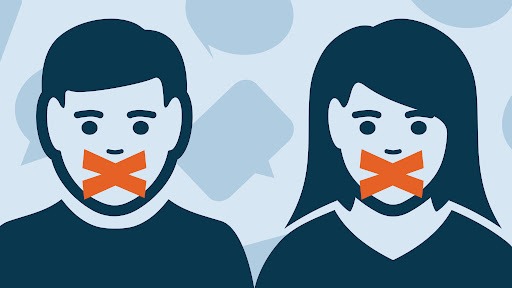
- Chilling Effect & Self-Censorship: Fear of heavy-handed legal action (Defamation, IT Act, or UAPA-like laws) forces creators to suppress their own work to avoid prosecution or social backlash.
- Executive Overreach in Regulation: Expanding powers under IT Rules (2021/2026) allow for rapid “emergency” content blocking without transparency or providing creators a fair hearing.
- The “Heckler’s Veto”: Organized mob pressure or threats lead the State to curb speech to prevent unrest, effectively rewarding intolerance instead of protecting the artist.
- Criminal & Civil Liability: The strategic use of Criminal Defamation and high-stakes civil lawsuits to financially and legally drain independent media houses and satirists.
- Polarization & Shrinking Civic Space: A declining societal and political tolerance for ridicule, where hypersensitivity and polarization replace democratic resilience and open debate.
Way Forward: Safeguarding Satire and Democratic Expression
- Refine Legal Definitions: Establish clear legislative distinctions between satire/parody and “deliberate misinformation.” Restrictions must be narrowly tailored under the Doctrine of Proportionality to ensure creative dissent is not mislabeled as a “threat to national security.”
- Reinforce Procedural Due Process: Strictly implement Shreya Singhal (2015) mandates, ensuring the “right to be heard” for content creators. The Executive must provide written, reasoned orders for all digital takedowns to facilitate effective judicial review.
- Neutralize the “Heckler’s Veto”: Adhere to the Indibily Creative (2019) precedent by recognizing the State’s positive duty to protect speech. Law enforcement should manage mob pressure or “outrage” rather than silencing the artist to maintain order.
- Establish Independent Oversight: To counter the 2026 IT Rules’ 3-hour takedown window, an independent body comprising judicial and civil society members should perform post-facto audits of “emergency” orders to prevent executive overreach.
- Decriminalize Satirical Expression: Shift from punitive criminal sanctions (e.g., criminal defamation or sedition-type charges) to proportionate civil remedies. This removes the “chilling effect” that stifles independent media and political commentators.
- Foster Constitutional Morality: Promote a democratic culture of tolerance through constitutional literacy. A mature Republic should view satire not as an affront to institutional dignity, but as a vital sign of a resilient and self-correcting democracy.
Conclusion
Satire, though critical and uncomfortable, is constitutionally protected unless it incites violence. A mature democracy ensures tolerance, distinguishes real security threats from critique, and safeguards accountability, dissent, and citizens’ freedom.