Why in the News
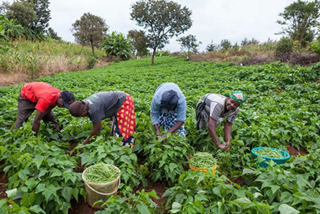
- Bamanwas Kankar panchayat, located in the newly formed Kotputli-Behror district in Rajasthan, became the first panchayat in the state to be certified fully organic, covering all seven of its hamlets.
- The panchayat adopted chemical-free farming and eco-friendly livestock practices to combat soil degradation, declining groundwater, and health hazards from chemical inputs.
- The initiative was supported by the Cofarmin Federation of Organic Societies and Producer Companies (COFED), which provided technical guidance, market access, and certification support.
Understanding Organic Farming
Organic farming is an integrated agricultural system that promotes environmental, social, and economic sustainability by avoiding synthetic chemical inputs.
- Core Definition: A method of crop and livestock production that involves much more than choosing not to use pesticides, fertilizers, genetically modified organisms, antibiotics, and growth hormones.
- Key Natural Inputs: Relies on crop rotations, animal manures, vermicompost, green manure, and biological pest control (e.g., neem oil, lady beetles).
- Historical Background of Organic Farming: Practiced since ancient civilizations: Mesopotamia, Indus Valley, Vedic India.
- Modern organic agriculture pioneered by Sir Albert Howard and Rudolf Steiner (early 1900s), emphasizing natural soil fertility and crop rotation.
- Global awareness boosted after Rachel Carson’s Silent Spring (1962) highlighting chemical farming hazards.
- Need for Organic Farming:
- Environmental Degradation: Conventional farming causes soil erosion, water pollution, and loss of biodiversity.
- Health Risks: Pesticide residues linked to cancer and neurological disorders (WHO).
- Soil Loss: India loses ~5.3 billion tons of soil annually due to erosion (ICAR, 2015).
- Water Contamination: Synthetic chemicals pollute water sources.
- Principles of Organic Agriculture: The principles of organic farming emphasize Health, Ecology, Fairness, and Care, focusing on the well-being of soil, plants, animals, humans, and the planet, while aligning with natural ecosystems and protecting biodiversity and water resources. They also promote equitable relationships in production and trade and ensure responsible, sustainable practices for present and future generations.
Organic Farming Practices
Short Code:





- Soil Management:
- Crop Rotation: Maintain fertility and control pests naturally.
- Minimum Tillage: Reduce soil disturbance to preserve structure and microorganisms.
- Organic Manures: Use compost, vermicompost, and green manure for nutrients.
- Crop & Biodiversity Management:
- Polyculture: Multiple crops grown together for ecosystem health.
- Agroforestry: Integration of trees with crops to enhance biodiversity.
- Integrated Pest Management (IPM): Use natural predators and organic pesticides (e.g., neem oil, pyrethrin).
- Water Management:
- Drip Irrigation: Efficient water use directly to roots.
- Mulching: Retains soil moisture and reduces evaporation.
Benefits and Challenges of Organic Farming
- Benefits of Organic Farming:
- Soil & Water Conservation: Crop rotation and mulching improve fertility and reduce wastage.
- Biodiversity: Encourages natural predators and diverse crops.
- Safe Food: Reduces chemical residues, enhancing human health.
- Nutritional Value: Natural fertilizers improve nutrient content.
- Economic Gain: Organic produce commands premium prices.
- Preservation of Tradition: Integrates traditional agricultural knowledge and practices.
- Challenges of Organic Farming:
- Organic farming faces high production costs, lower initial yields, and difficulties in managing pests and weeds due to the avoidance of chemical inputs.
- Additionally, farmers encounter lengthy certification processes, limited market access, and greater vulnerability to climate variations, making adoption more challenging.
Organic Farming in India: Key Facts
India ranks second globally in terms of total organic agricultural land.
- Area under organic farming: 2.78 million ha (~2% of net sown area, 2020).
- Registered farmers: Over 1.9 million under certification schemes.
- Key States: Madhya Pradesh has the largest area under organic certification, followed by Rajasthan and Maharashtra.
- Sikkim: Became the world’s first 100% organic state in 2016.
- Major crops: Major Exports: Oilseeds, fiber (cotton), pulses, tea, and coffee. India produces approximately 51% of the world’s organic cotton.
- Exports: 1.3 million MT worth ₹3,500 crore (2020).
Government Initiatives and Certification of Organic Farming
The Government of India promotes organic farming through two primary certification systems and various schemes:
1. Certification Systems:
- NPOP (National Programme for Organic Production): In 2024, the Food Safety and Standards Authority of India (FSSAI) and APEDA (Ministry of Commerce) introduced the “Unified India Organic” logo, replacing the earlier India Organic and Jaivik Bharat logos, to standardize and simplify the implementation of India’s organic regulations under the National Programme for Organic Production (NPOP). It is mandatory for export purposes.
- PGS-India (Participatory Guarantee System): Regulated by the Ministry of Agriculture. It is a decentralized, farmer-group-based certification focused on the domestic market.
2. Key Schemes:
- Paramparagat Krishi Vikas Yojana (PKVY): Promotes cluster-based organic farming with financial assistance for farmers (₹50,000 per hectare for 3 years).
- Mission Organic Value Chain Development for North Eastern Region (MOVCDNER): Specifically targets the North Eastern Region to develop certified organic value chains.
- Soil Health Card Scheme: While not exclusively organic, it helps farmers understand nutrient requirements to reduce over-reliance on urea.
- State-Level Schemes: Sikkim Organic Mission, Andhra Pradesh ZBNF.
- National Project on Organic Farming (NPOF): The National Project on Organic Farming (NPOF) was launched in 2004 to promote organic agriculture by providing training, capacity building, and support for the development of organic inputs such as bio-fertilizers and bio-pesticides.
Comparison: Conventional vs Organic vs Natural Farming
| Factors | Conventional Farming | Organic Farming | ZBNF (Zero Budget Natural Farming) |
| Definition | Uses chemical fertilizers and pesticides. | Uses organic manures and compost. | Relies on zero external inputs, using natural resources and homemade bio-inputs like Jeevamrut and Beejamrut. |
| Soil Health | Degrades soil fertility over time due to chemical use. | Improves soil health through organic matter. | Enhances soil fertility using natural microbes and mulching. |
| Water Requirement | High, due to intensive irrigation. | Moderate, aided by mulching and soil management. | Very low, relies on mulching and natural irrigation. |
| Productivity | Initially high but declines over time. | Sustainable, slightly lower than conventional farming. | Sustainable yield with minimal cost inputs. |
| Dependence on Market & Cost | High dependence on external inputs, costly. | Moderate, as organic inputs can be purchased. | Minimal, as farmers prepare inputs themselves. |
| Ecological Impact | Causes environmental degradation. | Environmentally friendly but needs some external inputs. | Fully sustainable, promotes biodiversity and soil health. |
Q. Consider the following statements regarding organic farming:
1.	Organic farming avoids synthetic chemical fertilizers, pesticides, GMOs, and antibiotics.
2.	Organic farming primarily relies on natural inputs such as crop rotation, animal manure, biological pest control, polyculture, drip irrigation, and mulching.
3.	Organic farming is less sustainable than conventional farming due to lower yields.

Which of the statements given above is/are correct?
(a) 1 only
(b) 1 and 2 only
(c) 2 and 3 only
(d) 1, 2 and 3

Answer: (b) 1 and 2 only

Explanation:
Statement 1: Correct. Organic farming avoids synthetic chemicals, GMOs, antibiotics, and other artificial inputs.
Statement 2: Correct. Organic farming emphasizes natural inputs such as crop rotation, animal manure, biological pest control, polyculture, drip irrigation, and mulching for soil and water conservation.
Statement 3: Incorrect. While organic farming may initially have lower yields compared to conventional farming, it is more sustainable in the long term because it preserves soil health, water resources, biodiversity, and human health.
Practice Today’s MCQs
Short Code: