Context
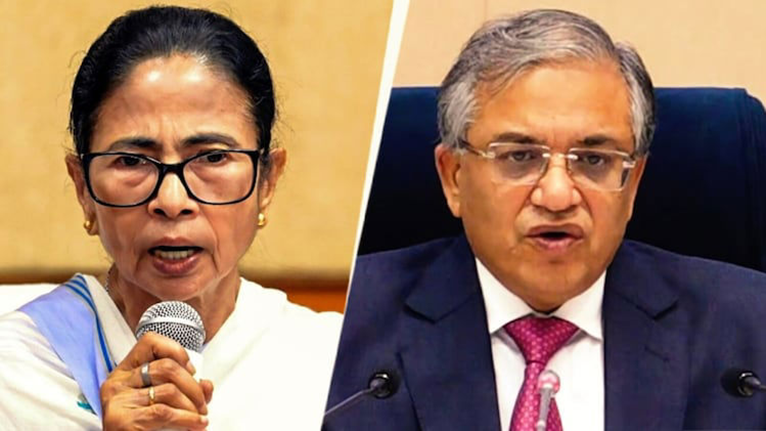
Recently, the political discourse in India has intensified following a series of public confrontations between the Election Commission and opposition parties over the Special Intensive Revision (SIR) of electoral rolls. West Bengal Chief Minister Mamata Banerjee has publicly suggested her party would support an impeachment motion against the current Chief Election Commissioner, Gyanesh Kumar, alleging bias and “insulting” behavior during meetings.
1. Constitutional Basis (Article 324)
The Constitution of India ensures the independence of the Election Commission through specific tenure protections.
- Article 324(5): This article explicitly states that the Chief Election Commissioner shall not be removed from office except in like manner and on the like grounds as a Judge of the Supreme Court.
- Grounds for Removal: The only two grounds for removal are “Proved Misbehaviour” or “Incapacity.”
2. The Parliamentary Procedure
While the term “impeachment” is colloquially used, the technical process is a Removal Motion governed by the Judges (Inquiry) Act, 1968:
- Initiation: The motion must be signed by at least 100 members in the Lok Sabha or 50 members in the Rajya Sabha.
- Investigation: The presiding officer (Speaker or Chairman) may admit or refuse the motion. If admitted, a three-member committee (comprising a Supreme Court judge, a Chief Justice of a High Court, and a distinguished jurist) investigates the charges.
- Voting (Special Majority): If the committee finds the CEC guilty, the motion must be passed by each House of Parliament with a Special Majority:
- A majority of the total membership of that House.
- A majority of not less than two-thirds of the members of that House present and voting.
- Presidential Order: Once passed by both Houses in the same session, an address is presented to the President, who then issues an order for removal.
3. CEC vs. Other Election Commissioners
There is a significant constitutional asymmetry in the removal process:
- The CEC: Enjoys the “Supreme Court Judge” level of protection described above.
- Other ECs: Can be removed by the President simply on the recommendation of the Chief Election Commissioner. They do not require a parliamentary motion or a special majority.
4. Recent Legislative Framework
The Chief Election Commissioner and Other Election Commissioners (Appointment, Conditions of Service and Term of Office) Act, 2023, retains these removal protections. It further equates the salary, allowances, and service conditions of the CEC and ECs to that of a Supreme Court Judge (previously equated to a Cabinet Secretary in the initial draft of the Bill).
Q. With reference to the Election Commission of India, consider the following statements:
1. The Chief Election Commissioner (CEC) and the other two Election Commissioners (ECs) enjoy the same constitutional protection regarding their removal from office.
2. A motion for the removal of the CEC can be initiated in either House of Parliament but requires a simple majority for its passage.
3. The grounds for the removal of the CEC are limited to "proved misbehaviour" and "incapacity" as per the Constitution.

How many of the statements given above are correct?
A) Only one
B) Only two
C) All three
D) None

Correct Answer: A) Only one
Explanation:
STATEMENT 1 IS INCORRECT: Only the CEC has the protection of being removed like a Supreme Court Judge. Other ECs can be removed by the President on the mere recommendation of the CEC.
STATEMENT 2 IS INCORRECT: The motion requires a Special Majority (majority of total membership AND 2/3rd of members present and voting), not a simple majority.
STATEMENT 3 IS CORRECT: Under Article 324(5), the CEC is removed on the same grounds as a SC Judge, which are specifically "proved misbehaviour" or "incapacity."