Context
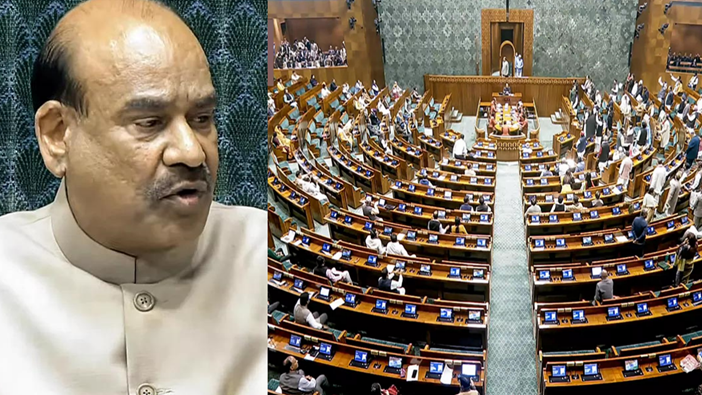
Recently, opposition parties in the Lok Sabha submitted a formal notice of a resolution to remove the Speaker, Shri Om Birla, from his office. This move followed days of parliamentary deadlock and was initiated after the Opposition alleged that the Speaker had acted in a partisan manner by disallowing the Leader of the Opposition from speaking and making unsubstantiated allegations against woman MPs.
1. Constitutional Provisions
- Article 94: This article specifies that a Speaker may be removed from office by a resolution of the House of the People (Lok Sabha) passed by a majority of all the then members of the House.
- Article 96: This article deals with the Speaker’s right to participate in proceedings but prohibits them from presiding while a resolution for their removal is under consideration.
2. Procedural Requirements
The removal process is governed by both the Constitution and the Rules of Procedure and Conduct of Business in Lok Sabha:
- 14-Day Advance Notice: A resolution for removal can only be moved after giving at least 14 days’ notice of the intention to move the resolution.
- Support of 50 Members: Under the Lok Sabha rules, the motion for leave to move the resolution must be supported by at least 50 members before it can be listed for discussion.
- Specific Charges: The resolution must be specific and based on definite charges. It should not contain arguments, inferences, or defamatory statements.
3. Voting and Majority Required
- Effective Majority: The resolution must be passed by a majority of all the then members of the House. This is technically known as an Effective Majority (Total strength of the House minus vacancies).
- Not Simple Majority: It is important to note that a simple majority (majority of members present and voting) is insufficient for the removal of the Speaker.
4. Rights of the Speaker During Removal
- Right to Speak: The Speaker has the right to speak in and otherwise take part in the proceedings of the House while the removal resolution is being considered.
- Right to Vote: The Speaker can vote in the first instance on such a resolution.
- No Casting Vote: Unlike regular proceedings where the Speaker only votes to break a tie (casting vote), during a removal resolution, the Speaker cannot exercise a casting vote in the case of an equality of votes.
- Restriction on Presiding: The Speaker cannot preside over the sitting of the House while the resolution for their removal is under consideration, even if they are present in the House.
5. Summary Table: Speaker’s Status During Removal Motion
| Feature | Status |
| Presiding Power | Cannot preside over the House. |
| Presence in House | Can be present and participate in discussions. |
| First Instance Vote | Allowed (can vote as a regular member). |
| Casting Vote | Not allowed (cannot vote to break a tie). |
| Presiding Authority | Usually, the Deputy Speaker or a member from the Panel of Chairpersons. |
Q. With reference to the Speaker of the Lok Sabha, consider the following statements:

1. A resolution for the removal of the Speaker requires the support of at least 100 members to be admitted in the House.

2. The resolution for removal must be passed by a majority of the total membership of the House, including vacancies.

3. While a resolution for his removal is under consideration, the Speaker can vote in the first instance but cannot exercise a casting vote.

How many of the above statements are correct?
A) Only one
B) Only two
C) All three
D) None

Correct Answer: A (Only one)

Explanation:
• STATEMENT 1 INCORRECT: According to the Rules of Procedure of Lok Sabha, a motion for leave to move the resolution for the removal of the Speaker requires the support of 50 members, not 100. (While the recent news mentioned 100 signatures, the legal requirement under the rules is 50).
• STATEMENT 2 INCORRECT: The resolution must be passed by a majority of all the then members (Effective Majority), which means the total strength minus vacancies. A "majority of total membership" (Absolute Majority) does not exclude vacancies.
• STATEMENT 3 CORRECT: Under Article 96, the Speaker can vote in the first instance but cannot exercise a casting vote when a resolution for his removal is being considered.