In a significant move under the Central Vista Redevelopment Project, the new Executive Enclave housing the Prime Minister’s Office (PMO) has been officially renamed ‘Seva Teerth’. This renaming is part of a broader government initiative to decolonize administrative nomenclature and reflect an ethos of service (Seva) over power (Satta).
1. What constitutes the ‘Seva Teerth’ Complex?
Formerly known as the ‘Executive Enclave’, this high-security zone is designed to function as the nerve center of executive governance. It comprises four key components:
- PMO (Seva Teerth 1): The primary office of the Prime Minister.
- Cabinet Secretariat (Seva Teerth 2): The administrative office coordinating inter-ministerial business.
- National Security Council Secretariat (Seva Teerth 3): The apex body for political, economic, energy, and security issues of strategic concern.
- India House: A dedicated venue for hosting bilateral talks and meetings with visiting foreign dignitaries (similar to the concept of Hyderabad House).
2. How is the Governance Lexicon Changing?
The renaming is part of a larger pattern to instill values of Kartavya (Duty) and Seva (Service) in public institutions, moving away from colonial-era entitlements.
| Old Nomenclature / Context | New Nomenclature | Significance |
| Executive Enclave | Seva Teerth | Emphasizes governance as a “pilgrimage of service.” |
| Raj Bhavan (Governor’s Residence) | Lok Bhavan | Shifts focus from “Raj” (Rule) to “Lok” (People). |
| Rajpath (Kingsway) | Kartavya Path | Symbolizes the path of duty rather than imperial authority. |
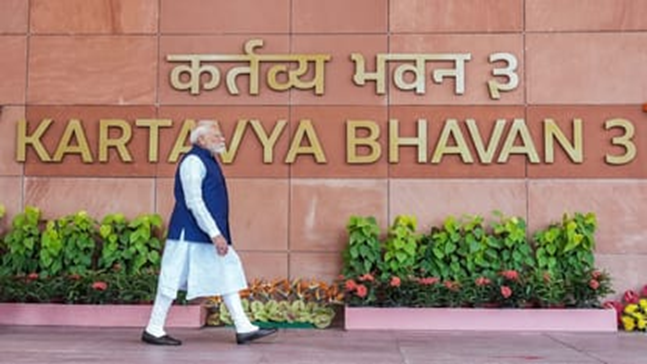
| Central Secretariat | Kartavya Bhavan | Reinforces the commitment of civil servants to public duty. |
| Race Course Road | Lok Kalyan Marg | Highlights public welfare (renamed in 2016). |