
After Reading This Article You Can Solve This UPSC Mains Model Question:
“Large hydropower projects in ecologically fragile and strategically sensitive regions often create a conflict between national security, developmental priorities and indigenous community rights.” Discuss with reference to the Siang Upper Multipurpose Project in Arunachal Pradesh. 15 Marks, (GS3 Environment)
Context
Tensions have escalated in Arunachal Pradesh’s Siang belt as indigenous Adi communities oppose the proposed 11,200 MW SUMP over displacement and livelihood concerns. The ongoing pre-feasibility survey has intensified protests, while the State government justifies the project on national security grounds amid China’s proposed upstream dam on the Yarlung Tsangpo.
Introduction
The Siang Upper Multipurpose Project represents the complex intersection of India’s hydropower ambitions, strategic concerns over China’s upstream activities, ecological vulnerability and the constitutional rights of indigenous communities.
Siang Upper Multipurpose Project (SUMP): Key Features and Historical Evolution
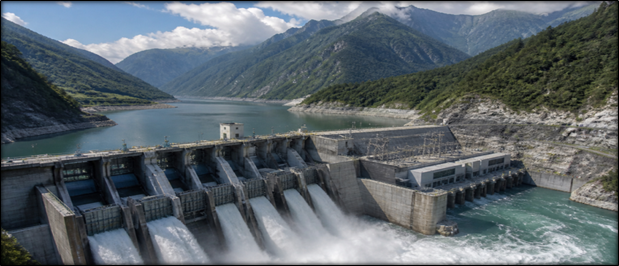
1. Large-scale hydropower project: The proposed 11,200 MW SUMP is envisaged as India’s largest hydropower project on the Siang River in Arunachal Pradesh, aimed at strengthening India’s hydropower generation capacity.
2. Strategic river system: The Siang is the Indian stretch of the Yarlung Tsangpo, which originates in Tibet, enters India through Arunachal Pradesh and subsequently becomes part of the Brahmaputra river system.
3. 1982–2013 – Initial planning and strategic concerns: The Brahmaputra Board proposed three smaller projects on the Siang and Subansiri rivers in 1982. By 2013, concerns over China’s upstream hydropower development had gained prominence in India’s strategic planning.
4. 2017 – Project consolidation: The proposed Siang Upper Stage-I and Stage-II projects were merged under a common framework, eventually evolving into the Siang Upper Multipurpose Project.
5. December 2024 – China’s hydropower expansion: China’s approval of a proposed 60,000 MW hydropower project on the lower Yarlung Tsangpo further increased India’s strategic interest in SUMP, particularly concerning downstream water security and potential upstream control over river flows.
Recent Developments: Why has the controversy intensified?
1. Local resistance: Sections of the Adi community, youth organisations and riverbank residents have opposed the project, arguing that it threatens their ancestral land, livelihoods and cultural identity.
2. Continuation of the Pre-Feasibility Report (PFR): Despite local opposition, the pre-feasibility survey has continued, creating apprehensions that the project may eventually progress towards construction.
3. Government’s assurance: Arunachal Pradesh Chief Minister Pema Khandu has stated that the project will not be rushed beyond the feasibility stage and that it will not proceed if experts find it unfeasible.
4. Demand for written assurances: Local representatives remain sceptical about government assurances and have demanded a written commitment that project construction will not proceed without community acceptance.
5. National security argument: The State government maintains that SUMP is strategically important to counter possible risks associated with China’s upstream dam, including potential changes in water flows.
Major Dimensions of the Siang Upper Multipurpose Project (SUMP)
1. Strategic and National Security Dimension
- China’s upstream advantage and water security: China’s proposed hydropower project on the Yarlung Tsangpo raises concerns for India, as the river enters Indian territory as the Siang and subsequently forms part of the Brahmaputra basin, creating potential upstream-downstream vulnerabilities.
- Potential weaponisation of water: India apprehends that upstream infrastructure could influence downstream water availability through changes in the timing and volume of water releases, making hydrological infrastructure important for strategic preparedness.
2. Environmental and Ecological Dimension
- Ecological fragility and biodiversity loss: The Siang basin lies in the ecologically sensitive Eastern Himalayas, where large hydropower projects may cause forest loss, habitat fragmentation and disturbance to terrestrial and aquatic biodiversity.
- Alteration of river ecosystems: Dam construction and reservoir operations can modify natural river flows, sediment transportation, fish migration and downstream ecological processes, affecting floodplains and agricultural productivity.
3. Socio-Cultural and Tribal Rights Dimension
- Displacement and livelihood insecurity: The Adi community fears the loss of ancestral settlements, agricultural land and traditional livelihood resources, particularly those dependent on agriculture, fishing and forests.
- Threat to cultural identity: The Siang holds deep religious, cultural and social significance for indigenous communities, and its submergence could weaken traditional practices, customary institutions and intergenerational relationships.
4. Economic and Energy Security Dimension
- Renewable energy and energy security: SUMP could significantly expand India’s hydropower capacity by providing relatively clean and dispatchable electricity, helping balance intermittent renewable sources such as solar and wind energy.
- Regional economic development: The project could generate employment, improve connectivity and encourage economic activities through investments in roads, transmission networks and communication infrastructure in Arunachal Pradesh.
5. Governance and Institutional Dimension
- Lack of public trust and inadequate consultation: The gap between government assurances and community expectations has generated distrust, highlighting the need for early and continuous engagement with indigenous communities.
- Transparency and credibility of assessments: Project design, land requirements, submergence areas and environmental consequences must be publicly disclosed, while the pre-feasibility survey should remain an objective technical assessment rather than a procedural formality.
6. International Relations and Transboundary River Governance
- Upstream-downstream asymmetry: China’s geographical position as an upstream riparian country gives it considerable influence over the Yarlung Tsangpo’s flow into India, creating concerns regarding downstream water security.
- Information-sharing deficit: India needs reliable information about China’s proposed dam, including its storage capacity, operational procedures, water-release schedules and potential downstream consequences.
Constitutional, Legal and Policy Framework
A. Constitutional provisions
1. Article 21 – Right to Life: The right to life has been judicially interpreted to include the right to a healthy environment, making environmental protection an important consideration in large infrastructure projects.
2. Article 29 – Protection of Cultural Interests: The provision protects the interests of sections of citizens having a distinct language, script or culture, which is relevant to safeguarding indigenous cultural identity.
3. Article 300A – Right to Property: No person can be deprived of property except by authority of law, making lawful acquisition and compensation essential where private property is affected.
4. Article 48A – Environmental Protection: The State is constitutionally obligated to protect and improve the environment and safeguard forests and wildlife.
5. Article 51A(g) – Fundamental Duty: Citizens have a duty to protect and improve the natural environment, including forests, lakes, rivers and wildlife.
B. Important legislative and regulatory frameworks
1. Environment (Protection) Act, 1986: It provides the overarching legal framework for environmental protection and the regulation of activities with potential environmental impacts.
2. EIA Notification, 2006: Applicable projects must undergo the prescribed environmental clearance process, including environmental impact assessment and public consultation requirements, subject to the relevant project category and exemptions.
3. Forest Rights Act, 2006: Where applicable, it recognises the individual and community forest rights of forest-dwelling Scheduled Tribes and other traditional forest dwellers.
4. Right to Fair Compensation and Transparency in Land Acquisition, Rehabilitation and Resettlement Act, 2013: It provides a framework for fair compensation, rehabilitation and resettlement in cases of land acquisition covered by the Act.
5. Biological Diversity Act, 2002: It provides a framework for biodiversity conservation, sustainable use of biological resources and equitable sharing of benefits.
C. Important judicial principles
1. Vellore Citizens’ Welfare Forum v. Union of India (1996): The Supreme Court recognised the precautionary principle and polluter pays principle as essential components of environmental law in India.
2. Narmada Bachao Andolan v. Union of India (2000): The Supreme Court examined the relationship between large development projects, environmental safeguards, rehabilitation and displacement, highlighting the importance of balancing developmental objectives with affected people’s interests.
3. Samatha v. State of Andhra Pradesh (1997): The Supreme Court emphasised the protection of tribal land interests in the context of land transfers and mining in Scheduled Areas, although its specific legal application must be distinguished from the situation in Arunachal Pradesh.
Way Forward
1. Strengthen strategic preparedness: India should seek information on China’s proposed dam and strengthen hydrological monitoring, flood forecasting and early-warning systems. SUMP’s strategic necessity and feasibility must be independently assessed.
2. Ensure tribal participation: The government should ensure early community consultations, recognise customary rights and undertake comprehensive Social Impact Assessments, fair rehabilitation and equitable benefit-sharing.
3. Strengthen environmental governance: Comprehensive and cumulative impact assessments, seismic studies, environmental flow requirements and climate-resilient planning must guide project decisions.
4. Improve governance and conflict resolution: Institutionalised dialogue, transparent information disclosure, participatory decision-making and independent grievance-redressal mechanisms are essential to building public trust.
5. Promote transboundary cooperation: India should strengthen hydrological data-sharing, flood-warning mechanisms and emergency communication with China while engaging Bangladesh in sustainable Brahmaputra basin management.
Conclusion
The Siang project must not become a choice between national security and indigenous rights. India’s strategic interests will be best served through scientifically informed planning, ecological safeguards, meaningful tribal participation and cooperative transboundary water governance.
| Important Current To Concept Covered In This Article: Siang Upper Multipurpose Project (SUMP) EIA Notification, 2006 |