UPSC Mains-Syllabus Linkage
- GS Paper II: Role of philanthropy in governance, ethical communication in public policy.
- GS Paper III: Climate adaptation vs mitigation, environmental data governance.
- Essay Paper: “Science and ethics in public discourse” / “Balancing urgency with responsibility in environmental action.”
Why in the News?
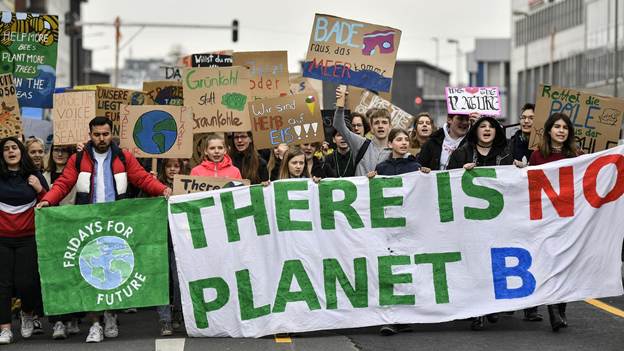
A recent commentary highlights how alarmist climate rhetoric, while spurring urgency, can distort policy priorities and invite backlash. It underscores the need for balanced, ethical, and evidence-based communication alongside inclusive, accountable climate governance—making it vital for understanding the intersection of public policy, environmental justice, and sustainable development.
Understanding the Issue
- Over the past decade, Bill Gates has emerged as a key figure in shaping global climate discourse through his books, philanthropy, and investments in clean technology. Between 2019 and 2021, his climate messaging leaned towards apocalyptic urgency, urging rapid decarbonisation and net-zero commitments.
- However, his recent statements reflect a recalibration—acknowledging that while climate change is serious, it may not directly threaten human survival. This moderation has ignited debate about the balance between urgency and realism in climate communication.
The Problem of Alarmism
Climate alarmism refers to framing climate change as an imminent catastrophe. While such rhetoric can drive awareness and funding, it has several drawbacks:
- Overstating inevitability: It can create a sense of hopelessness and foster political fatigue.
- Neglecting adaptation: By focusing solely on mitigation, it sidelines human and institutional capacity to adapt.
- Political backlash: Exaggerated claims can be exploited by climate sceptics, leading to policy reversals or complacency.
Alarmism mobilises communities in the short term but risks eroding public trust and long-term engagement.
Gates’s Pivot and Its Ripple Effects
In his recent communications, Bill Gates advocated for a pragmatic balance between climate mitigation and poverty alleviation. He emphasised that reducing disease, enhancing resilience, and addressing poverty must accompany decarbonisation.
This shift produced complex ripple effects:
- Positive: It reintroduced moderation into climate discourse, urging data-driven and inclusive policy design.
- Negative: Some political actors, notably climate sceptics, misinterpreted this moderation as a vindication of denialism.
Thus, the challenge lies in maintaining urgency without inviting misrepresentation.
The Role and Limits of Philanthropy
Gates’s approach to climate change mirrors the technocratic optimism that defined his technology career—trust in innovation and systems engineering to solve global problems. His philanthropic model, however, raises governance questions:
- Philanthropy can accelerate low-carbon innovation but often bypasses democratic accountability.
- Private actors may prioritise scalable technological solutions over structural social reforms.
In a democracy, climate strategy must be rooted in inclusive policymaking, not elite-driven narratives.
Data and Policy Complexities
The article underscores uncertainties in global emission trends:
- Fossil fuel emissions continue to reach record highs despite slower growth rates.
- Land-use change emissions remain poorly measured due to incomplete data and regional gaps.
- Year-to-year variations complicate claims of sustained progress.
Such uncertainties caution against simplistic declarations of victory or failure in climate policy.
Broader Implications for Climate Governance
- Balance between mitigation and adaptation: Policymakers must invest equally in emission reduction and resilience-building measures.
- Democratisation of climate action: Civil society, local governments, and vulnerable communities must be integral to decision-making.
- Ethical communication: Influential voices must communicate responsibly—neither dismissing nor dramatizing the crisis.
- Transparency in philanthropy: Private funding in climate domains must align with national and local priorities.
India’s Perspective
For India, which faces both developmental and environmental challenges, climate communication must emphasise opportunity as much as risk. Strengthening adaptation through resilient agriculture, urban planning, and public health infrastructure is as crucial as pursuing renewable energy transitions. Further, philanthropic or private-led interventions should complement, not substitute, public accountability mechanisms.
The Way Forward
- Institutionalise accurate data systems for emissions and land-use monitoring.
- Promote balanced climate discourse that recognises local realities and human agency.
- Integrate adaptation goals into national climate strategies alongside mitigation targets.
- Ensure transparency and inclusivity in all philanthropic and international climate initiatives.
- Encourage behavioural and systemic change through education, participatory governance, and community-level resilience programs.
Conclusion
While urgency in climate communication is indispensable, unchecked alarmism can undermine the very goals it seeks to advance. Effective climate action requires honesty, balance, and humility—anchored in science, inclusivity, and ethics. The real challenge is not only to act swiftly but to act wisely, ensuring that the path to sustainability remains both equitable and democratic.
| Year | Paper | Question |
| 2023 | GS-III | Explain the significance of the Green Climate Fund (GCF) in ensuring support to developing countries in combating climate change. How far has India been benefited from the GCF? [250 Words, 15 Marks] |
| 2021 | GS-III | Describe the major outcomes of the 26th session of the Conference of the Parties (COP) to the United Nations Framework Convention on Climate Change (UNFCCC). How far do they impact India’s commitment towards climate action? [250 Words, 15 Marks] |
| 2020 | GS-III | Explain the phenomenon of global warming and its causes. What measures need to be taken to control global warming? [150 Words, 10 Marks] |
| 2019 | GS-III | Climate change is a global problem. How will India be affected by climate change? How Himalayan and coastal states of India will be affected by climate change? [250 Words, 15 Marks] |
| 2018 | GS-II | How far do you agree that the behaviour of the corporate sector is crucial for combating climate change? [150 Words, 10 Marks] |
| 2016 | GS-III | Give an account of the current status and the targets to be achieved pertaining to renewable energy sources in India. [200 Words, 12.5 Marks] |
| 2015 | GS-III | Discuss the role of international cooperation in addressing transboundary environmental issues. [200 Words, 12.5 Marks] |
| 2020 | GS-II | Public policy is the outcome of collective deliberation of multiple stakeholders. Discuss in the context of environmental governance. [250 Words, 15 Marks] |