Context
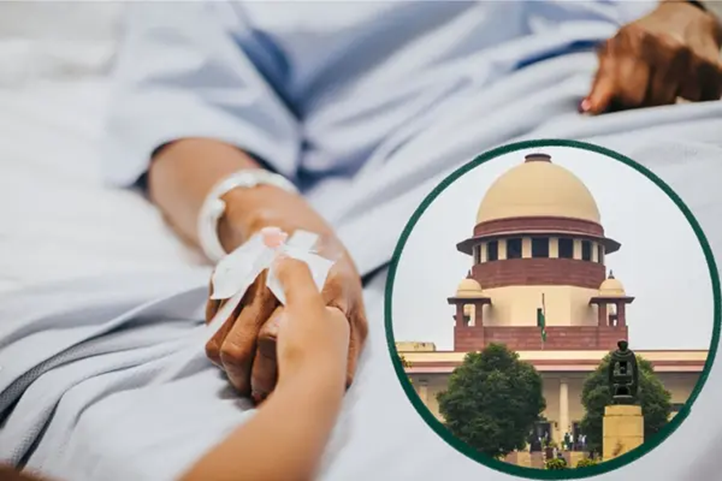
Recently, the Supreme Court of India delivered a historic judgment on March 11, 2026, permitting the withdrawal of life support for a 32-year-old man who had been in a Persistent Vegetative State (PVS) for nearly 13 years. In this ruling, the Court emphasized that the state’s interest in preserving life must become subservient to an individual’s dignity when medical interventions become futile and invasive. Significantly, the Bench directed that the term “passive euthanasia” should be replaced with “Withdrawing or Withholding of Medical Treatment” to reflect a more compassionate and medically accurate approach. This marks the first time since the 2018 Common Cause judgment that the apex court has directly authorized the cessation of clinically assisted nutrition and hydration (CANH) in such a specific case.
1. Evolution of the Right to Die in India
The legal journey has shifted from total prohibition to a nuanced recognition of dignity:
- P. Rathinam v. Union of India (1994): The SC initially held that the “Right to Life” under Article 21 includes the “Right to Die,” effectively striking down Section 309 of the IPC (Attempt to Suicide).
- Gian Kaur v. State of Punjab (1996): A Constitution Bench overruled Rathinam, stating that Article 21 is a “Right to Life” and does not include the “Right to Die.” However, it hinted that a dignified death is part of a dignified life.
- Aruna Shanbaug v. Union of India (2011): The SC permitted Passive Euthanasia under strict judicial monitoring for the first time, distinguishing it from Active Euthanasia.
- Common Cause v. Union of India (2018): A 5-judge bench declared the Right to Die with Dignity as a Fundamental Right under Article 21. It legalized Living Wills.
2. Active vs. Passive Euthanasia
| Feature | Active Euthanasia | Passive Euthanasia (Withdrawal of Treatment) |
| Action | A positive act to end life (e.g., lethal injection). | Withholding or withdrawing life-support. |
| Legal Status | Illegal in India (treated as murder/culpable homicide). | Legal in India under specific SC guidelines. |
| Outcome | Intentional termination of life. | Allowing the natural course of death to occur. |
3. Advance Medical Directives (Living Wills)
A “Living Will” is a document where a person specifies in advance that they should not be kept on artificial life support if they reach a terminal or irreversible medical state.
- Execution: Can be signed in the presence of two witnesses and attested by a Notary or Gazetted Officer (simplified in 2023 from the earlier requirement of a Judicial Magistrate).
- Revocation: An individual has the right to withdraw or change the directive at any time while they are competent.
- National Health Digital Record: In 2023, the SC directed that these documents be integrated into digital health records for easy access by hospitals.
4. Procedural Safeguards
The procedure involves two tiers of medical experts to prevent misuse:
- Primary Medical Board: Consists of three doctors (including the treating physician and two specialists with 5 years of experience). They must give an opinion within 48 hours.
- Secondary Medical Board: Consists of three experts (one nominated by the District Medical Officer). They also have a 48-hour window to confirm the primary board’s finding.
- Communication: The hospital must intimate the Judicial Magistrate of First Class (JMFC) about the decision before implementation.
Q. With reference to the 'Right to Die with Dignity' in India, consider the following statements:

1. The Supreme Court has recognized the Right to Die with Dignity as a fundamental right under Article 21 of the Constitution.

2. Active euthanasia, involving the administration of lethal substances to end a terminal patient's life, is legally permitted under the Common Cause (2018) guidelines.

3. A Living Will must be countersigned by a Judicial Magistrate of First Class to be considered legally valid in India.

4. According to recent 2026 judicial directions, Clinically Assisted Nutrition and Hydration (CANH) is considered a form of medical treatment that can be withdrawn.

How many of the above statements are correct?
(a) Only one
(b) Only two
(c) Only three
(d) All four

Solution:

Answer: (b) Only two

•	STATEMENT 1 IS CORRECT: In Common Cause v. Union of India (2018), the SC held that the right to a dignified life includes the right to a dignified death.
•	STATEMENT 2 IS INCORRECT: Active euthanasia remains strictly illegal in India and is prosecuted as a criminal offense.
•	STATEMENT 3 IS INCORRECT: In 2023, the SC modified the guidelines; a Living Will now only needs attestation by a Notary or Gazetted Officer, not a Judicial Magistrate.
•	STATEMENT 4 IS CORRECT: In the March 2026 Harish Rana case, the SC clarified that CANH (feeding tubes) is indeed a "medical treatment" and can be withdrawn if it is in the patient's best interest.