After Reading This Article You Can Solve This UPSC Mains Model Questions:
“Despite immense cultural and natural endowments, India continues to underperform as a global tourism destination.” Analyse the structural constraints facing India’s tourism sector and suggest measures to unlock its full potential. 250 words (GS-3 Economy)
Context
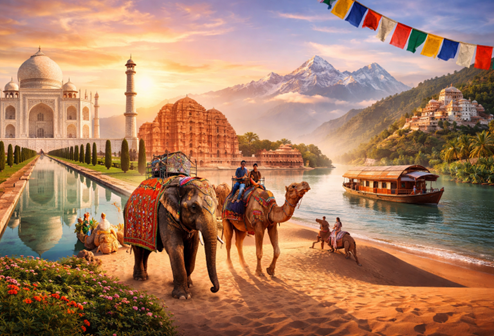
Despite its civilisational depth, ecological diversity and cultural richness, India underperforms as a global tourism destination. As of August 2025, India recorded about 5.6 million foreign tourist arrivals (FTAs), far below peers like Singapore (11.6 million) and Thailand (>$60 billion tourism receipts). This gap reflects structural and policy deficits rather than lack of potential.
Significance of Tourism Sector in India
1. Economic Engine & Foreign Exchange (FEE)
- In 2024, India earned approximately $28 billion in foreign exchange. The government is targeting $130–140 billion in earnings by 2030.
2. Massive Employment Multiplier
- Direct & Indirect Jobs: In FY23, the sector supported nearly 7.6 crore (76 million) jobs.
- Regional Benefit: Unlike manufacturing, tourism creates jobs in remote, rural, and tribal areas (e.g., homestays in the Northeast or Ladakh), curbing rural-to-urban migration.
3. Inclusive and Balanced Regional Development
- It empowers MSMEs and local artisans, as 80-90% of the tourism supply chain consists of small-scale businesses.
4. Soft Power and Cultural Diplomacy
- By showcasing Yoga, Ayurveda, and its spiritual heritage, India fosters “people-to-people” contact that transcends political boundaries.
5. Preservation of Heritage and Environment
- Tourism provides the economic rationale for preserving India’s 44 UNESCO World Heritage Sites.
- Revenue from tickets and tours funds the maintenance of ancient monuments and the protection of wildlife (e.g., Tiger Reserves).
- The transition toward Eco-tourism ensures that local communities become guardians of their natural environment rather than exploiters.
6. Growth of Niche “High-Value” Sectors
- Medical Value Travel (MVT): Projected to reach $13.42 billion by 2026, attracting patients globally for low-cost, high-quality healthcare.
- MICE (Meetings, Incentives, Conferences, and Exhibitions): Positioning India as a hub for global business summits, which generates higher per-capita spending compared to leisure tourists.
Core Problems of Tourism Sector in India
I. Image
- Safety Deficit: Ranked 114th in the WEF Safety & Security index. High-profile reports of harassment and scams create a “cautionary” rather than “welcoming” global narrative.
- Marketing Monolith: The “Incredible India” brand is iconic but too generic. Competitors use “surgical marketing” (e.g., Malaysia’s Truly Asia or Thailand’s Amazing Thailand); India lacks specific sub-branding for its plural identities like the Buddhist Circuit, Himalayan Trail, or Coastal Belt.
- Travel Access and Visa Constraints: Unlike India, which offers visa-free entry mainly to Bhutan, Nepal, and Maldives, countries such as China and Thailand extend visa-free access to a far larger number of nations, enhancing their ease of travel.
- Sanitation Stigma: Despite Swachh Bharat, the global imagination of India is still tethered to poor hygiene. The “Visual Pollution” (litter/dust) at heritage sites contradicts the “Incredible” branding.
- For instance, excessive tourist-generated waste in hill stations such as Manali has led to littering, contaminating watersheds and undermining environmental sustainability.
II. Infrastructure
- The “Last-Mile” Logistical Gap: While the Ude Desh ka Aam Naagrik (UDAN) scheme has improved air access, the “doorstep-to-monument” experience is broken. Potholed roads, lack of standardized signage, and poor public restrooms deter high-value travelers.
- The 30% Utility Gap: According to Ministry estimates, only 30% of domestic circuits offer a seamless experience with integrated sanitation and road facilities.
- Price Incompetitiveness: India is a “budget destination” that is oddly expensive. High GST (up to 18% on hotels) and the denial of Input Tax Credit (ITC) make Indian luxury stays costlier than those in Bali or Bangkok.
III. India Itself
- The Skill Paradox: A massive 40% manpower shortfall. With only 1% formally trained staff, the “Service Culture” often shifts from Atithi Devo Bhava (Guest is God) to frustration due to language barriers and unprofessional guest relations.
- Bureaucratic Friction:
- Immigration: Often viewed as a security screening rather than a tourist welcome.
- Regulatory Cobweb: Operators face a “license raj” (Fire, Police, FSSAI, Health) that varies by state, stifling the growth of SMEs and homestays.
- Dissent & Diplomacy: Bureaucratic “over-sensitivity” to foreign critics (denying entry based on past views) creates a global perception of India as a rigid, rather than a confident, democratic destination.
Key Government Initiatives: Tourism Sector in India
1. Swadesh Darshan 2.0: Development of 50 top tourist destinations selected via a competitive “Challenge Mode” in partnership with States.
2. PRASHAD Scheme: Holistic development of identified pilgrimage and heritage destinations. Over 54 projects across 28 States/UTs are sanctioned to provide world-class amenities (cleanliness, lighting, last-mile connectivity) at major religious hubs.
3. Heal in India & Ayush Visa: Positions India as a global hub for Medical Value Travel (MVT). Launch of the ‘Heal in India’ portal and introduction of the Ayush Visa for foreign nationals.
4. “Wed in India” & MICE Tourism: Launched the “India says I do” campaign to capture the multi-billion dollar global wedding market.
- MICE Strategy: A dedicated roadmap to position India as a premier destination for Meetings, Incentives, Conferences, and Exhibitions, leveraging new infrastructure like Bharat Mandapam and Yashobhoomi.
5. Infrastructure & Connectivity: UDAN Scheme- Expansion of regional air connectivity to 120+ destinations, including remote hill stations and the North East, to bridge the “last-mile” gap.
6. Digital & Skill Transformation: Incredible India Campaign – Global branding and digital promotion of India as a tourist destination.
Way Forward: Strengthening the Tourism Sector in India
- Segmented Marketing: Move from a generic “one-size-fits-all” campaign to surgical, niche-based branding. Market Spiritual/Wellness to East Asia, Adventure/Wildlife to Europe, and MICE/Luxury to the Middle East.
- Digital Renaissance: Integrate AI-powered trip planners and AR/VR virtual tours of monuments to engage tech-savvy global travelers. Partner with international influencers to showcase authentic, safe, and diverse local experiences.
- Integrated Tourism Circuits: Ensure remote heritage sites have integrated amenities (standardized signage, high-speed Wi-Fi, and clean restrooms).
- Private Sector Synergy: Scale the “Adopt a Heritage 2.0” project. Encourage private maintenance of site facilities through CSR and tax incentives, ensuring world-class upkeep without transferring monument ownership.
- GST Simplification: Fix the Input Tax Credit (ITC) anomaly for the hospitality sector. Align tax slabs with Southeast Asian neighbors to make mid-range and luxury travel price-competitive.
- “Visa on Arrival for the World”: Gradually expand “Visa on Arrival” to all low-risk nations to reduce bureaucratic friction and promote spontaneous travel.
- Industry Status: Granting full “Infrastructure Status” to the hospitality industry to enable easier access to low-interest, long-term financing
- Massive Skilling: Integrate tourism-specific vocational courses into the National Skill Development Mission to address the 40% workforce shortfall.
- The “Welcome” Force: Expand the Tourist Police (with high female representation) and train immigration officers as “Cultural Ambassadors” to ensure a secure and friendly first impression.
- Grassroots Empowerment: Promote Community-based Tourism and homestays (e.g., in Vibrant Villages) to ensure economic benefits flow directly to local residents.
Conclusion
To reach the goal of a $1 trillion tourism economy by 2047, India must pivot from passive promotion to active destination management. By integrating AI-driven personalization, sustainable “carrying capacity” frameworks, and a seamless “Visa-on-Arrival” regime, India can transform its cultural depth into a world-class, safe, and digitally-integrated global experience. The world is ready to visit India; India must now be ready to host the world.