UPSC Mains-Syllabus Linkage
- GS-II (International Relations): India’s regional diplomacy, balancing between interests and values, lessons for future engagement with contested regimes.
- GS-III (Internal Security): External security threats, terrorism spill-over, narco-trafficking from Afghanistan post-2021.
- Essay/Ethics: Balancing real politic with democratic principles and human rights considerations in foreign policy.
- Comparative Policy: Utility of “engagement without recognition” in other contexts—Myanmar, Taiwan, and how India shapes precedent for future contested states.
Why in the News?
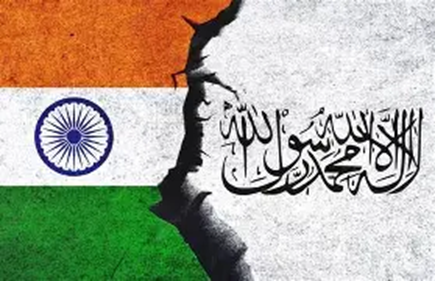
- A high-level meeting took place between India and the Taliban, with Afghanistan’s Foreign Minister visiting New Delhi—the most senior Taliban visit since 2021.
- India is debating upgrading its technical mission in Kabul to a full embassy, reflecting a serious recalibration of its Afghan policy while still not recognizing the Taliban regime.
- The engagement comes amid renewed regional churn in South and Central Asia, especially with Pakistan facing instability, China and Russia warming ties with Kabul, and the Islamic State-Khorasan posing transnational security threats.
Importance of Afghanistan for India
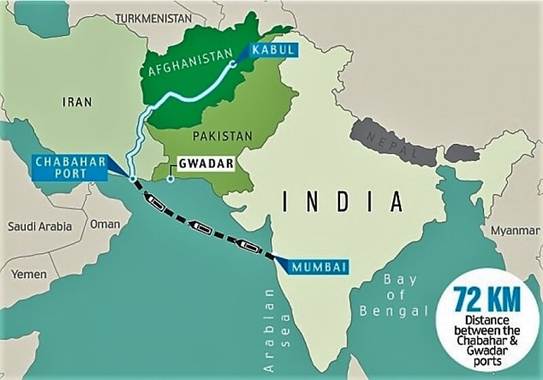
- Gateway to Central Asia: Afghanistan acts as a crucial corridor connecting India to the resource-rich Central Asian region. Via the Chabahar port in Iran, India gains access to Central Asian markets and energy supplies, bypassing Pakistan and countering China’s regional influence.
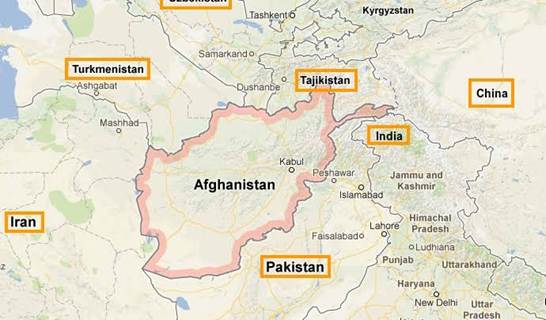
- Geostrategic Location: Afghanistan shares borders with not only Pakistan but also Iran, Turkmenistan, Uzbekistan, Tajikistan, and China, making it strategically central to India’s regional connectivity and influence.
- Counterbalance to Pakistan: By maintaining foothold and influence in Afghanistan, India can limit Pakistan’s regional dominance, weakening Islamabad’s strategic depth policy that seeks to use Afghanistan as a buffer against India.
- Counter-Terrorism Efforts: India’s involvement helps assert leadership in combating terrorism and extremist groups prevalent in the region, which have historically targeted India through cross-border terrorism.
- Developmental Partnership and Mutual Gains: India has invested over USD 3 billion in Afghanistan, funding key infrastructure like dams (Salma Dam), roads (Zaranj-Delaram Highway), the Afghan Parliament building, hospitals, and schools. These projects not only improve Afghan living standards but also strengthen bilateral goodwill and long-term ties.
Challenges for India’s Taliban Policy
- Terrorism Risks: The collapse of Afghanistan’s democratic government emboldened militant groups such as the Haqqani Network, Al-Qaeda, and Lashkar-e-Taiba. Their presence directly jeopardizes India’s national security due to potential cross-border terrorist activities.
- Pakistan’s Strategic Opposition: Pakistan views India’s influence in Afghanistan as a threat and accuses India of fomenting insurgencies in Pakistan’s restive regions like Balochistan, thereby escalating tensions.
- Non-Recognition of Taliban: India has refrained from officially recognizing the Taliban regime because of its failure to establish an inclusive government, protect human rights, and suppress terrorism—factors that complicate diplomatic relations.
- Refugee and Security Concerns: The Taliban takeover caused a wave of Afghan refugees seeking shelter in India, putting pressure on resources and raising security concerns, including the potential infiltration of radical elements.
India’s Engagement Approach: “Engagement Without Recognition”
- India maintains functional diplomatic and technical engagement through its mission in Kabul without formal recognition of the Taliban regime (distinct from de jure recognition as per international law).
- This model is backed by precedents like India’s engagement with Taiwan and Myanmar, allowing for pragmatic interaction without formal legitimacy to the regime.
- Humanitarian projects and infrastructure development are pursued, and cooperation is selective and primarily “interest-focused”.
Rationale Behind the Policy
- Opportunities
- Continuity of Investment: Protect projects and goodwill in Afghanistan against total loss post-US/NATO withdrawal.
- Countering Pakistan: Maintain leverage as Pakistan-Taliban ties become strained over border and terror issues.
- Monitor and Contain Threats: Facilitate intelligence-gathering and ground-level insight into emerging threats including IS-K and Pakistan-backed proxies.
- Risks
- Legitimisation of Taliban Regime: Early recognition may undermine India’s democratic values and encourage oppressive Taliban policies, particularly against women and minorities.
- Unpredictable Partners: Taliban’s record of ideological rigidity, exclusion of women, and lack of internal unity make policy commitments uncertain.
- Long-term Instability: Potential for Afghanistan to remain a hub for terrorism, narco-trade, and instability affecting the region.
Key Challenges for India
| Challenge | Details |
| Security Concerns | Prospects of future anti-India terror attacks from Afghan soil remain high . |
| Human rights and inclusivity | Taliban’s domestic record is regressive, especially for women and minorities. |
| Regional Rivalries | China and Russia are increasing engagement; so is Pakistan, though carefully. |
| Internal Taliban Divisions | Taliban not a monolith; power struggles risk unpredictability of commitments. |
International and Regional Context
- Russia and China have started formal engagement with the Taliban, even exchanging ambassadors, while Pakistan’s support is conditional and transactional.
- The biggest external security challenge to Taliban is from IS-Khorasan, highlighting regional security threats.
- The National Resistance Front (NRF) continues resistance against the Taliban, mainly from exile bases.
Analytical Perspective: Strategic Wait-and-Watch
- Why Engage, But Not Recognise?
- Recognising Taliban would erode India’s leverage with other Afghan factions and alienate global partners wary of Taliban’s legitimacy.
- Direct engagement offers limited influence on critical issues—terrorism, rights, humanitarian assistance—while preserving scope for recalibration.
- A slow, pragmatic approach allows India to cooperate on non-political fronts, gather intelligence, and secure regional interests without perceived endorsement of Taliban’s ideology.
Conclusion
India’s cautious engagement with the Taliban without formal recognition reflects a pragmatic balance between safeguarding strategic interests and upholding principles. This approach protects India’s investments and regional stability while allowing flexibility amid evolving geopolitics. It prevents legitimizing a regime with questionable governance, promotes humanitarian aid and security cooperation, and counters adversarial influences. Such nuanced diplomacy enables India to maintain strategic autonomy and influence in Afghanistan’s complex landscape.
| Year | Paper | Question |
| 2013 | GS-II | The proposed withdrawal of the International Security Assistance Force (ISAF) from Afghanistan in 2014 is fraught with major security implications for the countries of the region. Examine in light of the fact that India is faced with a plethora of challenges and needs to safeguard its own strategic interests. [200 Words, 10 Marks] |
| 2019 | GS-II | For any meaningful dialogue to take place, India has to be a partner in Afghanistan reconciliation process. Discuss the evolving paradigm of Indian foreign policy with respect to Afghanistan. [250 Words, 15 Marks] |
CRUISHING AHEAD
UPSC Mains-Syllabus Linkage
- GS-III (Economy, Infrastructure, Growth & Security): Infrastructure (Ports, Shipping); Investment Models (MDF); Forex Outflow reduction; supply chain resilience; economic growth.
- GS-II (Governance, Policy & IR): Evaluation of Sagarmala/MAKV 2047; correcting policy flaws (Infrastructure Status, tax/regulatory disparities); strategic push for transshipment hubs; bolstering IOR influence and IMO compliance.
- Essay/Ethics & Comparative Policy: Balancing economic competitiveness (subsidies/PLI) with environmental sustainability (Green Ports) and ethical governance/welfare.
GS-I (Geography & Society): Links physical geography (coastline) to urbanization (CEZs) and socio-economic development of coastal communities.
Why in the News?
The Indian shipping and port sector has recently been in the spotlight due to several key developments and policy pronouncements, underscoring a governmental push for maritime-led economic growth.
- Major Policy Push: Announcements regarding India Maritime Week/Summit (IMW/GMIS) and the release of ambitious plans like the Maritime Amrit Kaal Vision (MAKV) 2047 highlight a renewed focus on making India a global maritime power.
- Significant Investment: The unveiling of substantial investment plans, including a dedicated Maritime Development Fund (MDF) and financial assistance schemes for shipbuilding, signals a move from policy intent to concrete financial backing.
- Infrastructure Status: The decision to grant infrastructure asset status to large vessels marks a critical policy reform aimed at easing long-term, low-cost financing, which has been a perennial demand of the industry.
- Geopolitical and Economic Context: Global supply chain disruptions (like the Red Sea Crisis) and the vision of a ‘Developed India by 2047’ necessitate a robust, self-reliant maritime capacity to secure trade and reduce foreign exchange outflow.
India’s Maritime Sector: Challenges and the Policy Intervention
India’s 7,500 km coastline, a natural competitive advantage, is yet to be fully leveraged. Achieving “maritime might” requires addressing deep-seated structural and financial constraints through targeted government policy.
1. Structural and Financial Challenges
| Challenge | Impact on Indian Shipping |
| Capital & Financing Constraints | Ships were not traditionally classified as ‘infrastructure,’ making long-term, low-cost debt difficult. This is compounded by high borrowing costs and rigid collateral rules, making fleet acquisition costly. |
| Tax Disparities and Operational Costs | Indian-flagged ships face a 5% Integrated Goods and Services Tax (IGST) on purchases and higher port and logistics charges compared to foreign-flagged vessels, severely affecting global competitiveness. |
| Aging Fleet | A significant portion of the Indian fleet is aged (e.g., average age around 21 years), leading to higher operational, maintenance, and insurance costs, and non-compliance with new green shipping norms. |
| Over-reliance on Foreign Tonnage | Indian vessels carry a marginal share of the nation’s total EXIM cargo (estimated less than 15%), resulting in massive foreign exchange outgo as freight payments (leakage of “freight forex”). |
2. Gaps in Port and Shipbuilding Infrastructure
- Shallow Drafts and Transshipment: Many major Indian ports lack the necessary deep drafts (e.g., 18-21 meters) and dedicated berths to handle Ultra Large Container Vessels (ULCVs) directly.
- Result: Cargo is often transshipped via foreign hubs like Colombo, Singapore, and Dubai, adding cost and time to the supply chain.
- Shipbuilding Industry Underdevelopment: The domestic shipbuilding sector struggles with a 25-30% cost disadvantage compared to global leaders like China and South Korea due to high steel costs, import duties on components (though relaxed now), and a lack of a robust domestic ancillary ecosystem.
- Poor Last-Mile Connectivity: Inadequate Road and rail links for port evacuation led to congestion, high dwell times, and increased logistics costs, which are currently high at 13-15% of GDP (compared to a global average of 8-10%).
3. Government Interventions and Vision
The government has launched comprehensive programs to address these gaps, notably under the umbrella of Maritime India Vision 2030 (MIV 2030) and Sagarmala Programme.
- Policy and Legislative Reforms:
- Indian Ports Act & Merchant Shipping Act Amendments: Modernizing colonial-era laws to enhance ease of doing business, promote Public-Private Partnerships (PPP), and encourage private capital.
- Infrastructure Asset Status: Granted to large merchant ships to provide access to long-term, cheap credit.
- Financial and Fiscal Incentives:
- Maritime Development Fund (MDF): A dedicated corpus (e.g., ₹25,000 crore) to offer long-term financing and interest subvention for shipbuilding and fleet acquisition.
- Shipbuilding Financial Assistance Policy: Provides direct financial assistance (e.g., 15-25% of the vessel cost) for Indian-built ships, especially for specialized and green vessels.
- Tonnage Tax Extension: Extending the benefit of the presumptive tax regime (Tonnage Tax) to Inland Water Transport (IWT) vessels to encourage investment in waterways.
- Infrastructure Development:
- Sagarmala Programme: Focuses on Port Modernisation, Port Connectivity (via rail and road), and Port-Linked Industrialisation to develop Coastal Economic Zones (CEZs).
- Coastal Shipping and IWT: Schemes to enhance the modal share of coastal shipping and IWT, which are more fuel-efficient and environmentally friendly modes of transport. (e.g., focus on operationalizing 50 National Waterways).
The Road Ahead: Recommendations for Sustainable Growth
For India’s maritime sector to truly thrive and move from “cruising” to “leading,” a dedicated and multi-pronged approach beyond initial financial stimulus is essential.
1. Addressing Financial and Fiscal Anomalies
- Level Playing Field on Taxation: The 5% IGST on ship imports for Indian-flagged vessels must be removed to eliminate the cost disadvantage vis-à-vis foreign competitors.
- Enhancing MDF Utility: Ensure the Maritime Development Fund provides debt at internationally competitive interest rates and with long repayment tenures (7-10 years) to support the capital-intensive nature of the industry.
- Reviving Cargo Reservation: Re-evaluate and implement a well-designed Cargo Reservation Policy to mandatorily allocate a percentage of government-controlled EXIM cargo to Indian-flagged vessels, thereby guaranteeing a baseline demand.
2. Fostering a Globally Competitive Shipbuilding Ecosystem
- Production-Linked Incentive (PLI) Scheme: Introduce a sector-specific PLI scheme for shipbuilding and its ancillary industries to incentivize scale, technology adoption, and indigenization of high-value components.
- Shipbuilding Clusters: Develop dedicated maritime clusters (similar to those in South Korea) that integrate shipyards, R&D centers, MSMEs, and skill development institutes for synergy and cost reduction.
3. Pushing the Green and Digital Transition
- Green Shipping Initiatives: Incentivize the adoption of alternate fuels (e.g., LNG, Green Hydrogen, Methanol) and technologies through subsidies and tax breaks. The Green Tug Transition Program (GTTP) is a welcome step that needs fast-tracking.
- Digital Transformation: Accelerate the implementation of Smart Port Infrastructure Management Systems (SPIMS) and the National Logistics Portal (Marine) to enable paperless trade, optimize cargo handling, and further reduce vessel turnaround time.
| Key Government Initiatives for Maritime Sector (Overview) |
| Sagarmala Programme (2015): Focus on Port Modernization, Connectivity, and Port-led Industrialization. |
| Maritime India Vision (MIV) 2030: A blueprint to make India a global maritime leader, covering 150+ initiatives. |
| Maritime Amrit Kaal Vision (MAKV) 2047: Long-term vision for sector’s growth until 2047, projecting massive investment and job creation. |
| Green Tug Transition Program (GTTP): Mandates gradual replacement of conventional tugs with green-fueled ones at major ports. |
Conclusion
The government’s recent policies demonstrate a clear commitment to leveraging India’s “Blue Economy” potential. Granting infrastructure status and establishing the Maritime Development Fund are crucial steps in solving the core financing problem. However, the true success of this vision hinges on removing persistent tax disadvantages and ensuring effective, time-bound implementation of infrastructure projects. A globally competitive and ‘Atmanirbhar’ Indian shipping sector is not just an economic necessity but a strategic imperative to secure India’s position as a powerful, reliable “lighthouse” in global trade.