Why in the News
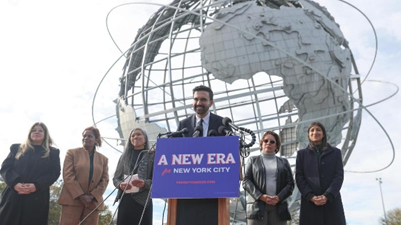
Recently, Zohran Mamdani elected as incoming Mayor of New York City (Big Apple), set to begin governing from January 1, 2026, with all-women Transition Team, posing basic question about sustainable welfarism in market-reliant economies. Headline promises like free buses, rent freezes, and universal childcare have brought welfarism back to centre stage, echoing similar political movements globally.
Background Context
- The year 2025 began with a new US President, while the Big Apple has witnessed the emergence of a progressive municipal administration.
- Welfare has repeatedly returned to the political centre stage when inequality widens or growth is perceived as exclusive, both in the Big Apple and globally.
- Governments in countries such as Brazil, the United Kingdom, and India have relied on welfare-led politics to deliver public benefits.
- NYC, or the Big Apple, is now poised to experience a “Mamdani moment”, representing inclusive economic governance.
Two Sides to Welfare: Rawls vs. Pareto
Welfare acts fast, delivering visible outcomes like children in school or families housed, bypassing slow productivity reforms. Policy challenge lies in balancing social justice with economic efficiency.
. The Rawlsian Principle (Justice/Distribution)
- Core Idea: Based on John Rawls’s philosophy—judge society by the least advantaged. Policies should prioritise the needs of those whom markets leave out.
- Welfare Role: State should subsidise buyers and sellers to admit the excluded on fair terms, thereby increasing social welfare even at the cost of some inefficiency.
- Appeal: Welfare acts fast, delivers visible outcomes (children in school, families housed), and bypasses the slow grind of productivity reforms.
2. The Pareto Principle (Efficiency/Markets)
- Core Idea: Prizes efficiency; an outcome is only Pareto efficient if no one can be made better off without making someone else worse off. Relies on markets to allocate most goods and services.
- Incentive Reality: Conventional economics highlights that incentives are not a moral preference, but describe behaviour. Setting a price to zero raises demand; if supply cannot scale, queues and side-payments follow.
The Dynamic Challenge: Polanyi’s Double Movement
Economic and social history suggests the necessity of oscillation between the two poles, referred to by Karl Polanyi as the “double movement”:
- Market Overreach: Excessive market liberalisation or overreach sparks a counter-movement for social protection.
- Ossified Protection: Rigid, ossified protections trigger a shift back towards liberalisation.
- Historical Examples:
- Bismarckian social insurance -> later liberalisations;
- Post-war welfare states -> Thatcher-Reagan retrenchment;
- India toggling between Public Distribution System (PDS)/National Rural Employment Guarantee Act (NREGA) and market-complementing reforms like Direct Benefit Transfer (DBT)/Goods and Services Tax (GST).
Challenges and Traps of Undisciplined Welfarism
Dangers exist at policy extremes, undermining long-term sustainability:
| Policy Extreme | Description | Consequences/Challenges |
| “Pareto Trap” | Policy prioritises efficiency while tolerating exclusion. | Clinics “efficiently” empty of poor; buses on time but inaccessible to where workers live. |
| “Rawls Trap” | Policy suppresses prices across the board, undermining market incentives. | Undermines supply incentives; quality falls; middle class exits; coalitions fray. |
| Deadweight Losses | Quality often erodes due to lack of cost discipline, leading to inefficiency. | Poorly maintained fleets (free buses); new construction deterred (rent freezes), leading to “key money” market; strained quality (free childcare) if staffing unfunded. |
| Fiscal Dishonesty | Welfarism fails not just by mispricing, but by underfunding or lacking transparent costing. | Promises are not durable; capacity expansion (depots, housing stock) is neglected. |
The Mamdani Model: Designing a Sustainable Thermostat
The effective model is not Rawls or Pareto, but a thermostat—automatic stabilisers—that leans Rawlsian under stress and Pareto as capacity grows. Requires welfarism to be fiscally honest and micro-economically careful.
I. Micro-Economic Discipline: Subsidising Outcomes
- Subsidise Outcomes, Not Inputs:
- Cap fares selectively, not universally.
- Contract for outcomes like on-time kilometres and peak seat availability.
- Keep modest price signal with transparent provider compensation.
- Examples: Singapore’s Bus Contracting Model; France’s Solidarité Transport.
- Contingent Buffers:
- Replace blunt price controls with means-tested, automatic vouchers that scale in shocks.
- Pair with zoning fast-tracks and tax incentives to expand supply.
- Add sunset/trigger rules to interventions.
- Cash/E-Vouchers with Quality Backstops:
- Default to cash/e-vouchers backed by credible public options and hard quality budgets.
- Fund staffing, accreditation, and inspections to set a quality floor and discipline private prices.
- Examples: Brazil’s Bolsa Família; Kenya’s Inua Jamii programme.
II. Fiscal Honesty and Growth
- Welfare promises must be transparently costed.
- Paired with growth measures: productivity compacts with industry, regulatory simplification to lower supply costs, and public investment to expand capacity (depots, housing stock).
- Welfare must crowd in supply, not crowd it out or wait for it to appear.
III. Role of Mission-Driven Firms
- Act as connective tissue between Rawlsian state and Pareto markets.
- Co-production: Stakeholder-oriented operators accept capped fares given long-term contracts and reputational gains.
- Business Model: Use cross-subsidy models and a “focused factories” orientation (like McDonald’s) to deliver scale and quality, where paying rich underwrite poor.
- Examples: Indian health systems (Aravind Eye Care and L.V. Prasad Eye Institute).
IV. Dignity and Recourse
- Signals Respect: System must treat users as customers with recourse and suppliers as partners with obligations.
- Users: Ensure working grievance redress, real-time service information, and independent audits in plain language.
- Suppliers: Demand service standards, open books for subsidised lines, and penalties for gaming.
Way Forward: Programmed Oscillation
- Economic history teaches sequencing, not forced choice between kindness and competence.
- In Shocks: Lean Rawlsian—insure households, subsidise access, keep systems intact.
- As Capacity Catches Up: Lean Pareto—restore prices that ration, move to cash/vouchers, foster provider competition, invest in productivity.
- Durable welfarism must be disciplined by design: promise access, protect quality, pay for it honestly, and build bridges for co-production of public value.
- Focus needed on architecture that makes inclusion work at scale, not just romance of “free.”
Conclusion
- A Rawls-Pareto thermostat is proposed for the Big Apple to balance equity and efficiency.
- NYC’s upcoming governance under Zohran Mamdani is expected to demonstrate sustainable, inclusive welfarism, offering lessons for urban economic policy, fiscal management, and public-private collaboration.
India’s Policy Toolkit: Welfare vs. Efficiency Reforms
India’s foundational welfare programs are based on the Rawlsian principle, prioritizing the poor, while modern reforms leverage the market and technology, following the Pareto principle of efficiency
| Feature | Public Distribution System (PDS) / Targeted PDS (TPDS) | National Rural Employment Guarantee Act (NREGA) / MGNREGA | Direct Benefit Transfer (DBT) | Goods and Services Tax (GST) |
| Policy Nature | Welfare-led / Public Provisioning (In-Kind Subsidy) | Welfare-led / Rights-Based Employment Guarantee | Market-Complementing / Technology-Driven Subsidy Delivery | Market-Complementing / Indirect Tax Reform |
| Governing Act | Primarily National Food Security Act (NFSA), 2013 | MGNREGA Act, 2005 | No single Act; governed by the DBT Mission leveraging Aadhaar Act, 2016 | 101st Constitutional Amendment Act, 2016 |
| Primary Goal | Ensure Food and Nutritional Security by providing essential commodities (wheat, rice, sugar) at highly subsidized prices | Enhance livelihood security of rural poor by providing a legal guarantee of 100 days of unskilled manual work per household per year | Eliminate leakage, reduce corruption, and ensure targeted delivery of subsidies directly into beneficiaries’ bank accounts | “One Nation, One Tax”; simplify indirect tax regime, eliminate tax cascading (tax on tax), and create a unified national market |
| Mechanism | Joint responsibility (Centre procures/allocates via FCI; States distribute via Fair Price Shops (FPSs)) | Demand-driven scheme; work provided by Gram Panchayats (GPs); payment is a legal entitlement; focus on creating durable assets (water harvesting, rural roads) | JAM Trinity (Jan Dhan, Aadhaar, Mobile); funds transferred via PFMS/NPCI directly to Aadhaar-seeded accounts | Destination-based consumption tax; dual GST (CGST/SGST/UTGST) and IGST (Inter-State); governed by the GST Council |
| Issues | Leakage and diversion (often 40-50%); huge food subsidy bill (fiscal burden); storage and quality issues; inclusion/exclusion errors; buffer stock management | Low asset quality and durability; delays in wage payment; maintaining the 60:40 wage-material ratio; inadequate budgetary allocation; poor Social Audit | Exclusion errors (due to Aadhaar/banking issues); digital literacy gaps; last-mile connectivity challenges; potential for cash to be used for non-essential goods | Multiple tax slabs (diluting ‘one tax’); complexity in filing returns; impact on federal fiscal relations (Compensation Cess issue); exclusion of alcohol/petroleum products |
| Key Reforms/Developments (Prelims) | Targeted PDS (TPDS), End-to-End Computerization, Aadhaar Seeding, One Nation One Ration Card (ONORC), use of e-PoS machines at FPSs | Payment through DBT; Geo-tagging of assets; National Mobile Monitoring Software (NMMS) App for attendance; convergence with other schemes (PMKSY) | Integration of various schemes (PM-KISAN, PAHAL, MGNREGA wages); significant fiscal savings from removing ghost beneficiaries; promoting financial inclusion |