Why in the News?
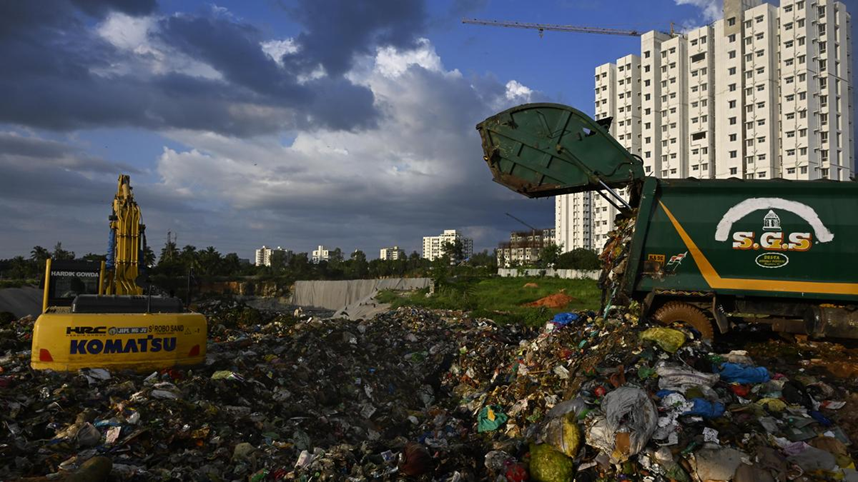
India’s escalating environmental crisis, driven by rapid industrialisation and unchecked waste generation, has made bioremediation a critical national priority. With rivers like Ganga and Yamuna receiving untreated sewage and industrial effluents daily, urban landfills overflowing (e.g., Bengaluru’s Mittaganahalli, 2024), and legacy contamination from oil spills, heavy metals, and pesticides, traditional cleanup methods have failed.
The government is now aggressively pushing bioremediation through Namami Gange, Swachh Bharat Mission, and Department of Biotechnology (DBT) programmes. This shift aligns with SDG 6 (Clean Water), SDG 14 (Life Below Water), and India’s NDCs under Paris Agreement.
The Pollution Burden & Need for Green Solutions
- Post-independence industrial boom → severe soil, water and air contamination
- 70%+ surface water bodies polluted (CPCB 2023)
- 80% sewage flows untreated into rivers (World Bank 2022)
- Legacy issues: Bhopal gas tragedy aftermath, oil spills, pesticide-laden Punjab farmland, chromium dumps in Kanpur
- Conventional methods (excavation, chemical treatment) → expensive, energy-intensive and create secondary pollution → Hence, bioremediation emerges as low-cost, in-situ, eco-friendly alternative
What is Bioremediation?
“Restoring life through biology” – using microorganisms (bacteria, fungi) and plants to detoxify pollutants by converting them into harmless substances (CO₂, water, biomass).
Two Broad Types
| Type | Description | Example |
| In-situ | Treatment at the contamination site itself | Bioaugmentation in Yamuna riverbed |
| Ex-situ | Excavated soil/water treated in controlled facility | Bioreactors for tannery sludge in Kanpur |
Traditional vs Modern Bioremediation
| Approach | Features | Indian Relevance |
| Traditional Microbiology | Uses native microbes, low-tech | Cost-effective in rural areas |
| Cutting-edge Biotech | Genetic engineering, nanobiotech, GM plants | Faster degradation, tackles complex pollutants |
Key Government Initiatives
| Programme / Agency | Focus Area |
| Namami Gange | Microbial treatment of sewage before river discharge |
| Swachh Bharat Mission (Urban) | Fungal degradation of municipal solid waste |
| CSIR-NEERI | Indigenous oil-zapping bacteria for marine spills |
| DBT-BCIL | Commercialisation of microbial formulations |
| National Clean Technology Programme | University–industry partnerships |
Opportunities for India
- Restore rivers, groundwater, degraded farmland
- Create green jobs in biotech & waste management (1 million by 2030 – DBT estimate)
- Reduce import dependence on chemical remediants
- Export low-cost bioremediation tech to Global South
- Support circular economy & LiFE (Lifestyle for Environment) movement
Major Challenges
| Challenge | Impact | Way Forward |
| No unified national policy | Fragmented implementation | Dedicated National Bioremediation Mission |
| GMO biosafety concerns | Fear of gene flow, ecological imbalance | Strengthen GEAC monitoring & field trials |
| Site-specific customisation | One-size-fits-all strains fail in diverse climates | Regional bioremediation hubs & strain banks |
| Lack of trained manpower | Scaling bottleneck | Include in curriculum + skill programmes |
| Monitoring & standardisation | Incomplete degradation goes undetected | Real-time biosensors + third-party certification |
Strategic Importance for India
- Decouples economic growth from ecological damage – essential for Amrit Kaal vision
- Directly contributes to NDC targets (carbon sinks via restored lands, reduced methane from landfills)
- Strengthens National Green Hydrogen Mission (clean feedstock via remediated waste)
- Positions India as global leader in tropical bioremediation (high temperature & monsoon-resilient strains)
- Addresses environmental justice – most polluted sites are in poor/marginalised areas
Conclusion
Bioremediation is no longer an academic curiosity — it is a national security and sustainability imperative for India. In an era where rivers burn, groundwater is toxic, and landfills tower over cities, biology offers the most potent, affordable, and regenerative tool to heal the environment without harming it further. The success of Namami Gange, Swachh Bharat, and India’s net-zero 2070 journey will depend heavily on how fast we move from pilot projects to nationwide, regulated, indigenous bioremediation ecosystems.
Source: Why does India need bioremediation? | Explained – The Hindu
UPSC CSE PYQ
| Year | Question |
| 2013 | Taking river Ganges as an example, discuss the strategies which may be adopted for river water pollution control and management. What are the legal provisions of management and handling of hazardous wastes in India? |
| 2016 | Rehabilitation of human settlements is one of the important environmental impacts which always attracts controversy while planning major projects. Discuss the measures suggested to solve the problems. |
| 2019 | The frequency of urban floods due to high intensity rainfall is increasing over the years. Discussing the reasons for urban floods, highlight the mechanisms for preparedness to reduce the risk during such events. |
| 2020 | Describe the major outcomes of the 26th session of the Conference of the Parties (COP) to the United Nations Framework Convention on Climate Change (UNFCCC). What are the commitments made by India in this conference? |
| 2023 | What is oil pollution? What are its impacts on the marine ecosystem? In what way is oil pollution particularly harmful for a country like India? |
| 2024 | Faster economic growth requires increased share of the manufacturing sector in GDP, particularly of MSMEs. Comment on the present policies of the Government in this regard. |