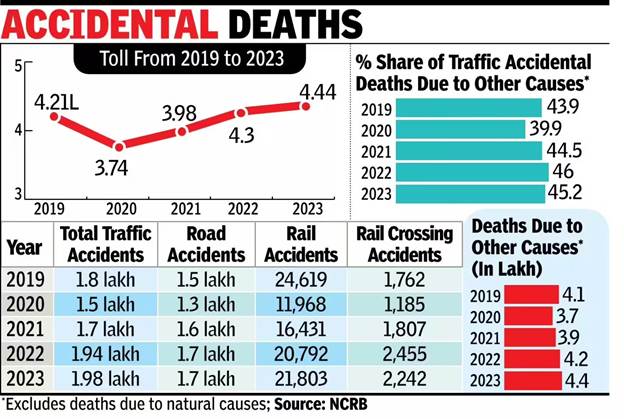
Road crashes in India are not just random accidents; they are a profound systemic failure, resulting in an alarming loss of over 1.7 lakh lives annually. This pervasive crisis demands a comprehensive analysis of the regulatory, technological, and infrastructural gaps that perpetuate this tragic cycle.
Why in the News?
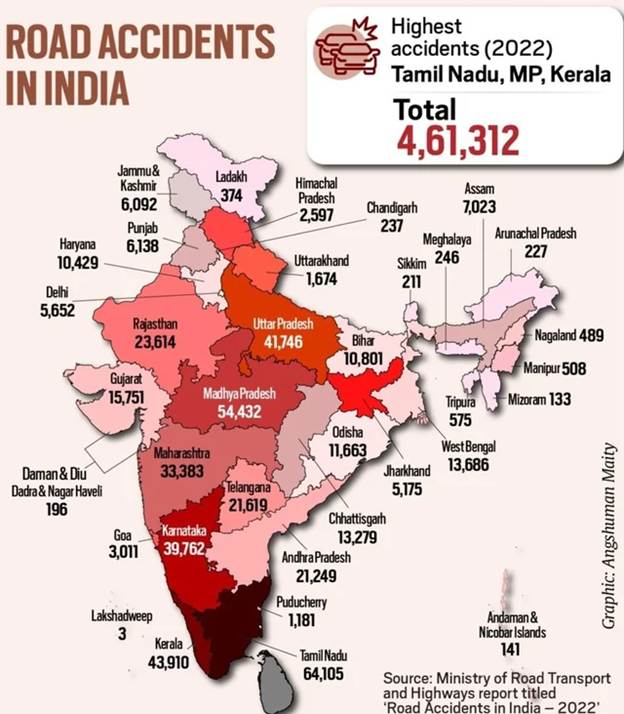
The inherent fragility of India’s road safety apparatus was recently underscored when the Supreme Court took cognizance of two mass-casualty road crashes in Rajasthan and Telangana. These incidents, which collectively resulted in dozens of fatalities, serve as a stark reminder that road safety is a critical governance and public health issue, necessitating immediate and holistic policy intervention. The high human cost and corresponding economic loss place a significant drag on national development.
The Multi-Dimensional Crisis: A Diagnostic of Failures
India’s road safety problem stems from a failure across the three pillars highlighted in the analysis: Licensing, Enforcement, and Infrastructure Engineering.
1. The Failure of the Licensing System (The Weak Gatekeeper)
The driving licence is meant to be the first line of defence—a filtration process determining a driver’s skill, physical fitness, and mental alertness. The system, however, has been reduced to a mere administrative formality.
- Compromised Filtration: Across much of the country, driving licences can be obtained without rigorous, formal training. The tests are often perfunctory and fail to assess genuine competence.
- Unstructured Safety: This failure is acutely evident in the commercial sector. Drivers of heavy vehicles (weighing over 15 tonnes and carrying dozens of passengers) often operate without any structured, mandatory safety training, increasing risk exponentially.
- Consequence: The lack of a structured assessment process allows drivers with compromised skills or chronic illnesses to routinely operate heavy vehicles, with no mechanism in place to detect or restrict such dangerous practices.
2. The Weakness of Enforcement and Accountability
Effective enforcement against major violations like speeding, overloading, lane violations, and driving under the influence is vital, yet it remains patchy and inefficient.
- Resource Constraints: Enforcement relies heavily on resource-constrained and unskilled manual policing, which inevitably leads to inconsistency and susceptibility to human error and discretion.
- Technological Lag: Despite repeated emphasis by the Supreme Court on the need for electronic enforcement standards and technology-based deterrence, the adoption of automated cameras and digital challan systems remains limited in coverage and patchy across states.
- Broken Accountability Chain: Even when penalties are issued, data integration is weak, and the recovery of fines often remains incomplete, undermining the deterrent effect of the law.
3. Engineering Deficiencies: The Peril of ‘Unforgiving Roads’
The physical design of India’s highways and urban roads often turns minor driver mistakes into fatal outcomes, creating what are termed ‘unforgiving roads’.
- Historical Design Flaw: Many State and National Highways were designed decades ago prioritizing speed and throughput over safety. This design philosophy leads to critical flaws.
- Specific Infrastructure Defects: Fatalities are often traced back to poor engineering, including poorly banked curves, a lack of crash barriers, inadequate illumination, and missing rest areas (forcing heavy vehicles to park haphazardly on highways).
- Unmarked Hazards: Common defects like broken dividers, exposed concrete structures, unmarked construction zones, and encroachments compound the danger, ensuring that a momentary lapse in driver attention can become a death sentence.
Way Forward: Towards a Holistic 4E Strategy
Addressing the systemic failure requires a strategic, unified approach that covers the globally accepted four pillars of road safety: Engineering, Enforcement, Education, and Emergency Care (4Es).
| Systemic Failure | Policy Reform/Way Forward | Expected Outcome |
| Licensing Failure | Digital Filtration: Implement structured training and technology-based testing (simulators, Automated Driving Test Tracks) to assess skills, not just perfunctorily. | Certify competent, well-trained drivers, especially for commercial vehicles. |
| Enforcement Weakness | Mandatory Electronic Enforcement: Enforce the Supreme Court’s mandate for seamless digital challan systems, automated cameras, and integrated data recovery across states. | Reduce human discretion and ensure consistent, efficient penalty recovery. |
| Weak Infrastructure | Safety Audits & Design Standards: Conduct mandatory, independent Road Safety Audits for all new projects and existing high-risk corridors. Design roads prioritizing crash barriers, proper banking, and adequate rest areas. | Convert “unforgiving roads” into safer corridors where mistakes are recoverable. |
| Driver Fatigue | Regulation & Technology: Mandate the use of telematics and technology in commercial vehicles to monitor driver working hours and detect fatigue or compromised alertness. | Restrict drivers with chronic illnesses or fatigue from operating heavy vehicles. |
By committing to these comprehensive reforms, particularly by rigorously enforcing electronic standards, upgrading infrastructure based on safety audits, and making the driver licensing system a credible filtration process, India can begin to reverse its devastating trend of road fatalities and establish a truly robust safety framework.
Road Safety in India: A Systemic Crisis and the Path to Vision Zero
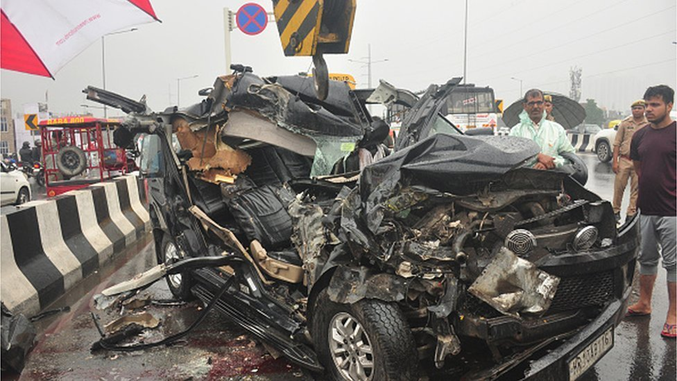
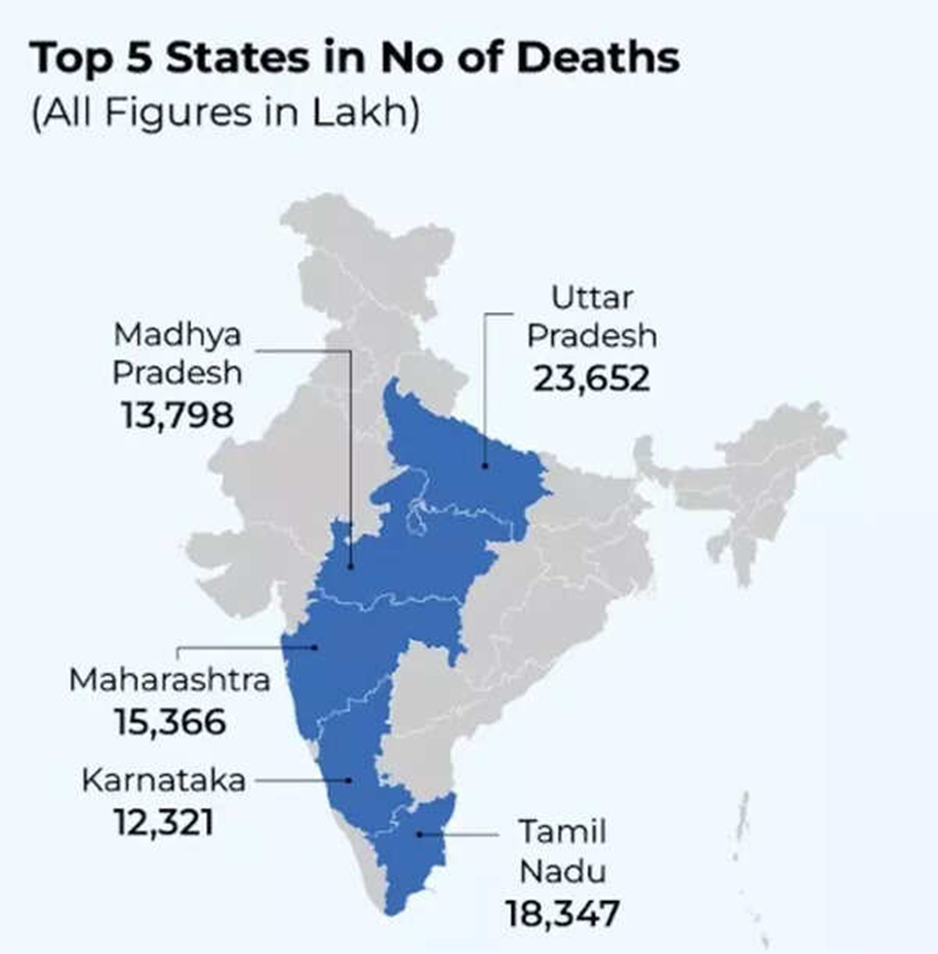
India faces a severe public health and economic crisis on its roads, consistently recording one of the highest numbers of road crash fatalities globally.With over 1.68 lakh lives lost in 2022 (MoRTH data), and an estimated economic cost of 5% to 7% of GDP annually (World Bank), road safety is no longer merely a traffic management issue but a critical governance and development imperative linked directly to the fundamental Right to Life (Article 21).
The Scale of the Challenge: Key Statistics and Vulnerabilities
The crisis is defined by its sheer scale, demographic impact, and structural flaws.
1. Statistical Overview
- Fatalities: Around 420 lives are lost daily on Indian roads.
- Global Share: India accounts for approximately 10% of the world’s road crash fatalities, despite having only 1% of the world’s vehicles.
- Vulnerable Demographics:
- Working Age Group: Nearly 69% of fatalities are among the productive age group of 18-45 years, crippling families and the nation’s human capital.
- Vulnerable Road Users (VRUs): Pedestrians, cyclists, and motorcyclists account for over 50% of all fatalities, highlighting the lack of protection for non-motorised transport.
- Leading Cause: Over-speeding is the single largest factor, responsible for over 70% of road accident deaths.
2. The International Commitment
India is a signatory to the Brasilia Declaration (2015) and has committed to the UN Decade of Action for Road Safety 2021-2030, aiming to halve the number of road crash fatalities and injuries by 2030 (SDG 3.6).
Deep-Dive Analysis: Failures Across the Four ‘E’s
India’s road safety management has historically been fragmented, leading to critical failures across the internationally recognized 4 E’s framework: Engineering, Enforcement, Education, and Emergency Care.
1. Engineering: The Flaw of “Unforgiving Roads”
- Faulty Design: Many state and national highways were designed prioritizing speed and throughput over safety. This results in unscientific intersections, poorly banked curves, and inadequate illumination.
- Black Spots: The presence of thousands of officially identified “black spots” (accident-prone stretches) that are often not rectified in a timely manner.
- Lack of VRU Infrastructure: Critical absence of basic infrastructure for vulnerable users, such as continuous footpaths, dedicated cycle lanes, and safe pedestrian crossings.
2. Enforcement: The Gaps in Accountability
- Manual Policing: Enforcement remains largely reliant on unskilled manual policing, which is resource-constrained and susceptible to human discretion, leading to inconsistency.
- Technology Underutilization: Despite mandates, the adoption of automated camera systems, speed guns, and digital challan systems is patchy. This allows high-frequency violations like speeding and drunken driving to go unpunished.
- Licensing System Failure: The driving license (DL) process is often perfunctory, failing to serve as a rigorous filter for assessing driver competence, especially for commercial vehicle operators.
3. Education: Low Safety Literacy
- Lack of Awareness: Low public awareness regarding traffic rules, the importance of safety devices (like rear seatbelts), and the danger of common violations (like wrong-side driving).
- Curriculum Gap: Road safety is often not integrated effectively into school and professional driving curricula, failing to inculcate safe road behaviour from a young age.
4. Emergency Care: The “Golden Hour” Missed
- Delayed Response: India’s post-crash care is severely deficient. Delayed response by ambulances and police often means the crucial “Golden Hour” (the first hour after a traumatic injury, where prompt care can prevent death) is missed.
- Trauma Centres: Lack of a robust, well-coordinated network of accredited trauma care centres and trained first responders along national highways.
Policy Interventions and Initiatives
The government has taken significant legislative and policy steps, primarily through the landmark Motor Vehicles (Amendment) Act, 2019.
| Policy/Legislation | Key Provisions for Road Safety |
| Motor Vehicles (Amendment) Act, 2019 | Increased Penalties: Exponentially higher fines for major violations (e.g., drunk driving, dangerous driving, not yielding to emergency vehicles). |
| Good Samaritan Law: Provides legal protection to bystanders who help accident victims, encouraging prompt assistance without fear of liability or interrogation. | |
| Vehicle Recall: Mandates the government to order a recall of defective vehicles that may pose a risk to the environment or road users. | |
| Institutional Mechanism: Provision for establishing a National Road Safety Board to advise on all aspects of traffic management. | |
| Vehicle Engineering Reforms | Mandatory Fitments: Making features like dual airbags, Anti-lock Braking System (ABS), speed limiting devices (for commercial vehicles), and seat belt reminders mandatory. |
| Road Engineering Reforms | Mandatory Road Safety Audits (RSA) by third-party auditors for all new highway projects across the design, construction, and operation phases. |
| Funding | Launch of the India State Support Program for Road Safety (with World Bank assistance) to strengthen institutional capacity and drive results-based interventions in states. |
Way Forward: Adoption of the Safe System Approach
To meet the 2030 fatality reduction target, India must shift from simply blaming the driver to adopting the ‘Safe System Approach’ (or Vision Zero), which assumes human error is inevitable and the system should be designed to prevent fatalities.
1. Strengthening Driver Licensing:
- Automated Testing: Mandating the use of Automated Driving Test Tracks (ADTTs) for all licenses to eliminate corruption and ensure rigorous, objective skill assessment.
- Professional Training: Making mandatory professional training a prerequisite for commercial vehicle licenses.
2. Infrastructure Investment:
- Safety Retrofitting: Prioritizing the correction of existing black spots based on data-driven analysis (accidents) and applying the Indian Road Congress (IRC) standards strictly.
- Vulnerable Road User Focus: Earmarking dedicated budgets (as mandated by the Supreme Court in some states) for pedestrian infrastructure, including high-quality footpaths, subways, and overbridges.
3. Data and Technology Integration:
- National Database: Developing a real-time, integrated, and granular National Accident Data System (beyond police reporting) to accurately inform policy.
- Intelligent Traffic Systems (ITS): Implementing intelligent transport systems like adaptive traffic signals and automated number plate recognition (ANPR) cameras for non-contact electronic enforcement.
4. Community and Post-Crash Care:
- Awareness: Launching sustained, high-impact campaigns (like the “Sankalp Se Siddhi” concept) targeting seatbelt usage (including rear passengers) and helmet quality.
- Trauma System: Creating a nationwide, centralized single emergency number for road crashes and strengthening trauma care facilities along highways for effective Golden Hour management.
Source: Why does India’s road safety system keep failing? | Explained – The Hindu
UPSC CSE PYQ
| Year | Question |
| 2017 | As per ‘The Accidents India 2016’ report road accidents are one of the leading causes of deaths in India. While explaining the provisions of the Motor Vehicles (Amendment) Act, explain how these provisions can help in reducing the road accidents. |